Wiener Linien has announced the procurement of ten electric hydrogen buses from Italian manufacturer RAMPINI.
The new HYDRON minibuses will enter operation on Vienna’s 2A and 3A lines this September – the first vehicles of their kind to begin service within the Austrian capital.
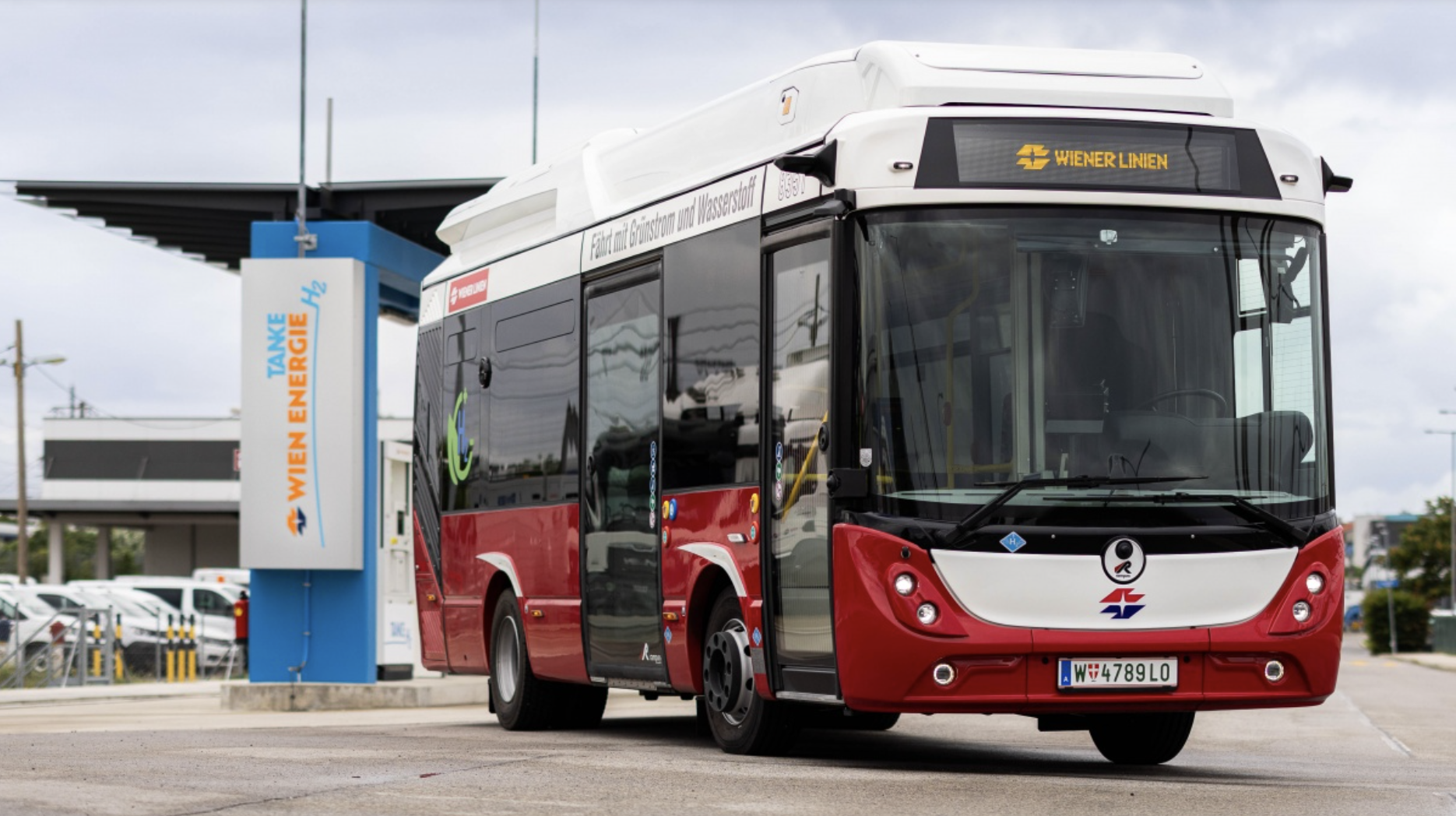
The hydrogen utilised by the vehicles will be provided by Wien Energie and refuelled at the Wiener Netze campus, keeping operations entirely within the Wiener Stadtwerke Group company.
RAMPINI has thus far provided 60 electric buses for operation within Vienna, with the funding for the new vehicles coming from the EU via the EBIN programme of the Federal Ministry for Innovation, Mobility and Infrastructure.
Having undergone a number of intensive tests; the new HYDRON minibuses will replace previously provided RAMPINI e-minibuses on lines 2A and 3A, with the range of the vehicles reducing the necessity for charging infrastructure within the centre of Vienna. As a result, lines 2A and 3A will begin to operate with ten buses instead of twelve.
Caterina Rampini, Vice President and CEO of RAMPINI, said:We are very proud to deliver again buses to Wiener Linien after the first delivery of pure battery buses in 2012. This shows the reliability of the technology as well as the trust of this esteemed customer. With the new HYDRON buses, officially launched in 2023 at the biggest bus exhibition in Brussels, we enter a new phase of technology development to work for a cleaner and sustainable future.
These very flexible and versatile Minibuses will show, what hydrogen as a energy carrier can deliver in public transport and move people comfortably and sustainably in the Austrian capital.
The new HYDRON buses feature a 230 kW central electric motor powered by a combination of both a 170 kWh LTO battery and a hydrogen fuel cell, utilising RAMPINI’s Hy4Drive-System which can switch between four charging and drive modes depending on conditions.
Wiener Linien has pledged an investment of roughly 12 million EUR into the purchase and maintenance of the vehicles, together with the Ministry of Innovation, Mobility and Infrastructure and the EU.
Measuring in at 8 metres in length, each bus is capable of carrying up to 42 passengers (13 seated, 28 standing) and is fitted with full air conditioning.