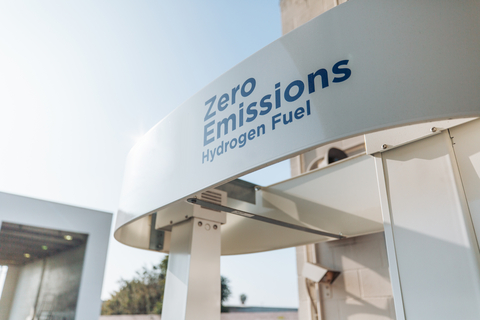
At Mobility Move 2026, Bosch unveiled a new generation of hydrogen fuel-cell systems designed specifically for buses.
Its latest Fuel Cell Power Module (FCPM) C100 has been presented as a compact power unit suited to urban buses. The module delivers between 100 and 300 kilowatts of power and forms part of Bosch’s wider portfolio of fuel-cell solutions.
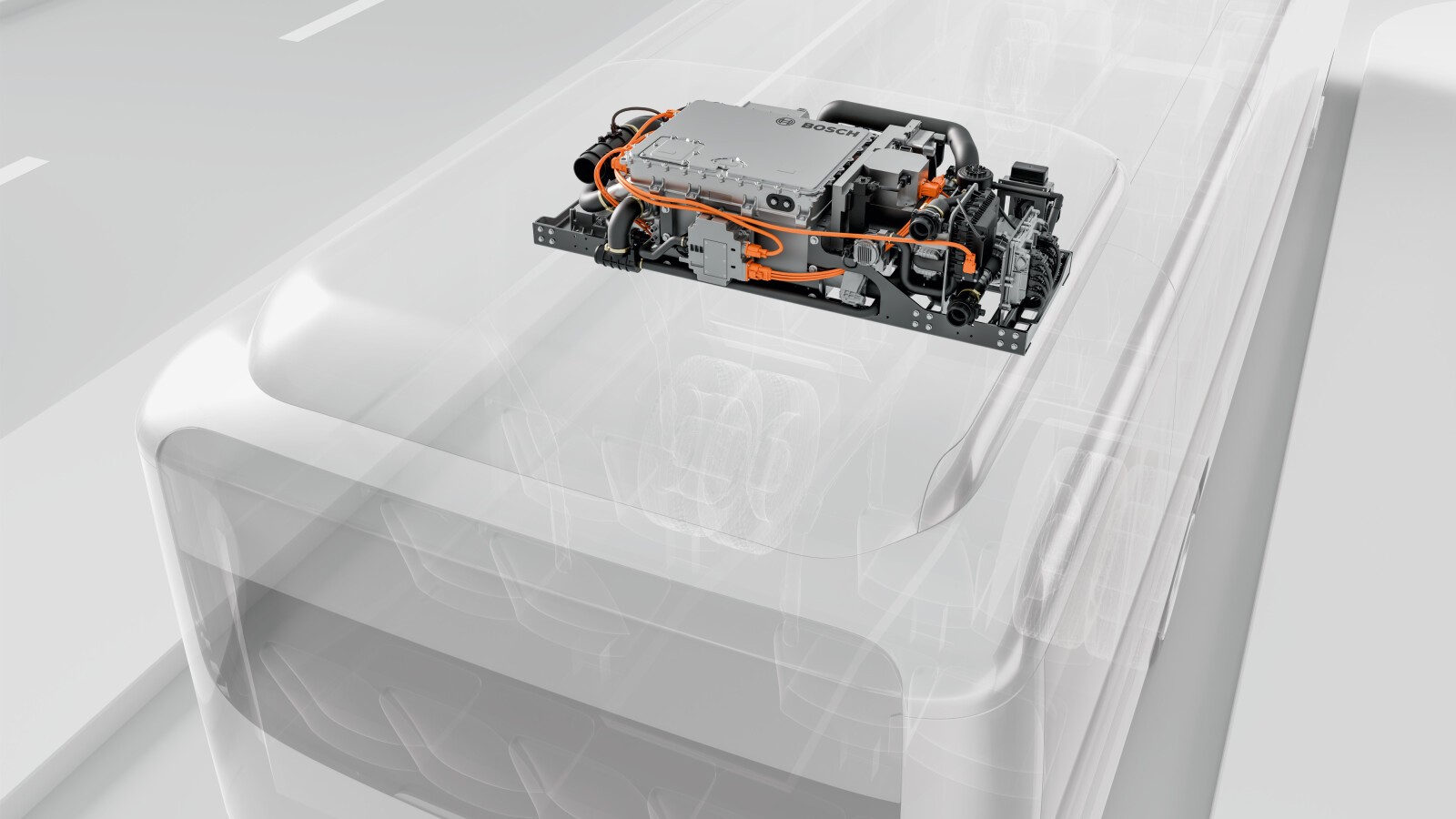
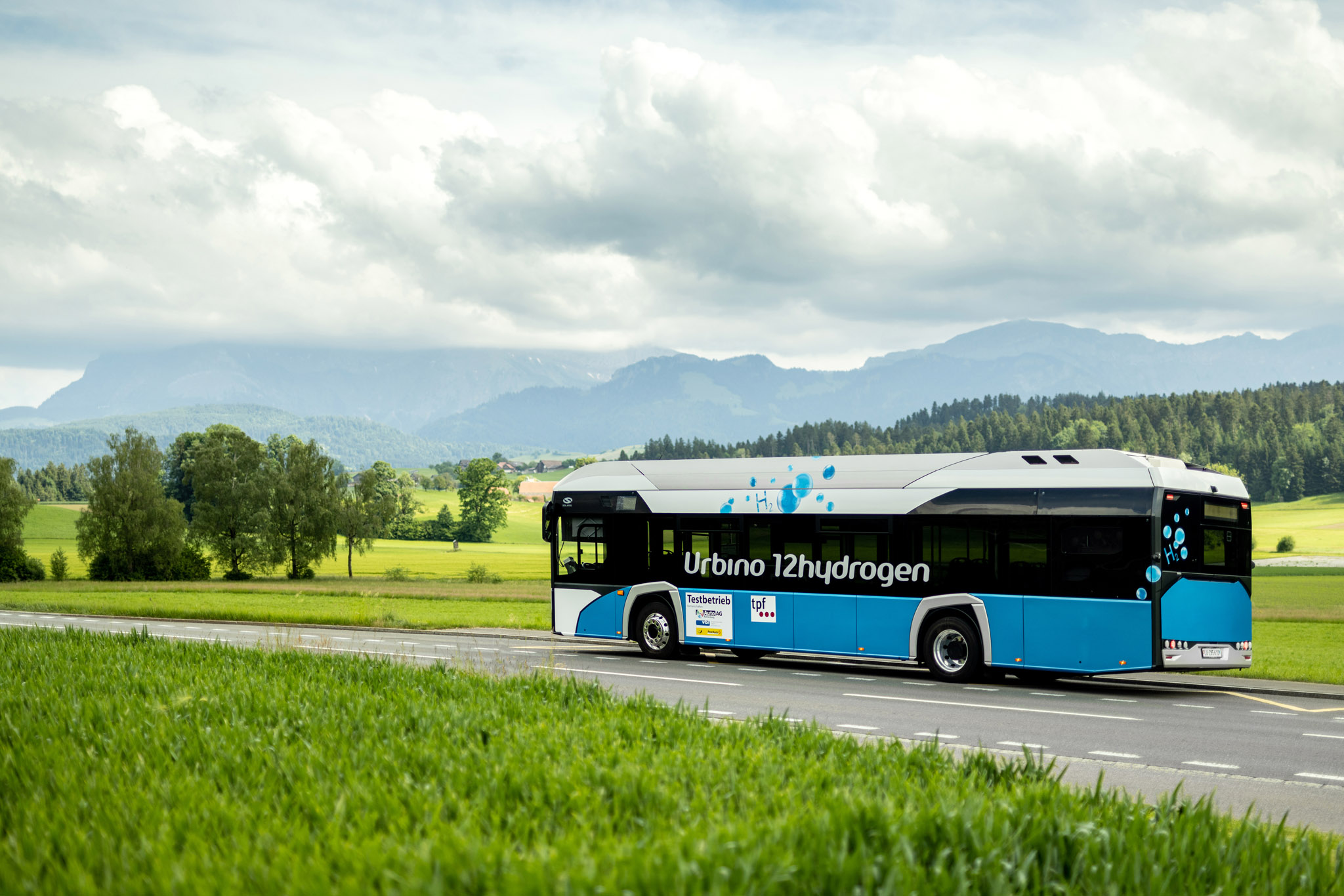
The C100 is designed for 12- to 18-metre city buses and features a low-profile structure measuring around 40 centimetres in height, enabling it to be mounted on the roof. This is a configuration commonly used in European urban bus fleets. The system can be integrated with standard CAN and diagnostic interfaces to simplify installation by vehicle manufacturers.
Jan-Oliver Röhrl, executive vice president of the Bosch Power Solutions division and chairman of Bosch’s global commercial vehicle activities said:In addition to battery-electric buses, fuel-cell electric vehicles can also be used to combat climate change.
The fuel cell is especially well-suited for buses that travel longer distances every day and rarely have the opportunity to charge en route.
The launch comes as European regulators tighten emissions targets for public transport. Under rules set by the European Union, carbon emissions from newly registered city buses must fall by 90 percent by 2030 compared with 2019 levels, with similar requirements due to apply to other bus categories from 2040. Fuel-cell vehicles, recognised as zero-emission under EU policy, are expected to play a role alongside battery-electric technologies.
The new C100 module builds on Bosch’s existing fuel-cell platform. Its FCPM C190 variant is designed for intercity buses and coaches, where it can be installed at the rear of the vehicle in a layout similar to conventional diesel buses. Bosch plans to begin testing the C190 in demonstration vehicles during the first half of 2026.
Meanwhile, the FCPM C300, capable of producing 300 kilowatts of power, which Bosch says is suitable for heavy-duty applications such as long-distance coaches and trucks.
Beyond vehicle systems, Bosch is also expanding its presence across the hydrogen value chain. The company recently launched its Hybrion PEM electrolysis stack, a technology designed to produce hydrogen through electrolysis, and is developing components for hydrogen combustion engines, including port and direct injection systems.
The group’s work on mobile fuel-cell technology has also received national recognition. A team of Bosch engineers was awarded the German Future Prize in 2025 for their contribution to the development of mobile fuel-cell systems.