BYD has set out its latest expansion plans in the UK and European markets, including the introduction of its eBus Platform 3.0 and a range of new vehicles.
The eBus Platform 3.0 is built around BYD’s Blade battery technology, which forms a structural part of the chassis. By replacing some metal components with battery modules, the design reduces overall weight, increases rigidity, and lowers the vehicle’s centre of gravity. According to BYD, this configuration enhances both safety and energy efficiency, while allowing greater battery capacity and range flexibility.
The platform integrates five main elements:
- Modular and light chassis
- Axle system designed for improved durability and weight distribution
- Thermal management system covering batteries, motors, and passenger cabin heating/cooling
- Controller unit that consolidates six components into one plug-and-play module for simplified servicing
- Electric motors using flat wire technology for reduced weight, quieter operation, and minimal maintenance
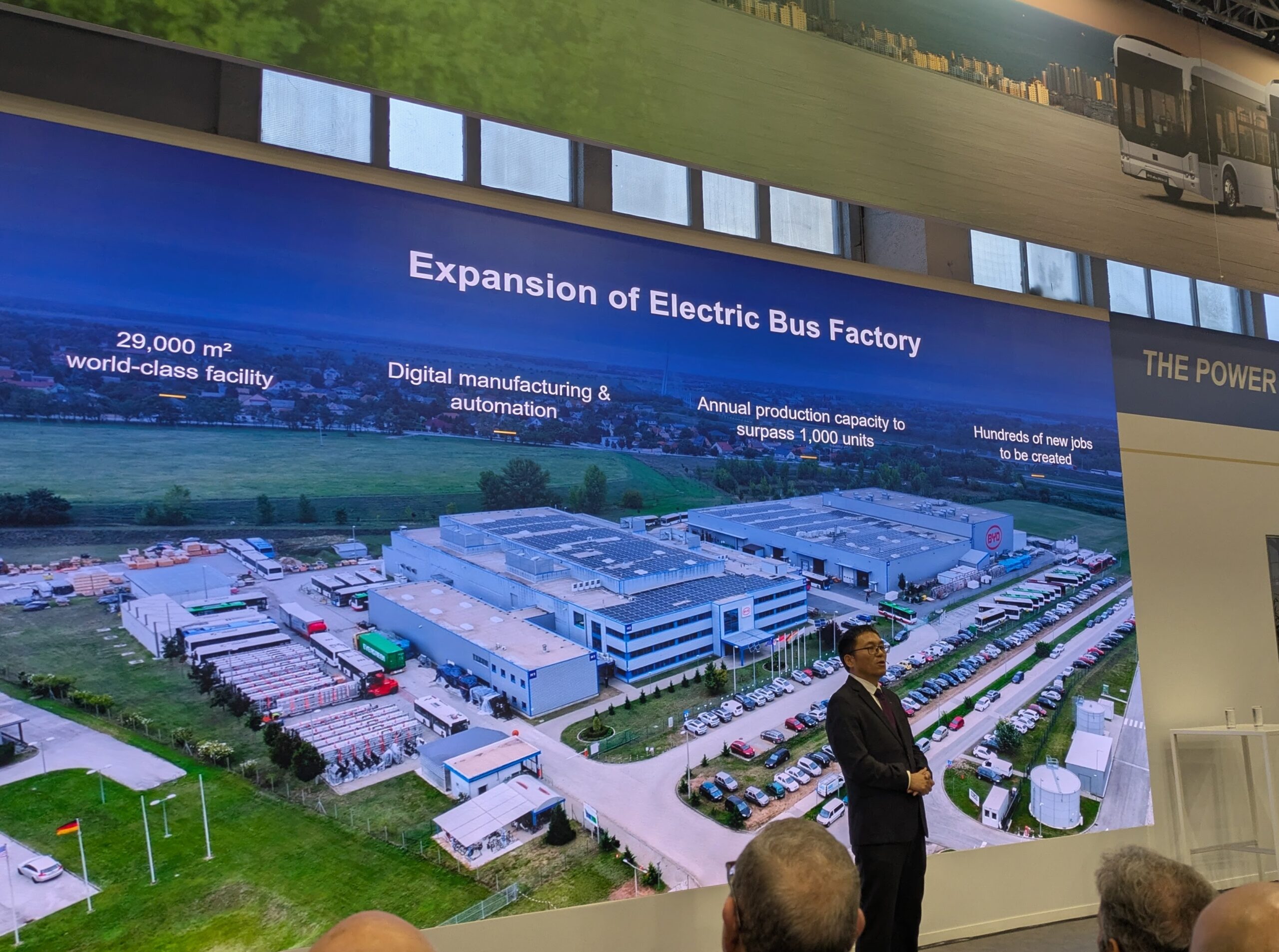
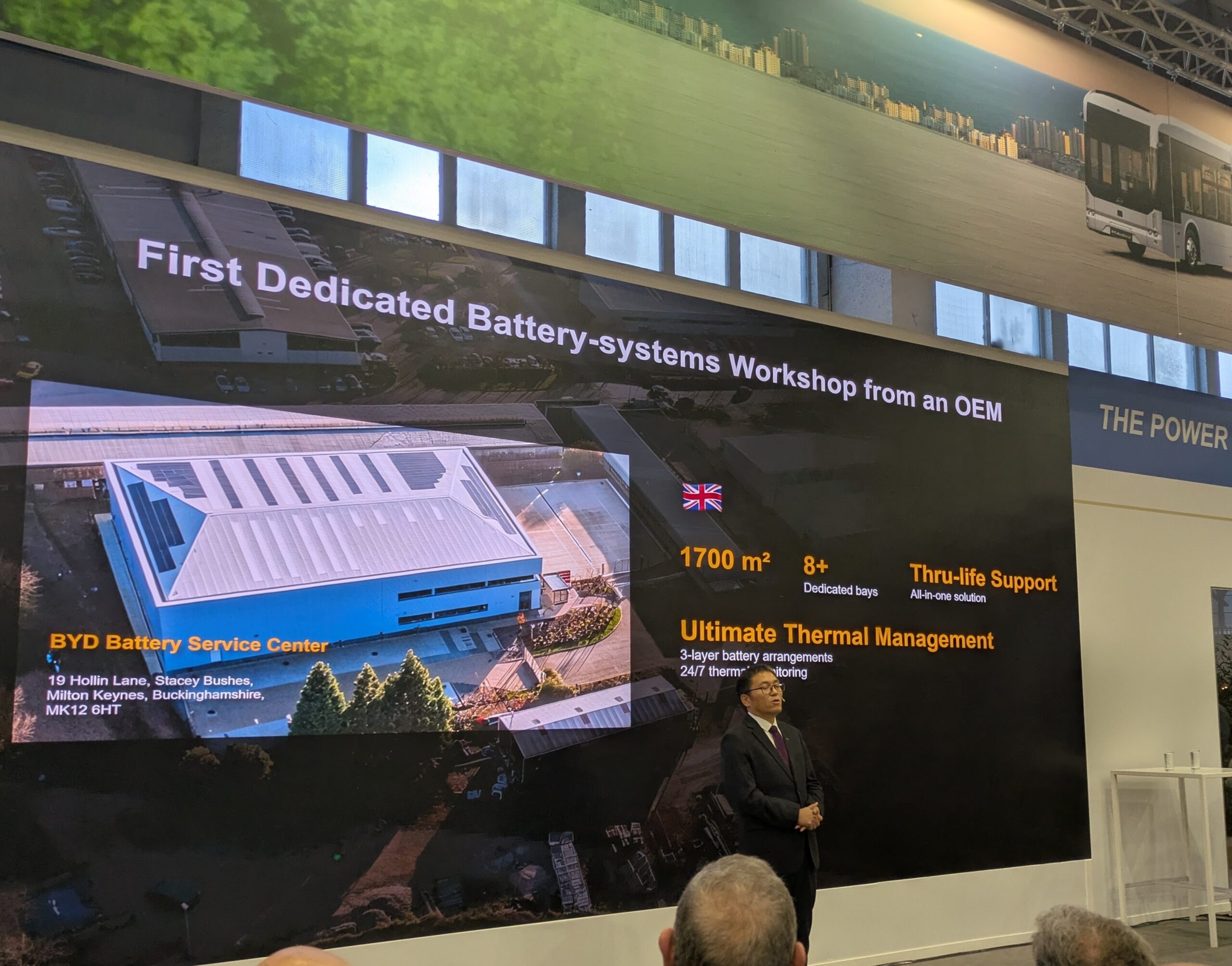
BYD is already the leading electric bus provider in Europe, but is now preparing to further expand its sales with this platform. To do so, the company is expanding its electric bus factory in Hungary and is establishing a dedicated battery support workshop in Milton Keynes, UK.
In addition, BYD highlighted three innovations now incorporated across its new bus range:
- Intelligent Body Control: adjusts stiffness in real time to improve ride comfort and vehicle stability at speed or on winding roads
- Blowout Control System: maintains stability in the event of a tyre failure
- Smart Regenerative Braking: enables energy recovery to 100%, reducing the need for mechanical braking and lowering wear on brake components.
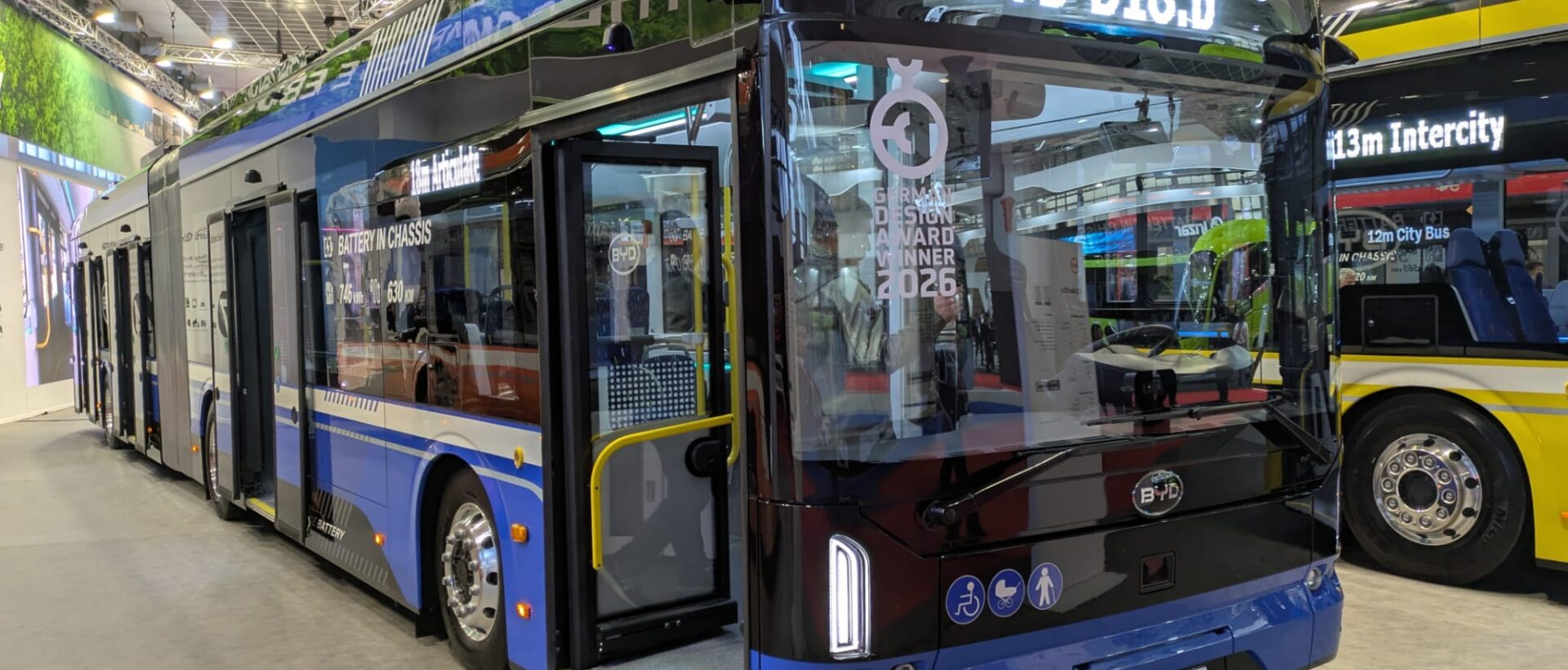
At Buswolrd, the company also presented two new vehicles:
- 12-metre Intercity High-Floor Bus
- 18-metre Articulated eBus
With in-house development of the chassis, motors, controllers, and thermal systems, BYD is positioning itself as a vertically integrated supplier capable of delivering vehicles with lower energy consumption, simplified servicing, and extended operational life.