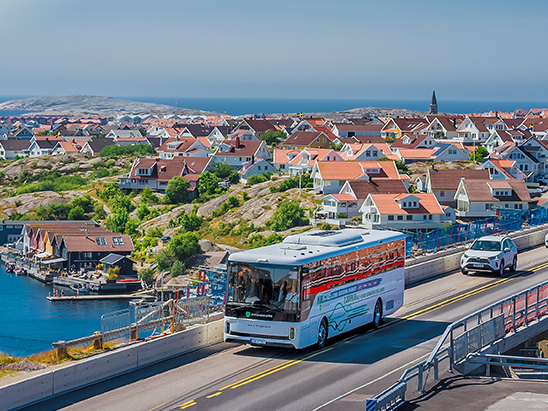
At its Busworld press conference, Daimler Buses laid out bold plans for the future of its interurban and long-distance vehicles, including the launch of its first fully electric interurban bus and a clear roadmap towards electrified coaches by 2030.
Daimler Buses reported an 8% increase in sales in the first half of 2025 compared to the same period in 2024, underpinned by strong demand for its growing electric range.
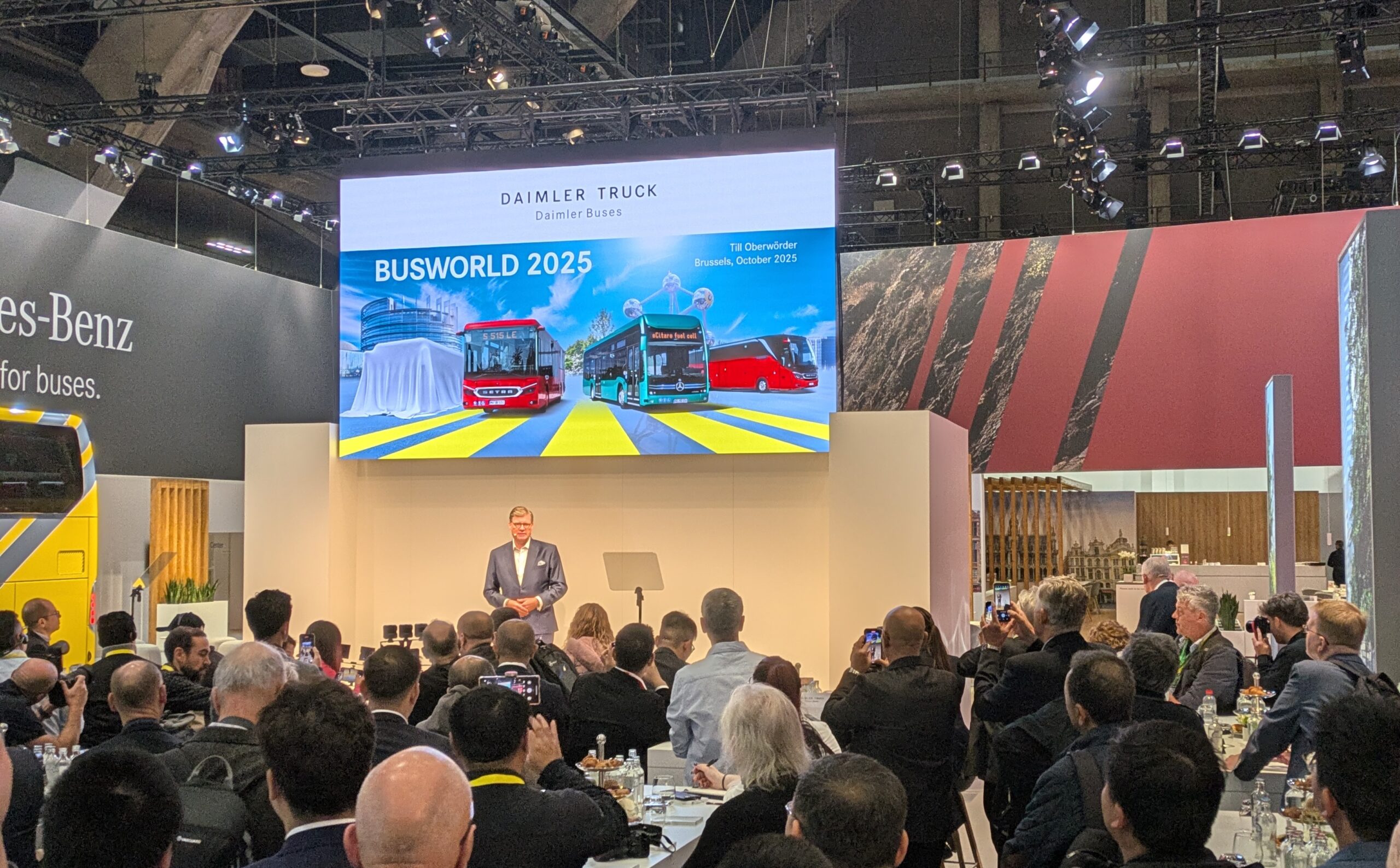
Since launching its first electric city bus in 2018, the company has delivered more than 3,000 zero-emission units, with recent large contracts secured in France, Spain, Slovenia, and Germany. To meet this demand, Daimler is investing in expanded production, including a multi-million-euro upgrade at its plant in Ligny-en-Barrois.
Mercedes-Benz eIntouro
The Mercedes-Benz eIntouro is Daimler’s first fully electric interurban bus. Tested in extreme weather conditions from the Arctic Circle to southern Europe, the model is designed to meet operators’ expectations for reliability, safety, comfort, and range.
With a maximum range of up to 500 kilometres on a single charge, enabled by lithium iron phosphate (LFP) battery technology, the eIntouro is positioned for versatile operations from rural services and commuter shuttles to school transport and day trips.
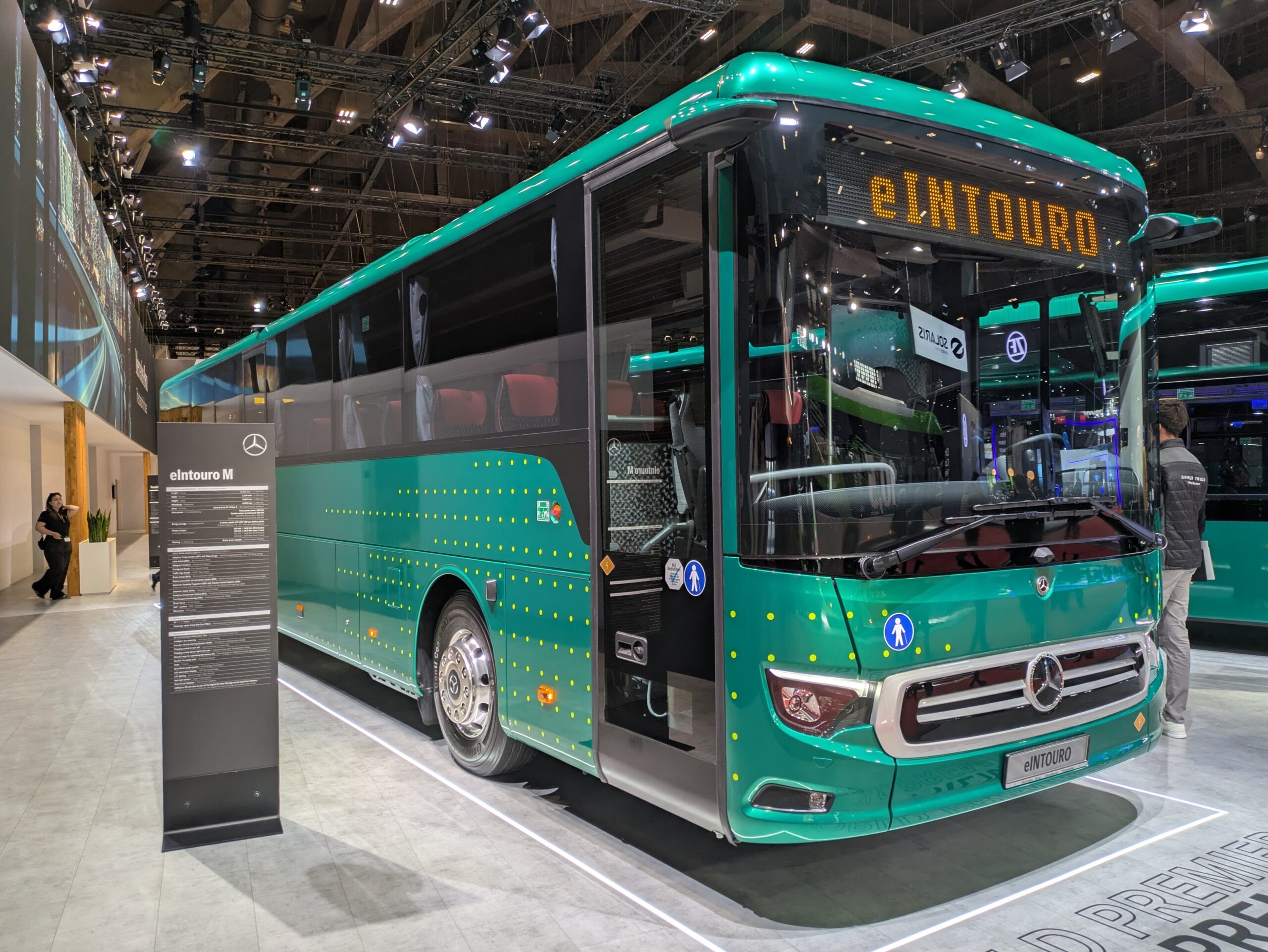
Customers can specify up to 63 seats, while advanced safety systems, including Active Brake Assist 6 and Sideguard Assist 2 are standard options.
Series production is scheduled to begin in the second half of 2026.
Services to Support e-Mobility
Electrification, Daimler stressed, is not only about vehicles but also services. Under the Omniplus brand, the company now bundles digital tools, fleet management solutions, and charging support.
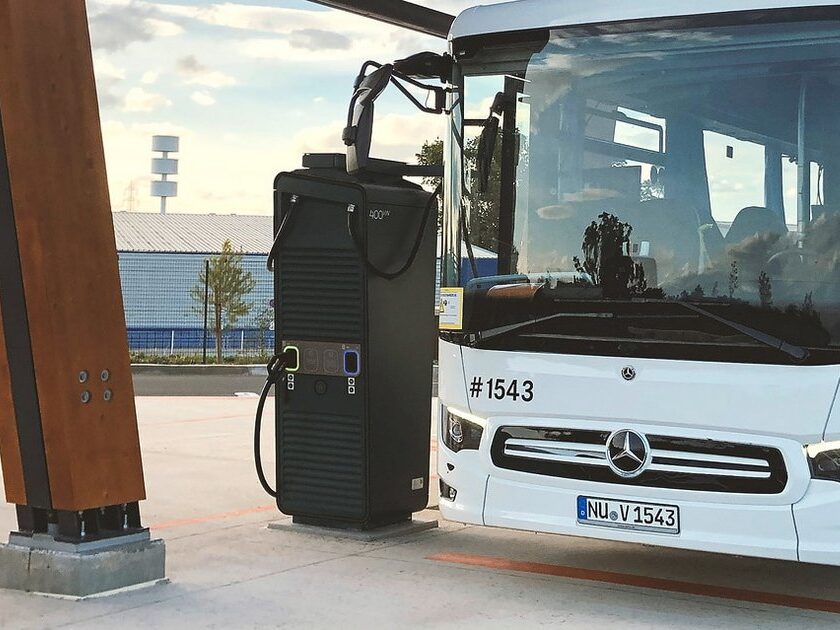
Projects are underway across eight European countries, including Daimler’s first full turnkey electric depot in Lüneburg, Germany, with solar integration and 20 charging points. From 2026, Daimler also plans to establish public charging stations for buses at tourist locations and city hubs, beginning with a pilot in Brno, Czech Republic.
Roadmap to Electric Coaches
In addition to electric city and interurban buses, Daimler has confirmed its ambition to launch a zero-emissions coach by 2030. Notably, the challenge of long-distance travel — carrying luggage and ensuring passenger comfort over thousands of kilometres — requires both battery-electric and hydrogen fuel cell solutions.
The first battery-electric coach is planned for the end of this decade, drawing on shared components with Daimler’s e-truck platforms. Hydrogen models will follow, leveraging technology from CellCentric, the Daimler Truck–Volvo Group joint venture in fuel cells.
Infrastructure
Despite technical progress, Daimler warned that infrastructure remains the biggest barrier. By 2030, the EU’s planned charging network will likely still fall short of supporting widespread long-distance zero-emission bus and truck operations.
The company is urging policymakers to address sector-specific needs, such as sufficient charging at tourist destinations and revising EU CO₂ reduction targets for coaches to reflect infrastructure readiness.
Daimler argues that the current 43% reduction target for 2030 is unrealistic without accelerated charging and hydrogen deployment, proposing instead a phased approach beginning at around 20%.