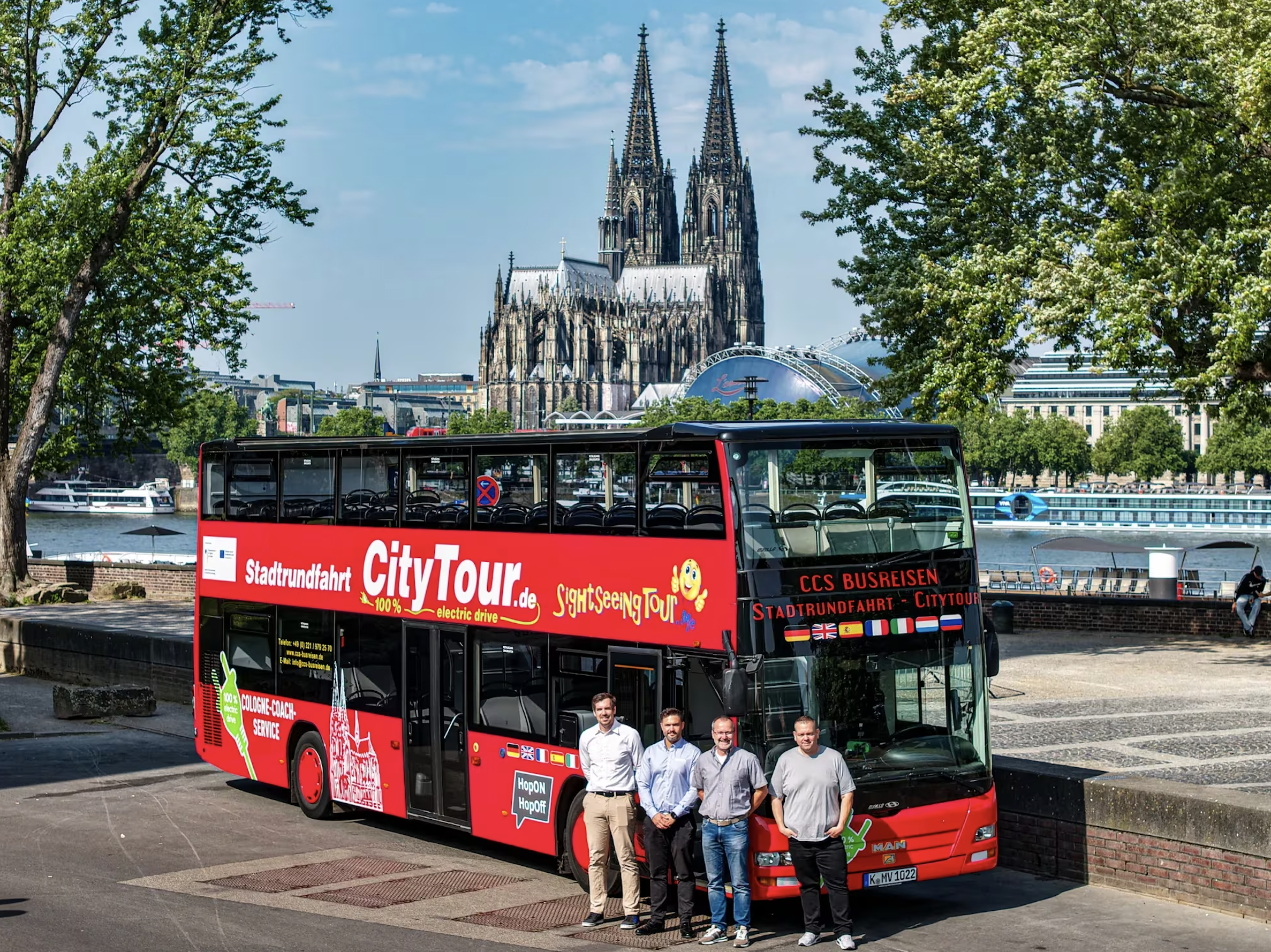
A fleet of 18 double-decker sightseeing buses operated by Willms Touristik has been converted from diesel to electric power, with the retrofitted vehicles now in service in Cologne and other German cities.
The buses, ranging from late-1980s models to those built as recently as 2019, were modernised under the German Federal Ministry for Digital and Transport’s funding programme. The conversion was carried out by Danish company Banke ApS, working with Allison Transmission’s authorised German distributor DGS Diesel- und Getriebeservice GmbH.
Each vehicle’s diesel engine, fuel system, and conventional transmission were removed before new components were fitted. The new system is built around a DANA TM4 SUMO HP electric motor delivering 145 kW of continuous power, paired with an Allison T280R fully automatic six-speed transmission. Six lithium iron phosphate battery packs, with a total capacity of 240 kWh, give the buses a range of about 200 kilometres, which is sufficient for daily sightseeing routes.
Because of their open-top design, the buses could not accommodate roof-mounted batteries. Instead, the packs were installed at the rear and within the passenger compartment, reducing seating capacity by two to six seats, depending on the model.
Willms Touristik Director, Sascha Wilms said:Considering that diesel buses will probably be forbidden from driving in German city centers in a few years' time, this project is not only an important step towards CO₂-free mobility, but also crucial for the future viability and profitability of our company.
The company expects lower operating costs, with electricity expenses averaging 0.33 EUR per kilometre compared with 0.60 EUR for diesel. Maintenance costs are also projected to fall, as electric drivetrains have fewer wear-prone components.