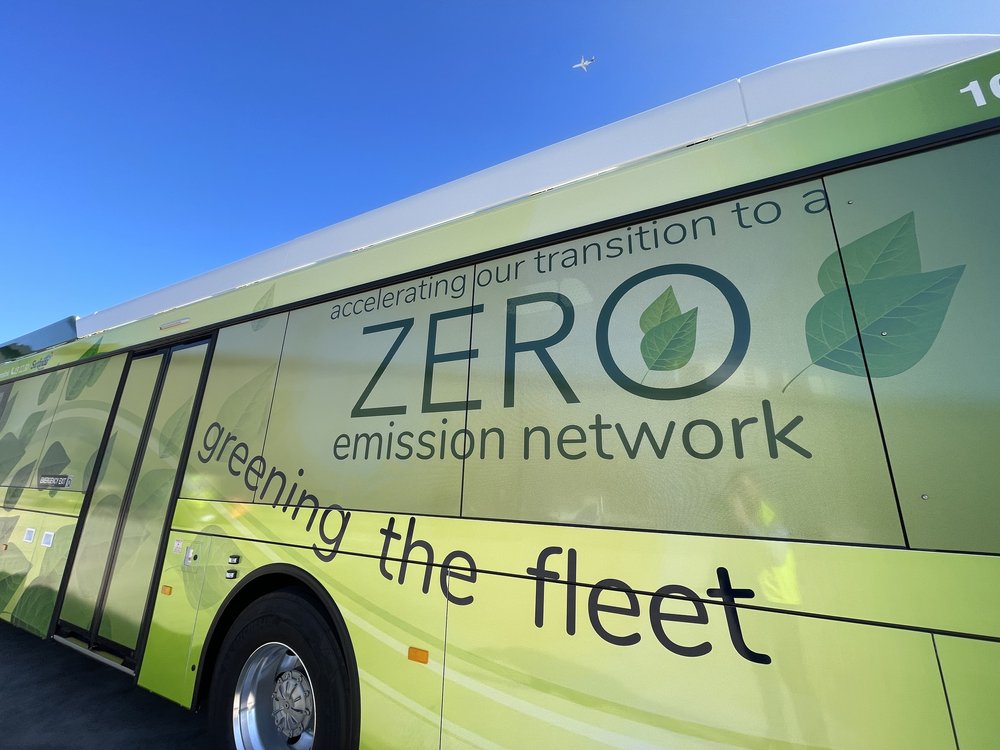
Dubai’s Roads and Transport Authority (RTA) has received the first batch of 250 buses under a contract for the procurement of 735 multi-size buses that comply with the European Euro 6 low-carbon emissions standard. The remaining buses are scheduled for delivery later this year.
The initial delivery includes 40 electric buses, marking the first large-scale introduction of electric buses into Dubai’s public transport fleet. This is the largest procurement of electric buses of its kind in the UAE to date.
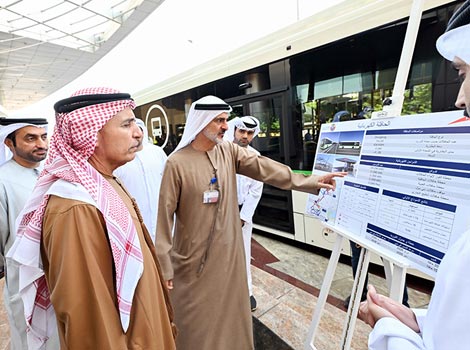
His Excellency Mattar Al Tayer, Director General and Chairman of the Board of Executive Directors of RTA, inspected the Zhongtong electric bus, which will be operated on Dubai’s urban routes. The bus has been designed to suit local operating conditions and has a single-charge range of up to 280 kilometres, allowing it to complete daily operations without mid-day recharging. It is equipped with a 434-kilowatt-hour battery and supported by a 360-kilowatt ABB charging system.
During the inspection, Al Tayer was briefed on the technical specifications of the 12-metre bus, which can carry up to 70 passengers and includes a 360-degree camera system. The vehicle complies with international safety standards and features an advanced battery cooling system suitable for the UAE’s climate. It underwent testing and trial operations in Dubai for more than three months, with results indicating stable performance, efficient energy consumption, and reliable operation of safety systems such as braking, cooling and battery management.
His Excellency Mattar Al Tayer said:The procurement of the new buses forms part of the implementation of the directives of His Highness Sheikh Mohammed bin Rashid Al Maktoum, Vice President and Prime Minister of the UAE and Ruler of Dubai, and the follow-up of His Highness Sheikh Hamdan bin Mohammed bin Rashid Al Maktoum, Crown Prince of Dubai, Deputy Prime Minister, Minister of Defence and Chairman of the Executive Council of Dubai. These directives aim to deliver a sustainable and flexible public transport system that facilitates mobility for residents and visitors, enhances quality of life, strengthens Dubai’s global competitiveness as a leading destination for major international events, and supports the objectives of the Dubai Urban Plan 2040.
The initiative also forms part of an integrated strategic plan developed by RTA to advance Dubai’s public transport system in line with global best practices. The plan seeks to deliver the highest standards of service to public transport users and to keep pace with the continuous growth in ridership, to make public transport the preferred choice for residents.
In the near future, there will be a gradual increase in the number of electric buses operating across the Emirate, in line with national directions to reduce the carbon footprint and achieve climate neutrality by 2050, and in support of the Dubai Economic Agenda D33, which seeks to strengthen Dubai’s position as one of the world’s largest urban economies.
These efforts also support RTA’s Zero-Emission Public Transport Strategy 2050, which aims to convert all buses, taxis and limousine vehicles to zero-emission operation. Under this strategy, RTA seeks to transition 100% of public transport buses to electric and hydrogen power by 2050.
The wider contract includes 549 city service buses, comprising 400 MAN buses and 149 Zhongtong buses, all meeting Euro 6 standards. It also covers 76 double-decker Volvo buses and 70 articulated Isuzu Anadolu buses to serve high-demand routes and expanding urban areas. These vehicles are classified as Class II under United Nations vehicle standards, allowing use on both urban and inter-urban routes.
Most of the new buses are equipped with driver monitoring systems, automated passenger counting, and driver identity authentication linked to RTA’s operating systems. Additional features include low-floor access, designated seating for children, spaces for bicycles, Wi-Fi connectivity, mobile phone charging points, and safety enhancements such as seat belts in family areas.
RTA has also adopted a national standardised fuel-consumption testing protocol for the new fleet, aimed at improving operational efficiency and supporting long-term financial and environmental sustainability.