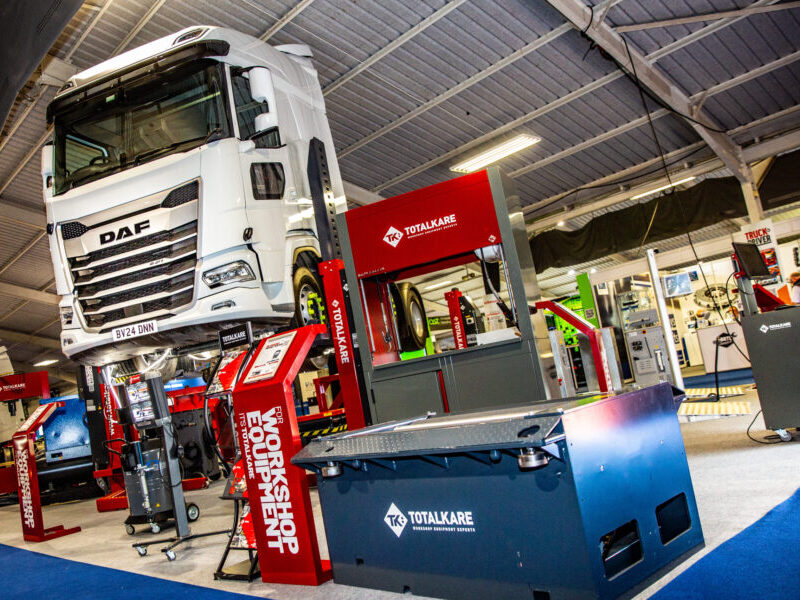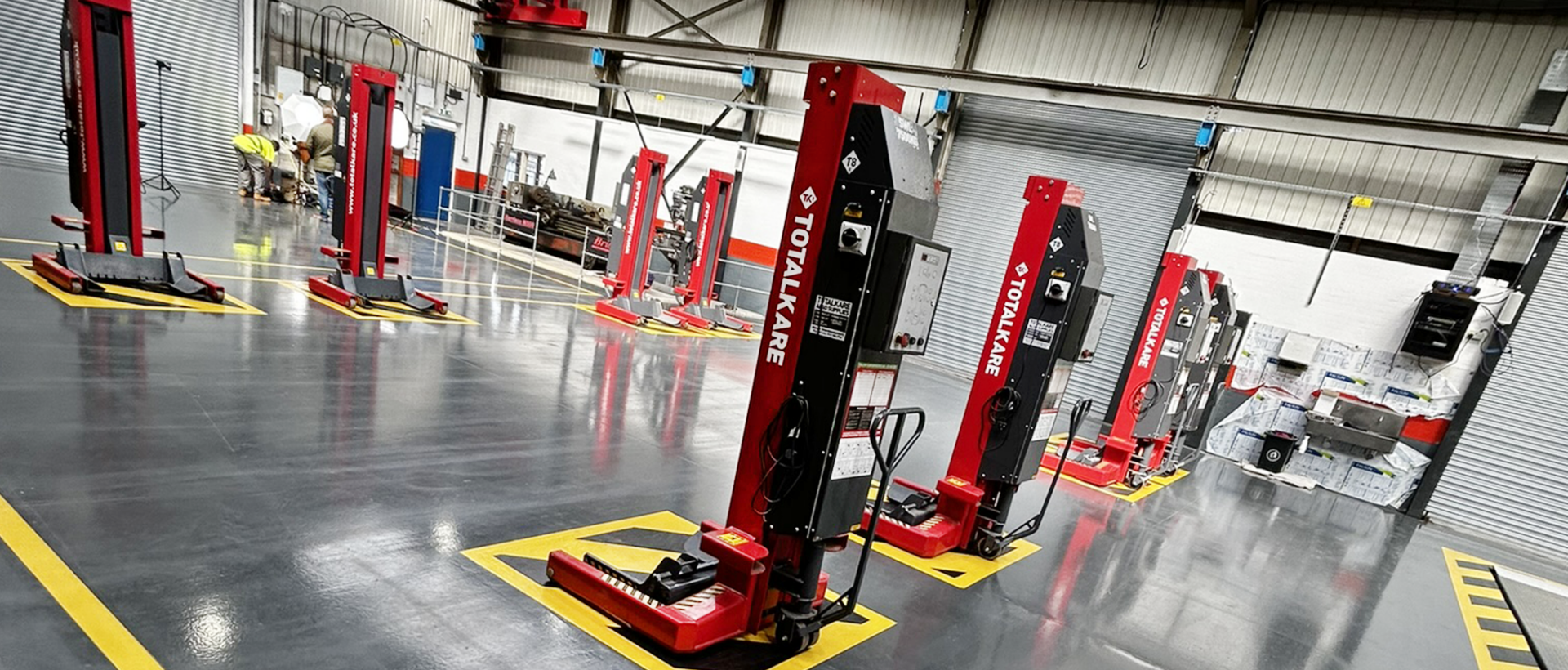
Is a mobile column lift system the best investment for your workshop?
When you think of heavy-duty vehicle lifts, lots of workshops imagine the classics: four-posts, scissor lifts, or in-ground vehicle lifts.
But ‘heavy-duty’ doesn’t have to mean ‘fixed installation’. And for some workshops, a mobile column lift system can end up giving you the most bang for your buck.
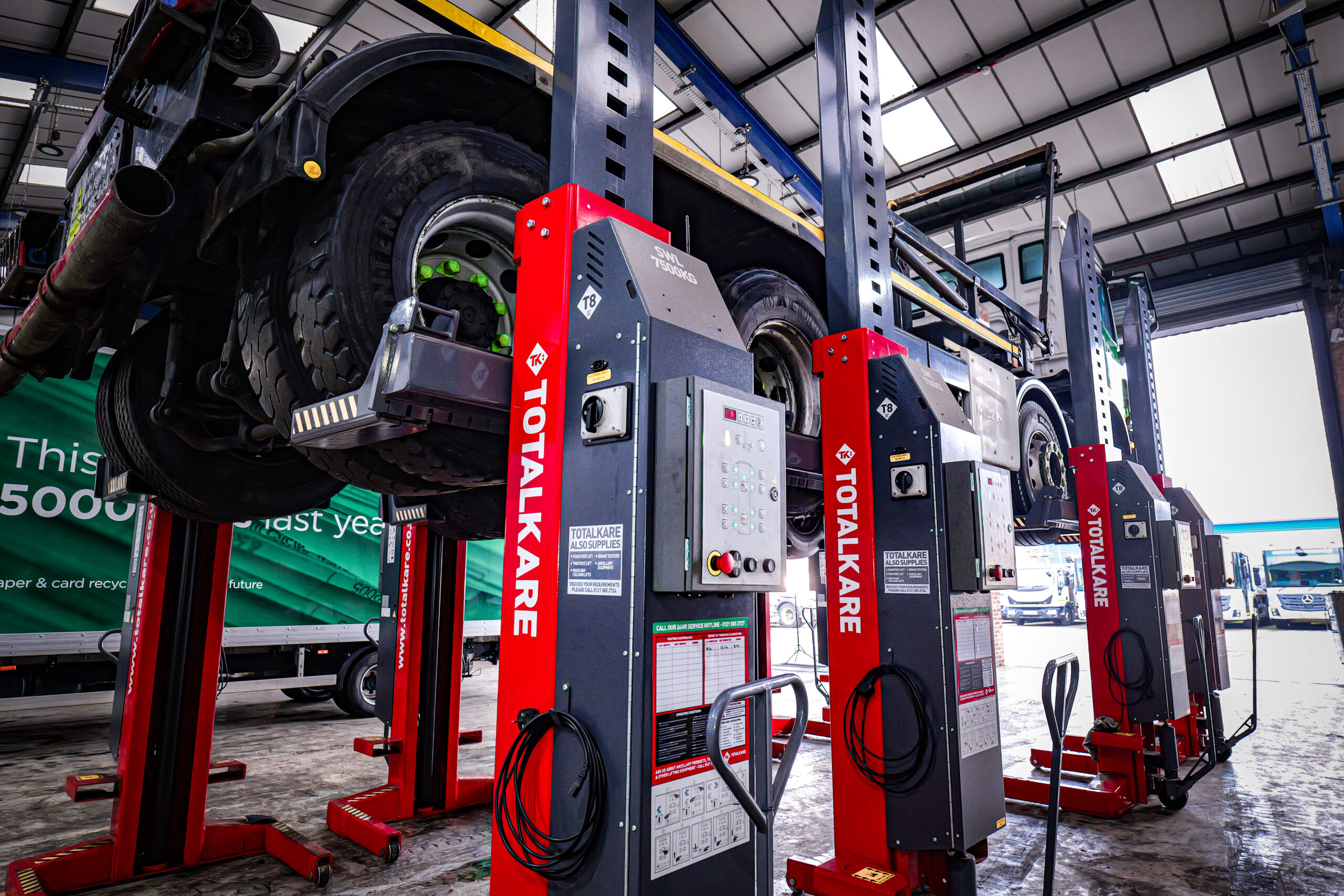
Here’s why a mobile column lift system is often the best investment for a heavy-duty workshop — especially when budgets and space are tight:
It’s Flexible
This one’s no secret: but the manoeuvrability of a mobile column lift is what really sets it apart.
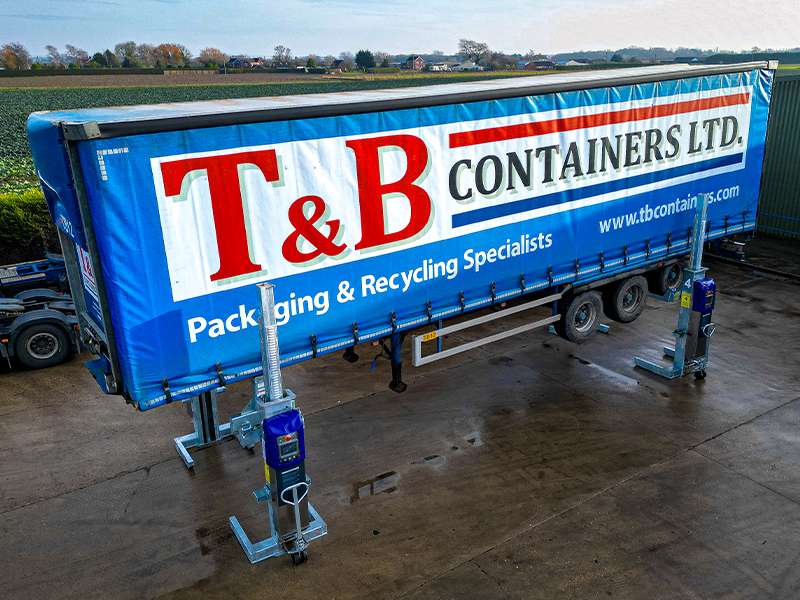
Without a fixed installation, you can set up a lifting station in any location that’s suitable: in different parts of your workshop, or even in an outdoor area.
That gives your workshop a huge amount of flexibility. When demand is high and you need the extra throughput, you can set up a new lifting station in an unused part of your premises — giving you a temporary boost to your output without committing to a permanent installation.
It’s especially useful for workshops with a smaller premises, where every square foot needs to be put to good use. But it’s also important for shops with an unpredictable workload — or ones that struggle to keep up with seasonal fluctuations.
It’s Versatile
Most fixed-installation lifts have specific limits: for both the weight they can lift, and the size of the vehicles. If your fixed lift has an 8-metre platform and a SWL of 25,000kg, that’s exactly you’ll have forever — with no wiggle room or other options.
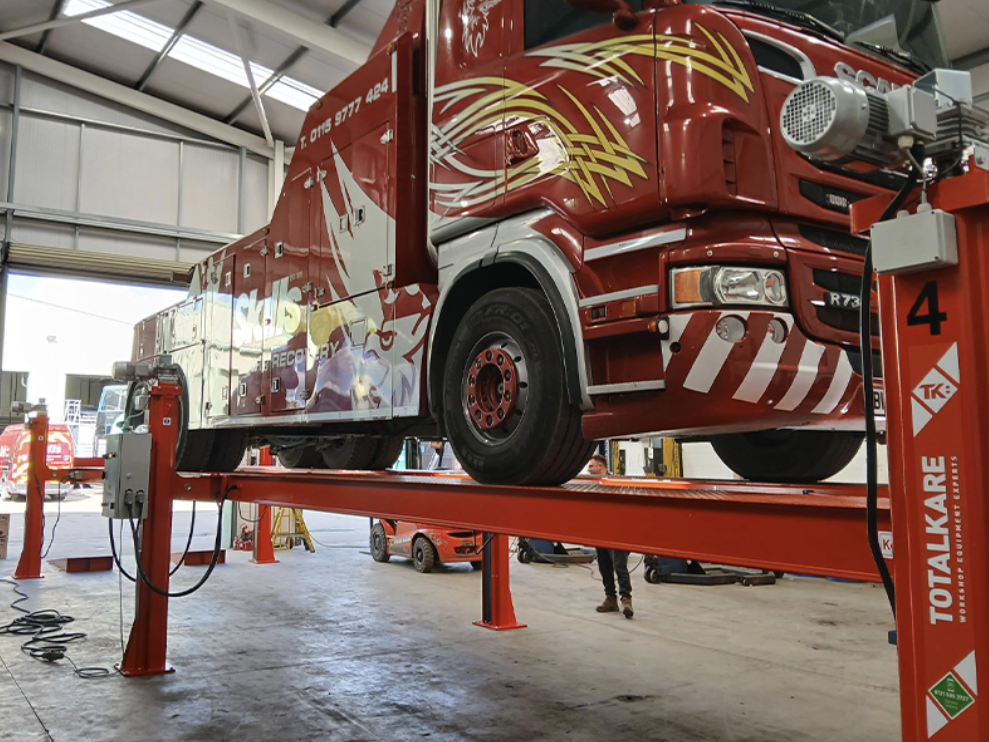
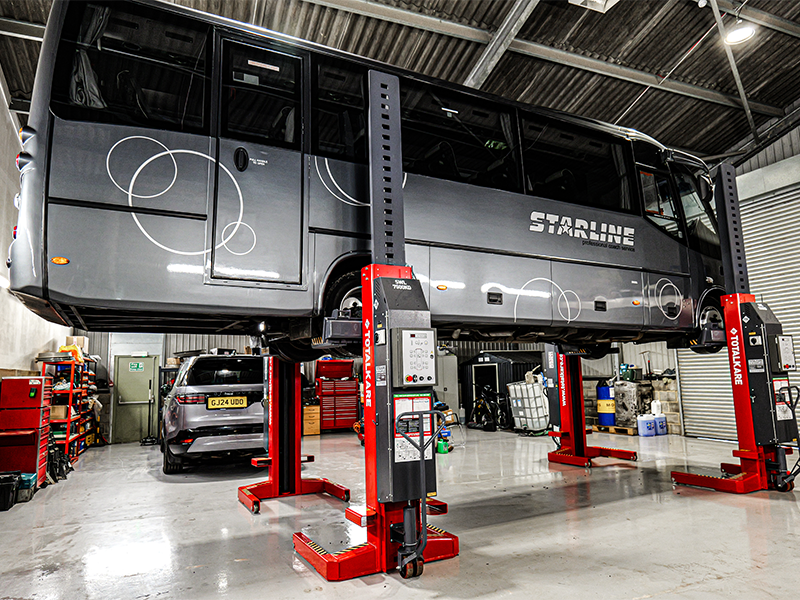
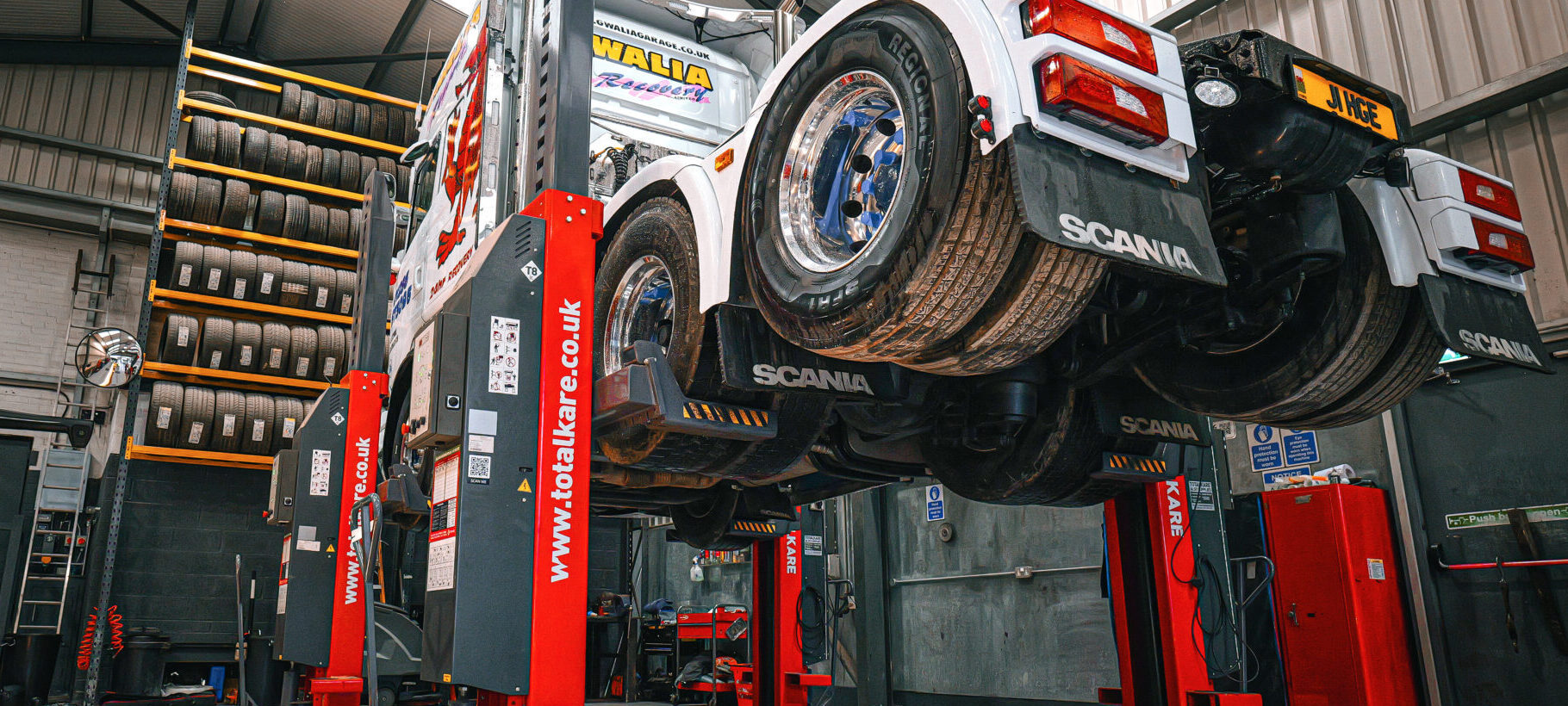
Because a mobile column lift system works with different sets of columns linked together (in groups of 4, 6, or 8), it’s a more versatile type of lift.
We’ve helped our customers use mobile column lifts to:
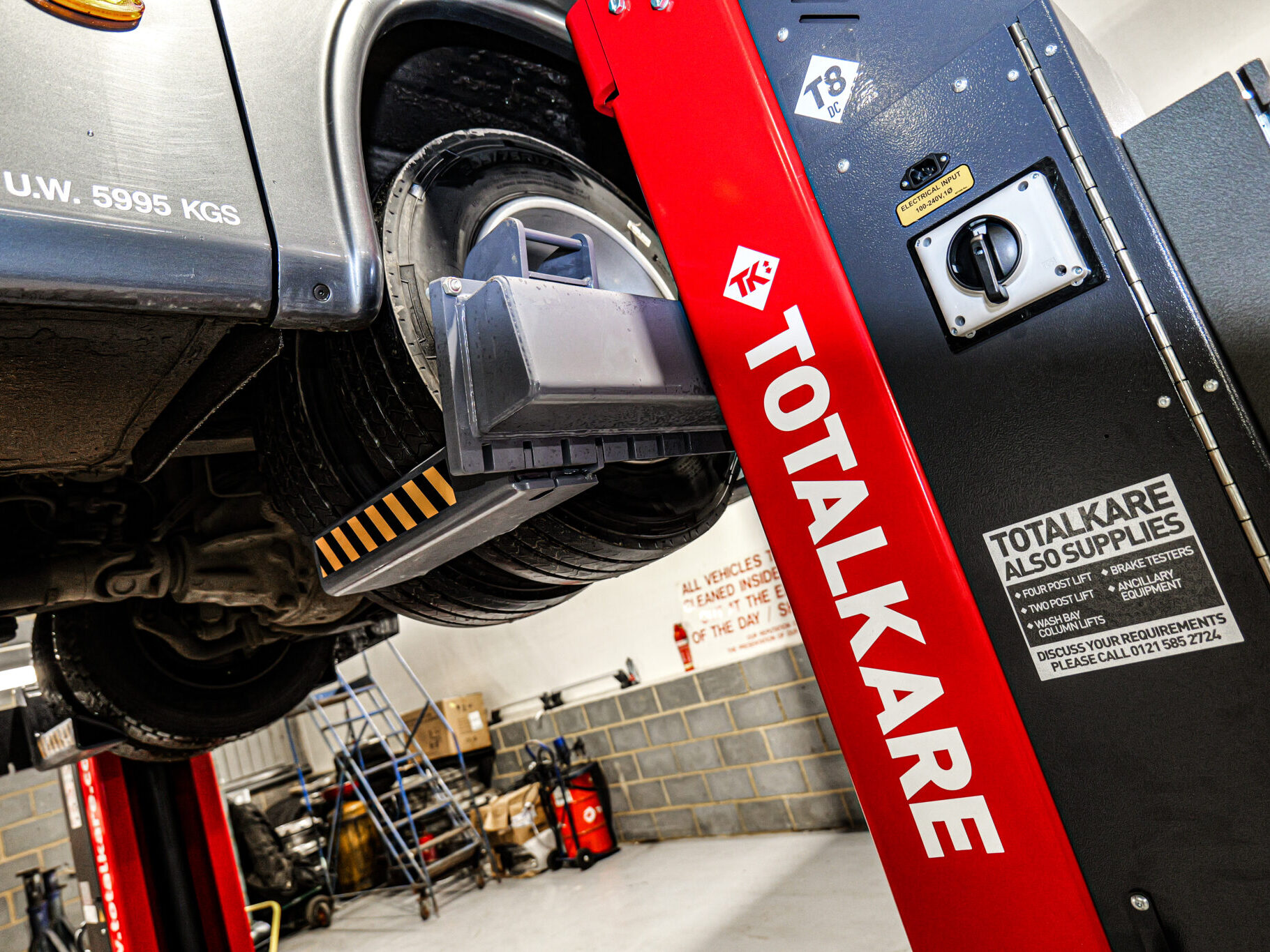
- Lift lorries, coaches, buses, and trucks
- Lift trailers with a special trailer beam
- Lift modular buildings (with a special adaptor for flat-bottomed loads)
- Lift forklifts (with a forklift ramp adaptor)
- Set up outdoor wash bays (with the G8AC Wash Bay Column Lift)
But as well as these different applications, a mobile column lift system can give you a different kind of versatility:
Because the columns can be grouped into separate sets, you’re able to split a mobile column lift into two fully functioning lifts.
If you’ve invested in a set of 8 columns, you’ve got the option to turn it into two smaller lifts (each with 4 columns). That means you can lift your longest and heaviest vehicles one day, and then switch to lifting two smaller vehicles the next day.
All of that comes from one investment — compared to paying for two installations if you used a separate fixed lift for each.
It Saves Space
With a mobile lift, you can make the most of your space, setting up new lifting stations where you weren’t able to before.
But it works the other way, too:
If your workload changes and there are times when don’t need to lift vehicles, a fixed-installation isn’t going anywhere. It’s still there, taking up dead space — space that could be put to better use.
With a mobile column lift system, you can take down your vehicle lift and pack it safely into storage. That means more space on the shop floor, more options for other workstations — and every square foot of your premises earning revenue like it should.
What’s the ROI of Mobile Lifts vs. Fixed Installations?
It’s a complex question without an easy answer: one that depends on a huge number of factors that are different for each workshop.
But we can say with certainty that a mobile column lift has features and uses with a direct positive benefit on your ROI — features that many fixed-installation lifts won’t have.
The ROI of your mobile column lift is affected by:
- The wide range of vehicles it can lift — saving you money on different types of lifts
- Avoiding groundworks or structural changes — lowering your investment against the revenue it creates
- Getting two lifts in one (splitting 8 columns into 4) — giving you more output without the extra investment
- The floorspace it can create or save — adding to your throughput without extra cost
This article was originally published by Totalkare.