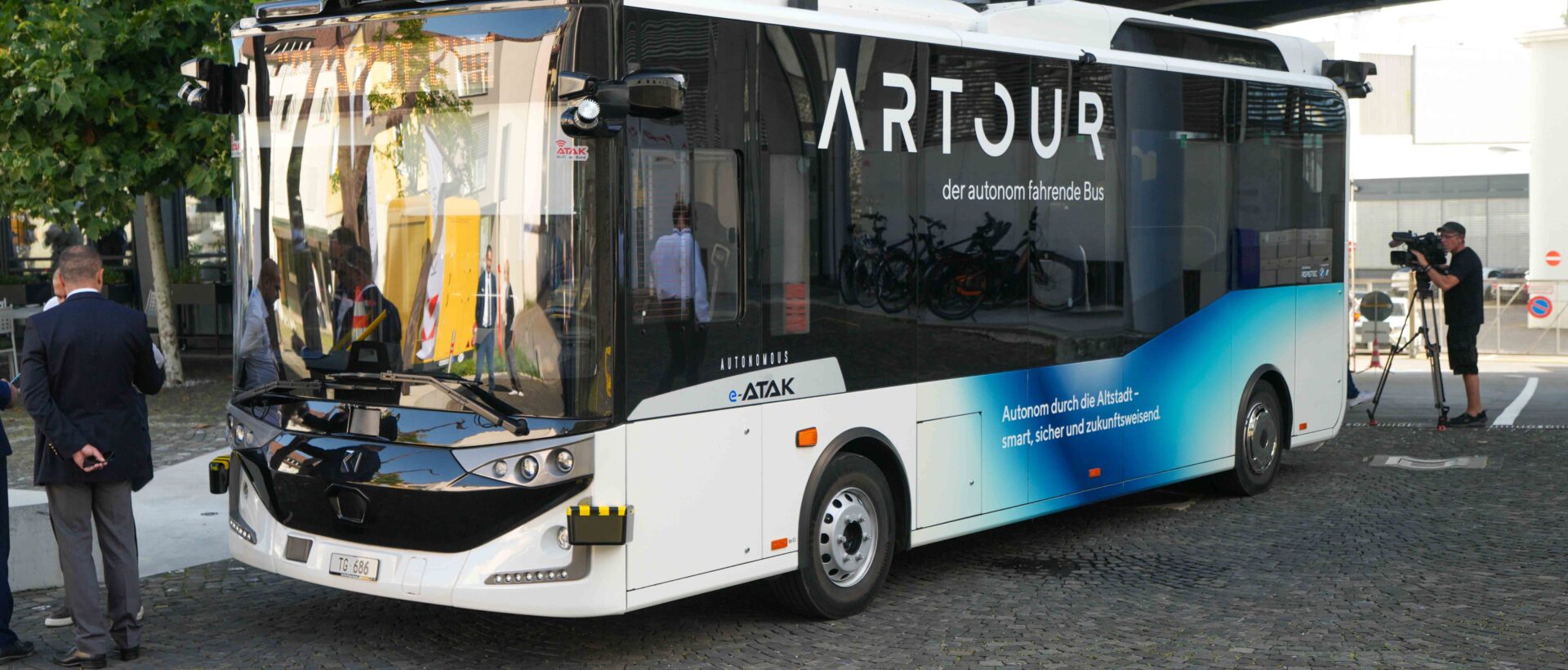
Karsan has officially implemented the first autonomous public transport vehicle in Germany, with its Autonomous e-ATAK unit now carrying registered passengers along two routes consisting of 11 stops in Burgdorf.
Having received testing approval from KBA (Kraftfahrt Bundesamt – Federal Motor Transport Authority), the vehicle was launched into the public space at a ceremony attended by a number of figureheads, including German Federal Minister of Transport Patrick Schnieder, Hannover Regional President Steffen Krach, Hannover Regional Vice President for Transport Ulf-Birger Franz, ÜSTRA Board members Elke van Zadel and Denise Hain, and Burgdorf Mayor Armin Pollehn.
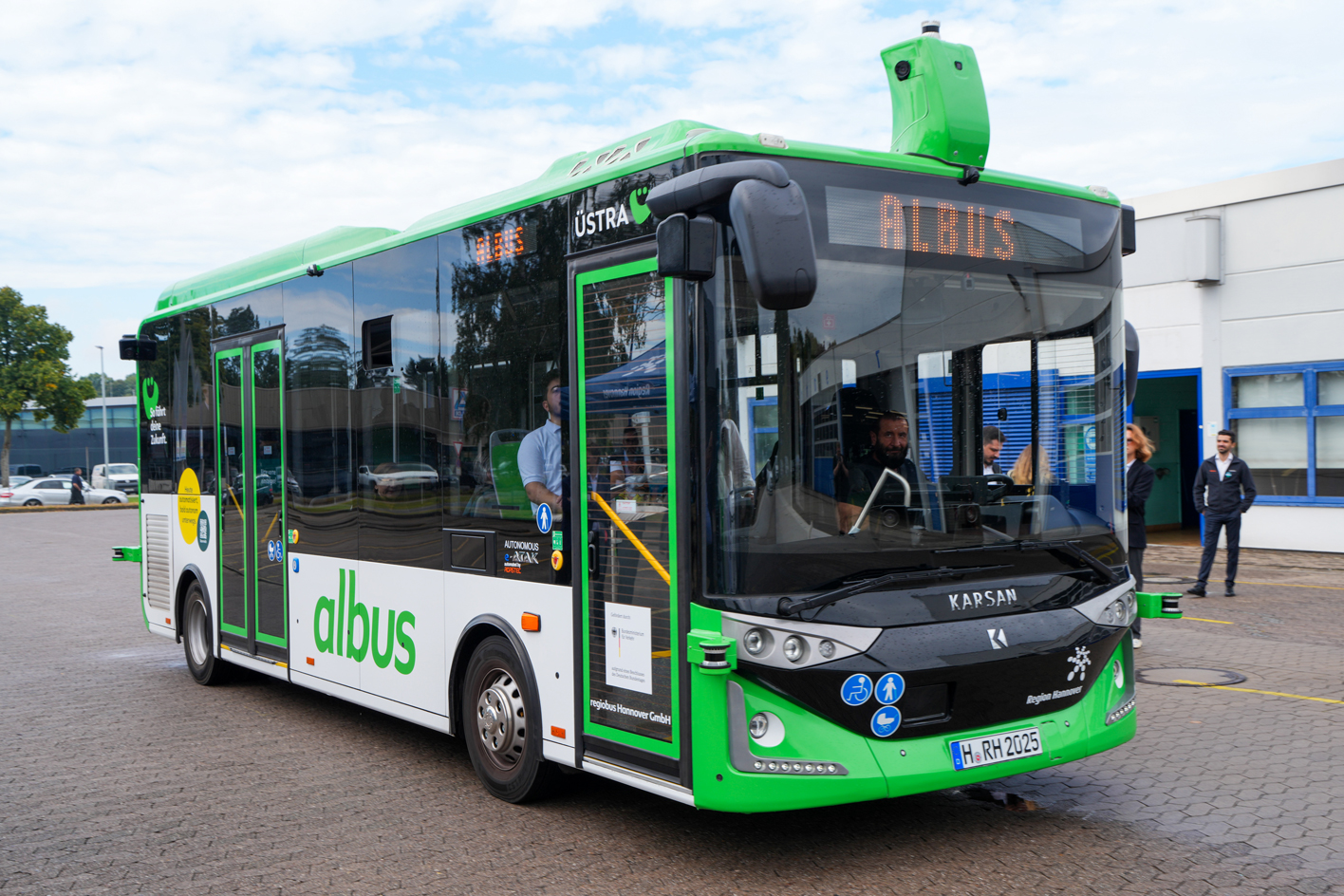
The unit was launched as part of the ALBUS project, which aims to integrate three fully automated (Level 4) electric buses for ongoing use in the regular public transportation system across the Hannover region.
Karsan CEO, Okan Baş, said:With Karsan Autonomous e-ATAK, we are not only achieving firsts; we are also steering the mobility transformation that is shaping the future of Europe. With the ALBUS project launched in Burgdorf, we are pioneering autonomous bus operations on public roads in Germany for the first time.
Following the Netherlands and Switzerland, this step, which is transforming public transportation in Germany, proves that autonomous technology is no longer a solution for the future, but for today.
Made possible in part by funding provided by the Federal Ministry of Transport (BMV), with the initiative valued at 3.7 million EUR.
Measuring in at 8-metres; the Karsan Autonomous e-ATAK unit, which was developed with ADASTEC’s Level 4 autonomous driving software, is a 100% electric vehicle offering a maximum speed of 40km/h for up to 22 seated passengers across a range of 300km.
Dr. Ali Peker, CEO of ADASTEC, said:Following years of successfully implementing our applications across Europe and the United States, we are proud to begin providing services on public roads in Germany.
This launch in Burgdorf, approved by the KBA, is an important step towards integrating autonomous driving into everyday life and reflects our commitment to building safer, cleaner, and more inclusive mobility.
The vehicle will stop at 11 different designated stops, pass through 10 traffic lights and traverse a number of intersections and pedestrian crossings along its trial routes through Burgdorf, and will operate as a supplement to the local 906 route service.
Each journey will see the presence of trained security personnel, with each service monitored and passengers requested to provide feedback via an online survey following the completion of their journey.
The trial is set to run until the start of 2026, and will offer services once per hour on an initial route including ZOB – Gartenstraße – Vor dem Celler Tor – Kleiner Brückendamm – Schwarzer-Herzog Intersection, while the second route will include the Südstadt extension, Geibelstraße – Niedersachsenring – Berliner Ring – Immenser Landstraße – Immenser Straße stops.