On 27 January, UK Parliament debated the state and future of British bus manufacturing, highlighting a growing paradox as demand for zero-emission buses surges and domestic production decreases.
Leading the debate, Euan Stainbank MP (Falkirk, Labour) noted that in 2025, 694 more zero-emission buses were registered in Britain than in 2024, marking a 38% increase in the number on the road in a single year. Yet alarmingly, there were 167 fewer buses built in the United Kingdom in the same period.
These numbers paint a stark picture: the demand exists, the workforce is ready, but domestic manufacturers are losing ground to foreign competitors.
Stainbank argued:When we need more zero emission buses, when operators and local authorities are buying more buses but there are fewer orders going to factories in Falkirk, Ballymena, Scarborough, Aldershot and across the country, we know there is a problem, and it did not start yesterday.
Jobs, Skills, and Local Economies
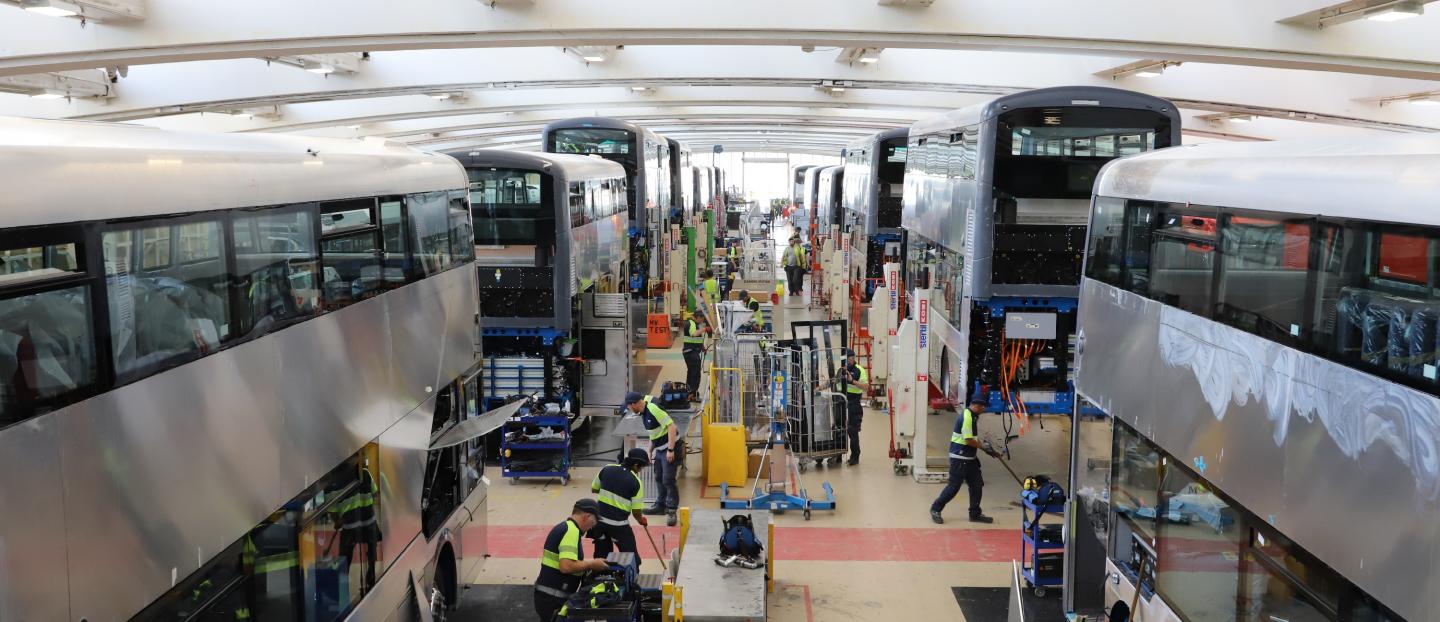
British bus manufacturers are key contributors to local communities and supply chains. Wrightbus, based in Ballymena, has grown from fewer than 50 employees in 2019 to over 2,000 today, demonstrating the potential for domestic growth. Meanwhile, Alexander Dennis, with plants in Falkirk, Larbert, and Scarborough, employs more than 4,000 people directly, while the broader supply chain supports over 13,000 additional jobs across the UK.
These roles are not only numerous but highly skilled. Bus manufacturing involves engineering, design, precision metalwork, electronics, and technologies like electric drivetrains and hydrogen systems. Kenneth Stevenson (Airdrie and Shotts, Labour), an engineer and former lecturer, emphasised the value of this expertise, noting that companies such as Alexander Dennis, Wrightbus and Mellor are critical for developing a “skills-based economy” that ensures long-term employment in industrial communities.
Yet, despite this skilled workforce and proven supply chains, domestic production is under pressure. John Milne (Horsham, LD) noted that just 17% of buses in the UK are manufactured domestically, with 83% coming from abroad. As such, grants, subsidies, and government-backed schemes promoting electric buses have often gone to overseas companies, and taxpayer funding is thus subsidising foreign manufacturing.
Stainbank observed:This is British taxpayers’ money going abroad to subsidise manufacturing in other countries. We are talking about billions of pounds, so it is really important that we look at the issue.
With British businesses able to fulfil the contracts awarded abroad, this issue highlights the underutilisation of the British industry, and points fault at the procurement process. Specifically, the debate stressed a need to place higher emphasis on the “social value” weighting when procuring new buses, which has historically accounted for just 5%. Mayoral authorities have now agreed to increase this to 10%, with recommendations for a higher, more meaningful metric of 30% still under discussion. This is intended to encourage contracts that prioritise domestic jobs, skills, and local economic benefits.
National Security and Sustainability
Alongside the need to support the British economy, the debate also highlighted the issue of national security. With reports of “kill switches” found in Chinese-made buses, concerns were raised about potential remote control of vehicles by foreign entities.
However, in response, Parliamentary Under-Secretary of State for Transport Simon Lightwood downplayed the “alarmist” framing, affirming that “remote updates and software controls are standard across modern vehicles.” He acknowledged the government’s focus on cybersecurity and adherence to UN regulations to safeguard passenger safety and operational integrity.
Less easy to dismiss is the environmental case for UK bus manufacturing. Alison Taylor (Paisley and Renfrewshire North) emphasised that domestic production would reduce the carbon footprint associated with importing buses from China or Europe, while supporting local economies.
Taylor said:Transporting large goods from as far away as China obviously has a detrimental environmental impact. Britain should be at the heart of manufacturing electric buses for our own use, driving forward the green transition to halt climate change. In my constituency, which covers part of Glasgow, improving air quality has undoubted health benefits. Driving change does not happen by accident; it needs a strategy, a plan, hard work and investment.
Taken together, these concerns underline that the debate over bus manufacturing is not solely an economic one. While ministers are right to caution against alarmism, MPs were equally clear that procurement decisions carry wider consequences, affecting national resilience, environmental impact, and public trust in critical transport infrastructure. Importing large numbers of buses from overseas raises legitimate questions about supply chain dependence, carbon emissions, and the long-term sustainability of Britain’s transition to zero-emission transport.
Government Action
Notably, some nations have requirements such as “Buy American” when using federal funding, ensuring public investment supports domestic manufacturing. The UK, however, is constrained by international trade obligations and subsidy control rules, which limit the ability to mandate that government-funded purchases are made solely from domestic suppliers. This limitation was acknowledged directly by Simon Lightwood.
Simon Lightwood said:Although I cannot mandate the purchase of British-built buses due to the Subsidy Control Act and our international trade commitments, we can do more to help UK-based suppliers compete.
Consequently, rather than a strict domestic-only rule, the UK relies on “social value” weighting within procurement, encouraging authorities to account for factors such as local jobs, training, apprenticeships, and wider economic benefit. Historically, this weighting has been low, prompting MPs such as Euan Stainbank to argue that increasing it to 30% would represent a meaningful intervention capable of shifting outcomes in favour of British manufacturers.
It is within these constraints that the stakes of the debate become clear. The discussion revealed cross-party recognition that UK bus manufacturing is at a critical juncture. With growing global demand for zero-emission buses, the UK has an opportunity to lead. Yet unless government policy aligns with industrial capability, the nation risks ceding this ground to foreign manufacturers.
Simon Lightwood asserted:Today’s debate has shown what Parliament does at its best: coming together across parties to stand up for British industry, British workers and British ingenuity. Let me close with this message: this Government are absolutely committed to ensuring the long-term success of the UK bus manufacturing sector. We know how important the sector is to communities, from Falkirk to Ballymena and far beyond, and the pride that British manufacturers feel when they see their buses on our roads. With the right support, the UK can remain at the forefront of bus manufacturing for decades to come.