Rheinbahn has opened a new e-bus port at its depot in Düsseldorf-Heerdt.
The new 5,500 metre-squared facility in Heerdt will enable the deployment of 60 battery-electric buses within the local area.
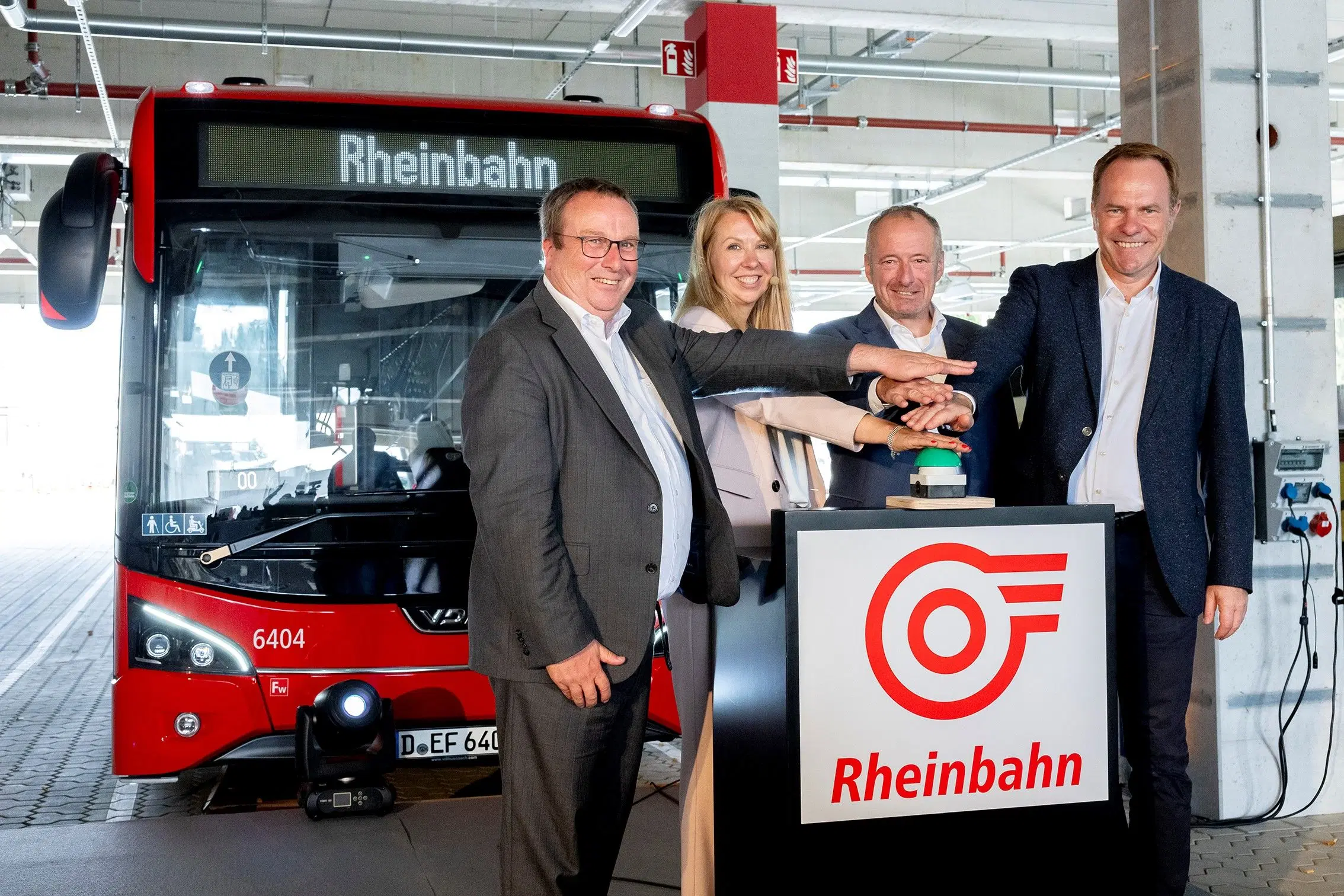
Development of the port, which is divided into two storage halls and a cleaning and maintenance hall, has been valued at roughly 24 million EUR.
Each of the two storage halls is capable of both housing & charging up to 30 battery-electric buses, with an upper floor housing transformers, medium- and low-voltage technology, fire alarm systems, a photovoltaic system and the building control system itself.
The facility’s photovoltaic roof is made up of 501 solar modules and generates around 195 megawatt hours of electricity annually.
The new e-bus port replaces the original storage and washing hall previously destroyed in a fire in 2021.
Annette Grabbe, CEO of Rheinbahn, said:With the new e-bus port, we now have the first depot in Heerdt that is consistently designed for e-mobility. This infrastructure gives us the flexibility and efficiency we need to reliably deploy our battery-powered buses in scheduled service. This means we are taking responsibility and taking a decisive step further on the path to climate neutrality. Sustainable and functional mobility is key to the high quality of life in Düsseldorf and the region.
It's a major undertaking – and that's why the completion of this e-bus port is not the end of it. It's a milestone on the path to emission-free and quiet mobility. Our passengers, the city, and the region will benefit from this.
Charing at the site involves the extension of a small pantograph on the roof of each bus, which then connects to a charging hood in the ceiling of the bus port itself, eliminating the need for hanging cables or any other devices in the bus port. The method allows for instantaneous and hands-free connection, with Rehainbahn also having developed a new load and charging management system that distributes power to individual buses on a priority basis.
Funding for the e-bus port comes from the city of Düsseldorf, the state of North Rhine-Westphalia, and the Rhine-Ruhr Transport Association (VRR), who together are funding the area’s transition to electric vehicles.
Thus far, the state of North Rhine-Westphalia has provided a total of 592.25 million EUR for the procurement of electric buses, as well as the necessary charging and workshop infrastructure.
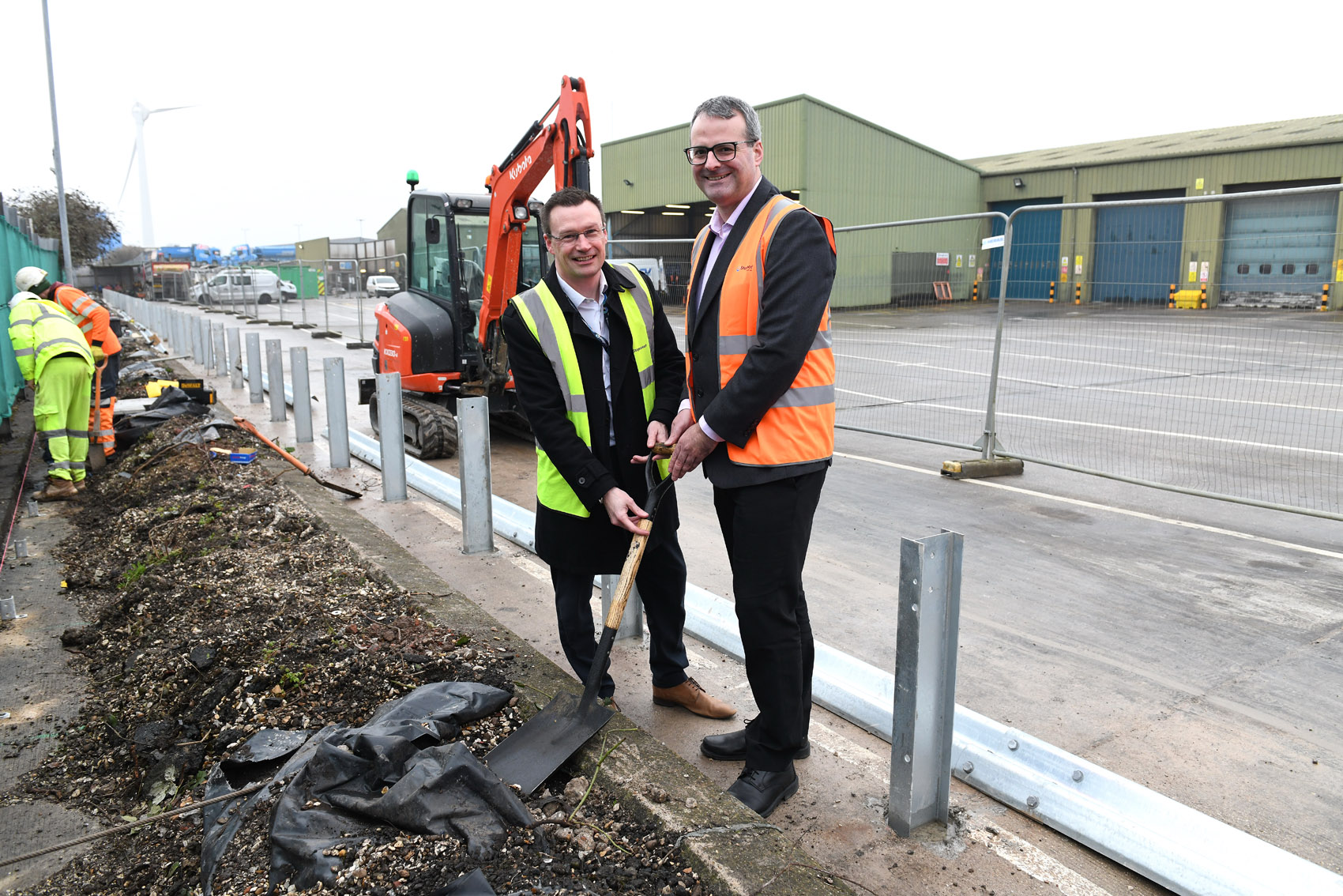
Transport Minister Oliver Krischer said:We were also happy to support this pioneering project. The new e-bus port will not only make public transport in the state capital future-proof, but it is also an important building block for the transport transition and for achieving climate protection goals throughout North Rhine-Westphalia.
Planning for the port took 18 months, with construction taking place over the course of around two years. The site houses over 10,450 metres of cable, and provides three 300-kilowatt fast chargers, with the remaining charging ports providing 150-kilowatts of power per space.