Security on Europe’s bus and coach networks has become a critical priority, requiring a coordinated approach to protect services from potential terrorism threats.
At the Busworld Europe Conference, representatives from transport operators, international associations, and law enforcement came together to explore how public transport can effectively prevent, detect, and respond to such risks.

Jan Politiek of Arriva Netherlands and Lisa Marie Cole of Transport for London (TfL) led the discussion, acknowledging that the openness and accessibility of bus and coach services could make them potential targets. They stressed that strong security measures are therefore essential to maintain both passenger safety and operational resilience.
Human Awareness
While new technologies are providing powerful tools to deter and detect threats, participants emphasised that security likewise depends on human awareness and close collaboration between operators, authorities, and passengers.
One initiative that places human awareness at the forefront is UITP’s Safe Bus Project. At Busworld, Carmela Canonico, Senior Manager for Safety and Security at UITP, provided an overview of the EU-funded initiative, which collected best practices across five countries to strengthen bus security.

The project has produced handbooks tailored for drivers and managers, covering areas such as planning, training, physical protection, cyber threats, and cooperation with authorities.
For drivers, the guidance focuses on recognising unusual behaviour and circumstances, using simple concepts such as identifying what is ‘not typical’ for a time, place, or route. Meanwhile, the managers’ training material addresses issues such as depot security, cyber resilience, and business continuity. The materials are available online, with translations in several languages, and supported by e-learning modules.
Technology
Alongside human vigilance, the session explored how technology is reshaping the security landscape. Tiffany Groeneveld, Security Manager at HTM Personenvervoer, highlighted that AI systems are already being piloted to detect weapons, abandoned items and suspicious behaviour on buses and coaches. However, Groeneveld warned that privacy legislation currently limits how these tools can be deployed, presenting a noteworthy challenge in realising their full potential. This tension—between technological capability and legal or societal acceptance—remains a key barrier to implementation.
Cybersecurity emerged as another critical theme, reflecting the rapid digitalisation of fleets and the adoption of electric buses. Canonico cautioned that greater connectivity inevitably creates new vulnerabilities, which could be exploited if robust defences are not in place. However, she also stressed that the same digital systems bring an important advantage: by integrating data from sources such as CCTV, ticketing, and even social media, operators can gain far richer situational awareness and make faster, more informed decisions in response to threats.
The discussion underscored that technology alone is not a solution. AI may detect anomalies, but it cannot effectively act on them without a human response. Moreover, public trust in AI will hinge on how operators frame the use of such tools and address concerns. As Canonico argued, acceptance will be as much about human understanding as it is about technical performance.
Delegates were also reminded that security is not just about the digital realm. Fred Teeven, Chair of KNV and former Dutch Secretary of State for Safety & Justice, argued that physical protections—such as barriers to stop hijacked vehicles from breaching secure sites—remain just as essential as cyber defences in a layered approach to risk.
Partnerships and Collaboration
When implementing human and technological solutions, partnerships and collaborations are vital, both domestically and internationally. During the discussion, Tom Torensma, a Dutch Police Inspector, examined this challenge in relation to cross-border crime, while Werner Vandenbergh of De Lijn, discussed public transport operations specific to Belgium. Both highlighted the challenges of coordinating between operators and police across multiple jurisdictions.
Vandenbergh explained that while operators in Belgium maintain strong cooperation with each other, structured, formal frameworks with the police can be limited. He noted that cooperation often improves during crises but is less sustained afterwards.
Beyond Belgium, Torensma described the need to create a coordinated, EU-wide approach to help staff consistently recognise and respond to criminal behaviour across borders.
Both speakers pointed to technical solutions used in coach services that could be adapted for buses, such as onboard camera systems and driver alert buttons linked directly to operations centres. However, they agreed that technology only works when combined with clear reporting procedures and cooperation between drivers, operators and police. A recurring theme was thus the need for closer exchange of information between public authorities and private operators, including across borders.

Driver Relations
The speakers stressed that drivers must be treated as key partners in this mission. Operators were thus urged to take drivers seriously by listening to their observations and experiences. Theo Signer, Station Manager at FlixBus, noted that high volumes of paper training and e-learning are seen as chores by drivers, who are thus not fully engaged. He therefore advocated for embedding training into daily operations or conducting scenario-based games that allow staff to rehearse their responses to real threats.
What’s more, the discussion highlighted that training alone is not enough; leadership plays a decisive role in creating a responsible culture. Cato Holter, Emergency and Safety Manager at Ruter in Oslo, stressed that visible commitment from senior management sets the tone, and involving security experts early is crucial. If management is overconfident that they are prepared, they risk only being reactive.
Equally important is acknowledging the reality of risk. Michal Cieslik, Chief Security Officer at Wiener Linien in Vienna, urged operators to confront potential threats openly rather than downplay them to avoid anxiety. At the same time, he cautioned against overemphasising danger, as too much fear can drive staff away from the profession. Instead, it is necessary to find a balance to cultivate vigilance and preparedness without creating unnecessary alarm.
Key Challenges Ahead
When considering the most significant challenges ahead, Canonico cited the fragmentation of responsibility between operators and authorities. Groeneveld pointed to unresolved questions about how privacy rules interact with security technology, while Torensma stressed the need to ensure staff across Europe share a common awareness of suspicious behaviour and know how to respond. Vandenbergh raised concerns about recruitment, noting that privacy restrictions prevent vetting of new hires, even though transport workers play a central role in public life.
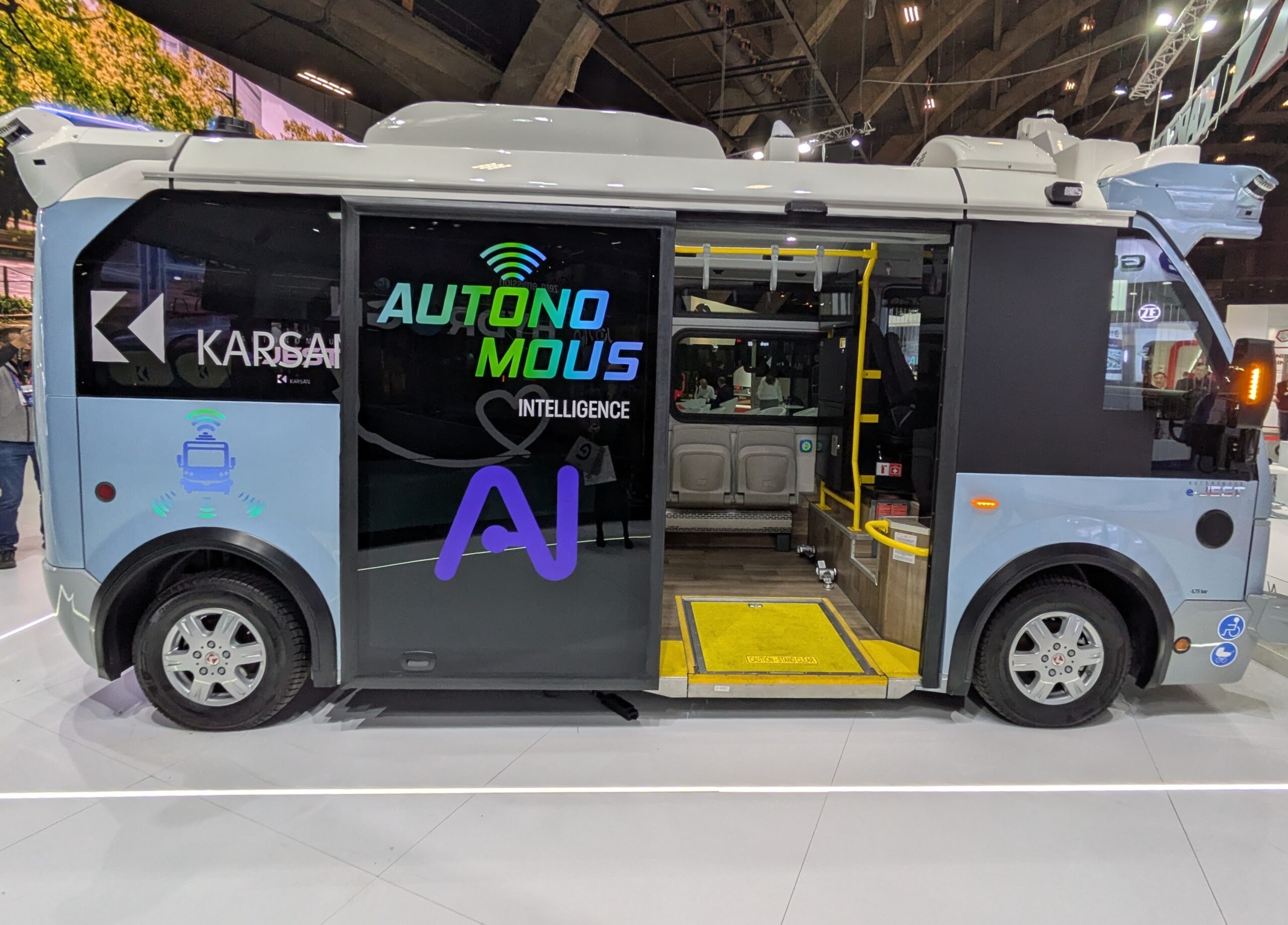
The discussion also considered the future impact of autonomous driving. Canonico warned that connected and automated mobility will create new risks, particularly around the safety of vulnerable passengers. Both she and Torensma emphasised the need for security strategies specific to autonomous buses before deployment expands further.
Overall, the debate underlined that securing Europe’s bus and coach networks requires both technical innovation and strong human factors. While AI, cameras and connected data systems can support detection and response, training, awareness, and cooperation between operators, authorities, and law enforcement remain central.
In hosting such a vital discussion at Busworld Europe, the event highlighted that bus and coach networks are taking potential threats seriously, combining innovation with human vigilance, and demonstrating a proactive and prepared approach to keeping passengers and communities safe.