Every month an electric bus depot runs without a charge management system (CMS), it pays for unmanaged power peaks, relies on staff to catch charging problems by hand, and uses up grid headroom it will need as the fleet grows. Operators who implement a charge management system early cut charging costs from the next billing period and keep their depots ready to scale.
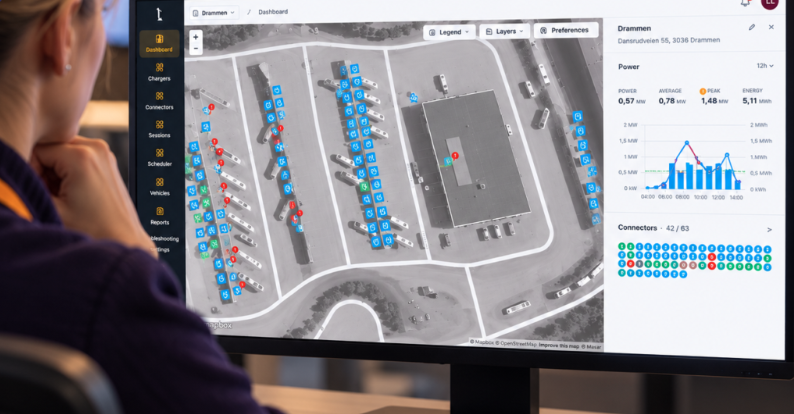
Tenix has run charge operations in live depots since 2018. Today more than 2,000 electric buses across 170 depots in six European countries charge through the Tenix Charge Operations Management Platform. The pattern we see is consistent: the cost of waiting builds up, and most of it cannot be recovered later.
What Does Waiting for a CMS Cost an Electric Bus Depot?
The largest cost is energy. Without active management, buses start charging as soon as they plug in, so demand peaks when the fleet returns to the depot. Where the tariff includes a demand charge, the highest power draw in the billing period sets it. Break the power cap for one hour in January, and that month’s saving goes to near zero.
Managed charging spreads the load across the charging window and shifts it to cheaper hours, while every bus still reaches the charge its next duty needs. This is what peak shaving does in practice. We looked at two depots to show the effect:
Each month without that control is a month of savings the depot cannot claim back.
Why Does the Depot Grid Connection Make Timing Urgent?
Most depots will add buses faster than they can add grid capacity. Under the EU Clean Vehicles Directive, member states must procure between 33% and 65% clean buses from 2026 to 2030, depending on the country, and at least half of that share must be zero-emission. Grid reinforcement moves far more slowly: the European Commission’s grid action plan notes that permits for grid reinforcements take four to ten years.
A CMS lets the existing connection carry more buses. It keeps total demand within the cap and charges each bus to what its next duty needs, so the depot stops paying for headroom it does not use. Seasonal load matters too. Heating and cold batteries lift the peak in winter, so size the cap for February and reduce the peak at all other times. Operators that learn their real load profile early make better decisions on when to upgrade the connection, and whether they need to.
How Does Waiting Affect Depot Teams?
Without a CMS, people fill the gaps. Staff check chargers through the charging window, move plugs by hand and re-plan when a bus arrives late. Offline chargers are the normal state in any depot, and the timetable changes every day, so a fixed charging plan is wrong by evening unless it follows the schedule.
Tenix Charge builds the charging plan from the departure schedule and adjusts it as vehicles, chargers and duties change. Tenix Charge will ensure that no charging failure goes unalerted, through charging alerts and notifications, so depot teams act on exceptions and spend their time on other work. The outcome it protects is zero missed routes.
What Happens When Every Depot Runs Its Own System?
Growth often brings a second depot, a second charger brand or a second vehicle supplier, each with its own software. Each depot then runs on its own, and coordinating across depots or countries, sharing standards and reporting to leadership all become manual work.
A brand-independent CMS works with any charger, vehicle or fleet management system and gives one view across every depot. Charging plans can follow a bus that starts its day in one depot and charges in another.
How Does Charging Data Affect Tender Competitiveness?
Public transport contracts are won on cost and reliability. Operators that run managed charging know their real energy cost per bus, their peak profile and their readiness record. That data lets them price a bid with confidence and commit to service levels they can meet. Operators who wait bid with estimates.
Can You Add a CMS to an Existing Turnkey or Charger Contract?
Yes. A CMS sits on top of existing infrastructure. Tenix connects to chargers over OCPP, the open protocol used across depot chargers, so existing chargers are repointed to Tenix and keep working. Operators in turnkey contracts can add charge management now. Read how a switch works in practice in Go Live With a New Charge Management System in 24 Hours.
Where Should Operators Start?
Optimisation first, flexibility second. Each step builds on the one before:
- Gain visibility and control of charger status and vehicle state of charge (SoC).
- Minimise demand charges by balancing loads and keeping peaks within depot limits.
- Lower charging costs by charging when power is cheapest, with every bus ready for departure.
- Protect battery health by stopping at the optimal SoC for each route.
- Monetise your depot through depot sharing, demand response and flexibility trading.
The first three steps pay back fastest, and they create the data and control that the last two depend on. For more on day-to-day operations, see our guide to managing electric bus charging operations and our guide to charging with limited grid capacity. For the tariff mechanics, read How to reduce peak demand charges for EV fleets.
See what managed charging could mean for your depot. Download The Business Case for CMS eBook, or send your questions to [email protected].
This article was originally published by Tenix.