Myth: Investing in more ticket machines shows fiscal responsibility.
Truth: Machines drain budgets.
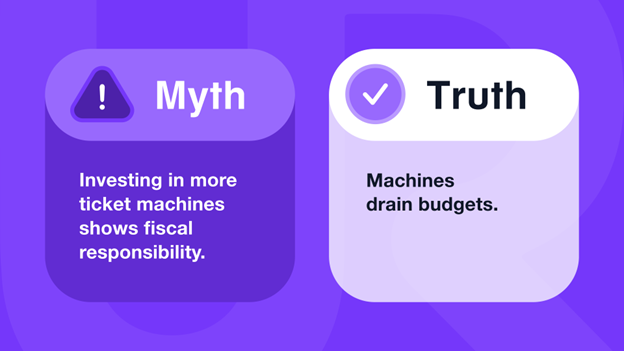
Each ticket vending machine can cost $25,000–$75,000 upfront, plus $3,000–$5,000 annually in maintenance. CFOs are better served by shifting to SaaS-based digital platforms that reduce capital exposure and deliver predictable operating costs.
Myth: Legacy fare systems are cheaper once they’re installed.
Truth: They become financial liabilities.
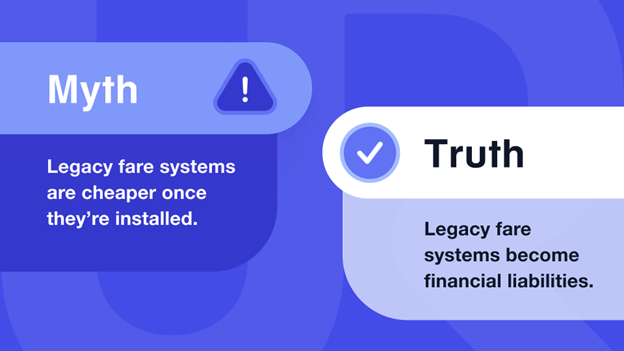
Hardware-heavy systems create a “technology debt.” Beyond depreciation, they require upgrades every 7–10 years, with major reinvestments that drain capital budgets. SaaS solutions stay current through continuous updates without massive reinvestment cycles.
Myth: Cash is still the most reliable way to collect fares.
Truth: Cash costs more than you think.
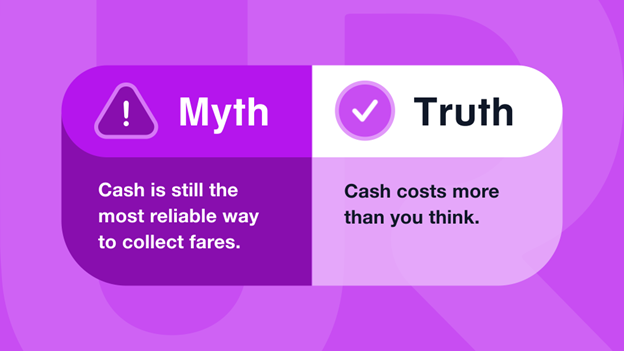
Cash handling eats up 10–15% of fare revenue when you include collection, counting, and security. Digital-first models cut transaction costs down to less than $0.10 per ride, compared to $0.30–$0.50 for cash or legacy smart cards.
Myth: Fare collection is a sunk cost, not a revenue driver.
Truth: It can become a revenue engine.
Modern account-based systems enable fare capping, dynamic pricing, retail partnerships, and fraud reduction. Instead of a cost center, fare systems become revenue engines that increase yield and protect income.
Myth: Sticking with the current vendor reduces risk.
Truth: Vendor lock-in is the bigger risk.
Legacy systems often mean vendor lock-in, expensive upgrades, and limited flexibility. Modular SaaS platforms offer scalability, compliance, and vendor independence, lowering long-term financial exposure.
Myth: Moving to digital fare systems only benefits operations.
Truth: The biggest wins are financial.
For CFOs, the biggest wins are financial. Key KPIs like Farebox Recovery Ratio, Cost per Transaction, ROIC, and Working Capital Flexibility all improve when agencies move away from hardware-heavy systems toward SaaS-based platforms.
This article was originally published by UbiRider.