The Škoda Group has officially presented the first two new battery-powered trolleybuses for operation in Esslingen, Germany.
Presented alongside representatives of the city of Esslingen am Neckar (Germany, Baden-Württemberg) and the Städtischer Verkehrsbetrieb Esslingen am Neckar (SVE); the handover marks the start of an order for the supply of 52 modern vehicles, which in turn forms part of a project to completely transition all urban transport within the city to electric and zero-emission alternatives by 2027.
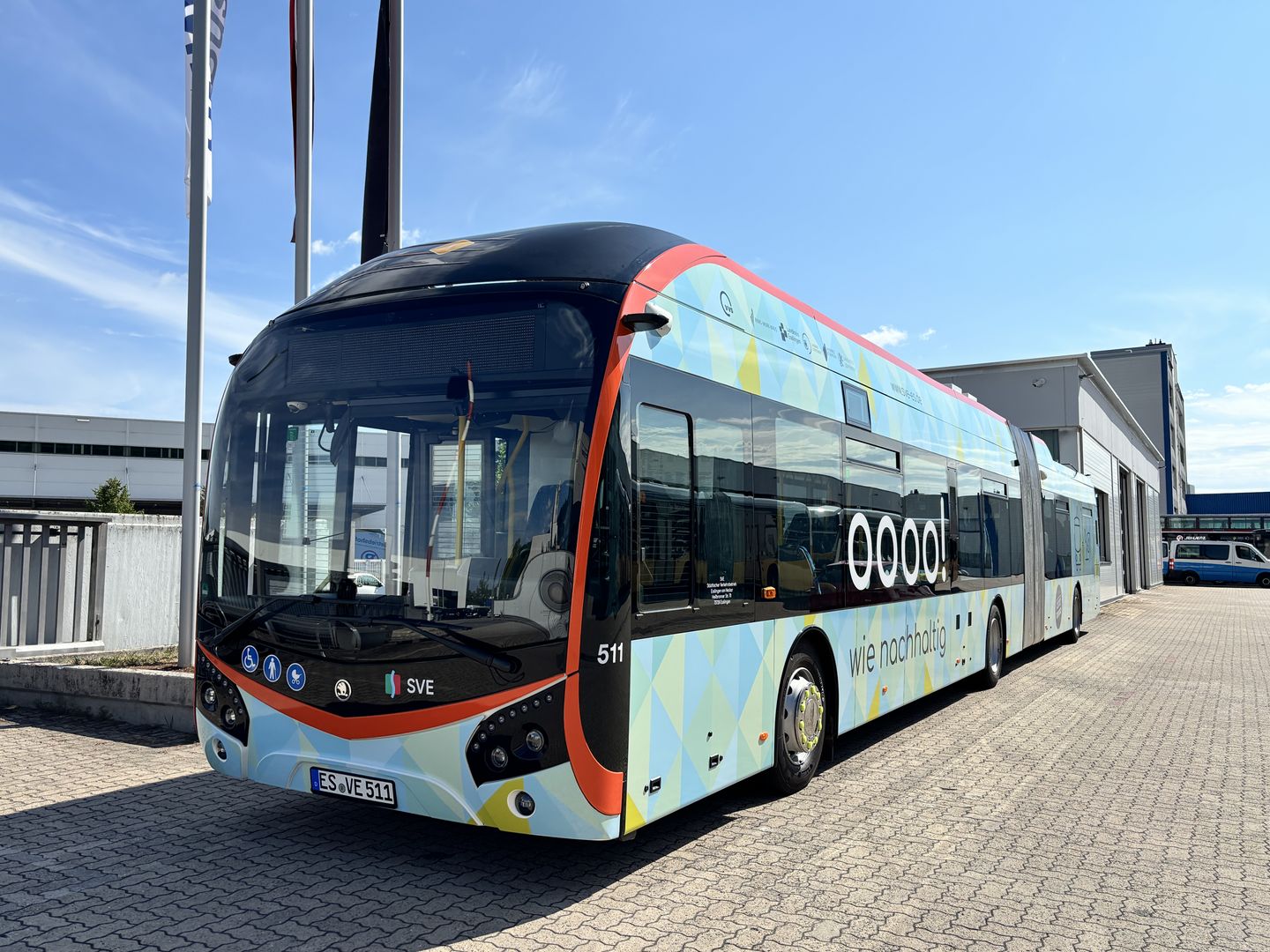
The contract, which will see Škoda supply a set of ten 12-metre-long 32Tr trolleybuses and forty-two 18-metre-long 33 Tr trolleybuses, also includes an option for Škoda to supply nine additional vehicles – all of which combine catenary operation with the ability to drive on traction outside their intended infrastructure for up to 25 km.
With deliveries set to take place gradually across the remainder of 2026, the vehicles are hoped to enable the city to develop a fully electric transport system – even where trolleybus infrastructure is not yet available.
Karel Majer, Chairman of the Board of Directors of Škoda Electric in the Škoda Group, said:The introduction of the first trolleybuses for Esslingen is an important milestone for us and confirmation that the project is progressing according to plan.
We are proud to be a partner of the city of Esslingen in the implementation of one of the most advanced emission-free urban transport concepts in Germany. The new battery trolleybuses combine proven electric traction technology with the flexibility of operation off-line and will offer passengers modern, reliable and comfortable transport
Developed to meet Esslingen’s needs; the trolleybuses supplied to SVE offer barrier-free boarding, modern information systems and Wi-Fi connection capabilities. All 12-metre-long 32Tr vehicles will be delivered in two-door variants, whilst all 18-metre-long 33Tr vehicles will be supplied with three doors.
Additionally, each unit will include an electric ramp for passengers with strollers or wheelchairs, modern diagnostics and energy recuperation technology, which allows for braking energy to be returned to the vehicle’s battery, contributing to higher energy efficiency during operation.
Finally, the delivery includes complete service support, which will aim to ensure long-term operational reliability of the vehicles, as well as support for the carrier once all buses enter regular operation.