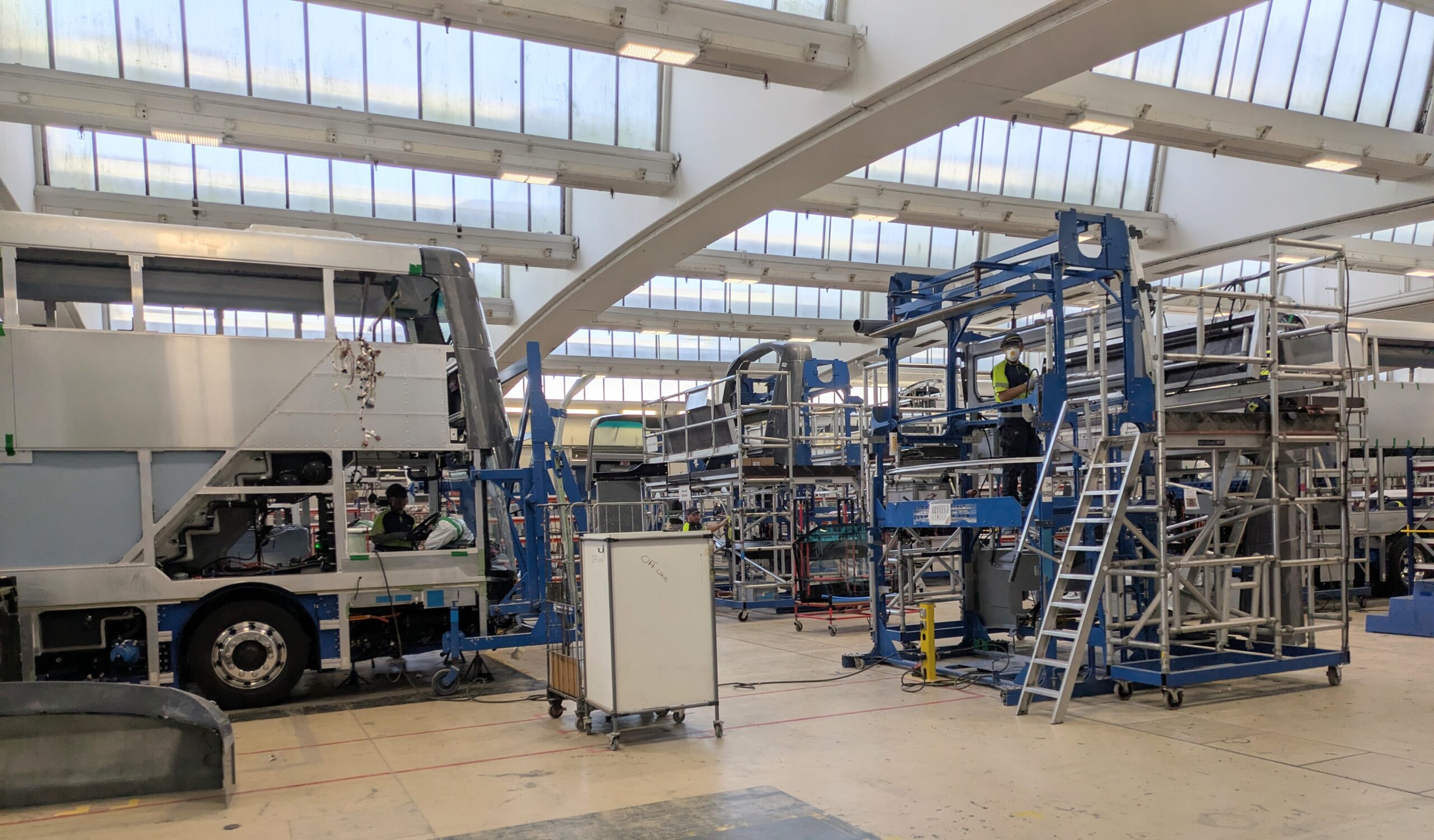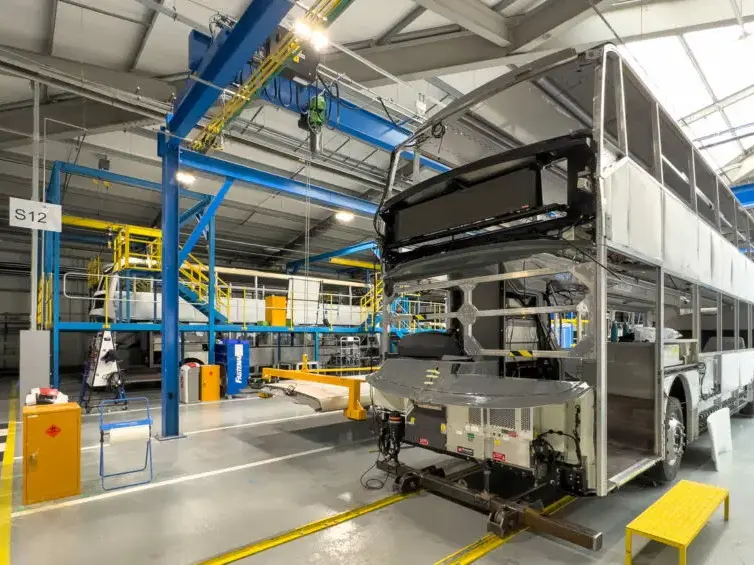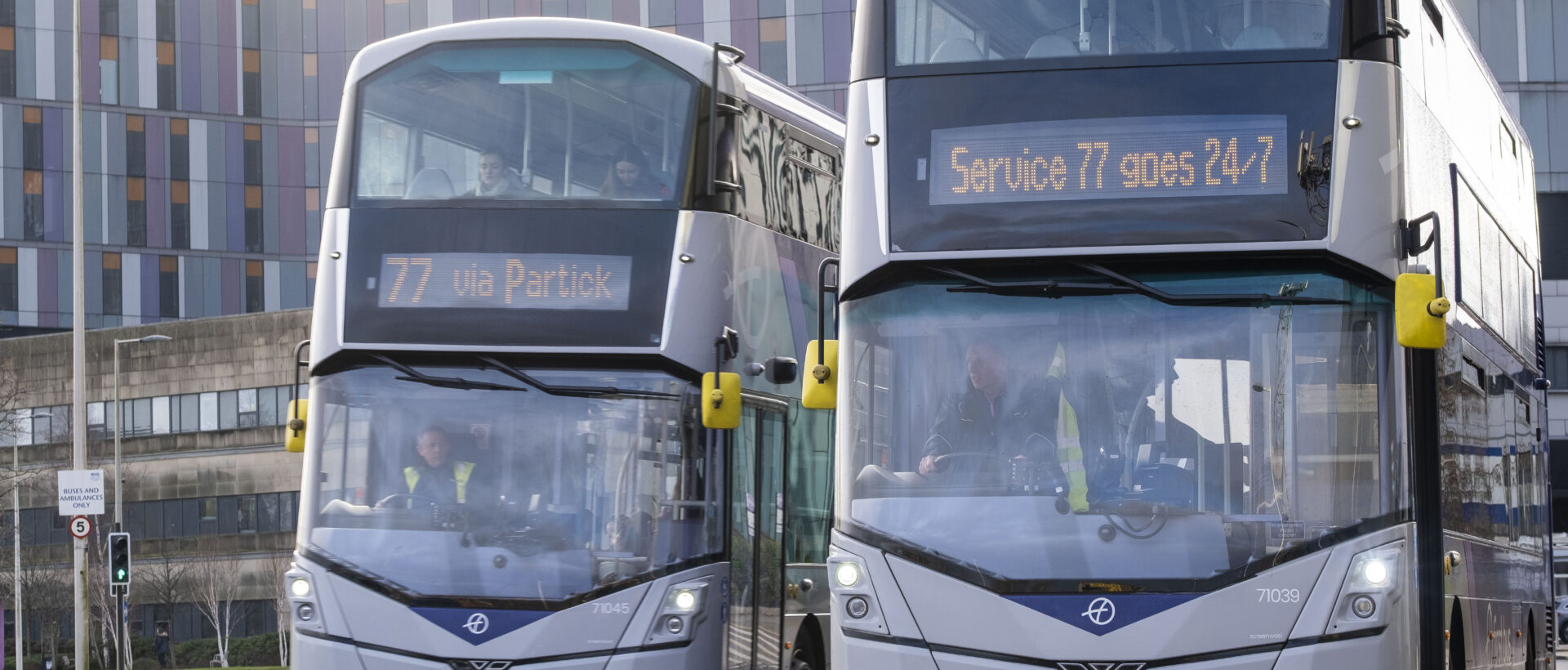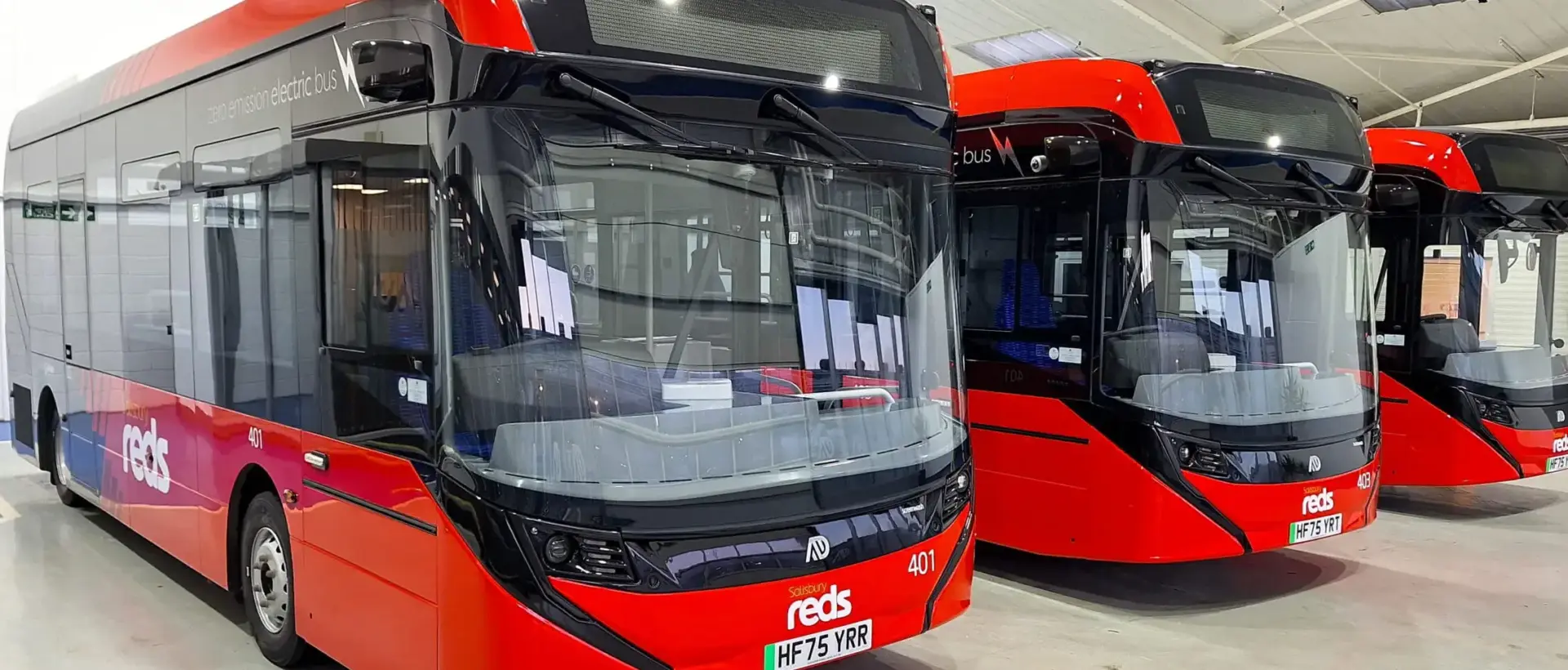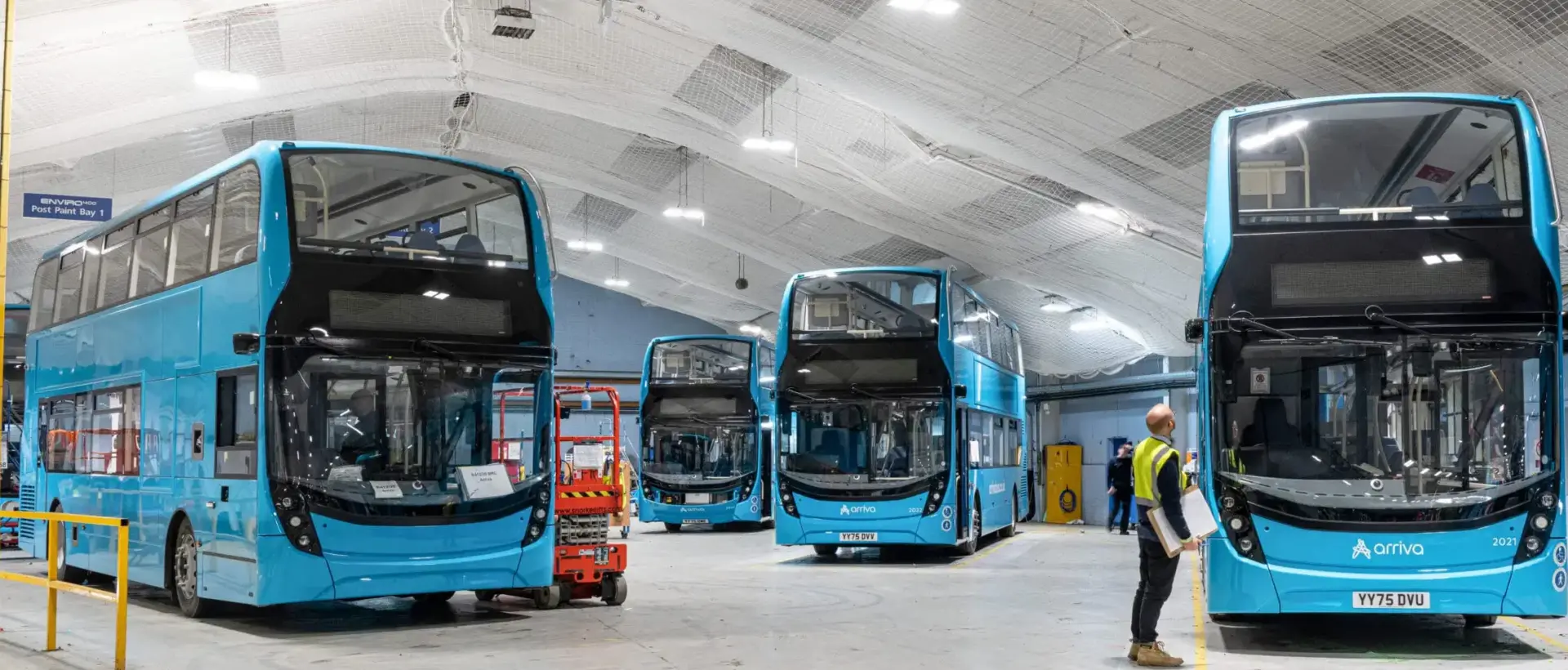
Yesterday, Alexander Dennis announced that it has begun consultations on a major shift in its bus manufacturing strategy in Scotland. The proposals include closing its long-standing Falkirk factory and ending the production of complete buses. Under the new approach, its Larbert facility would be converted to focus on chassis manufacturing, supporting the company’s growing range of low- and zero-emission vehicles.
These plans put 115 skilled manufacturing jobs at risk, but aim to safeguard around 200 manufacturing and support jobs previously at risk of redundancy. In addition to these jobs, the loss will also be felt throughout the supply chain. Unite the Union has noted that every job in bus manufacturing multiplies to three to four jobs in the wider supply chain and support services.
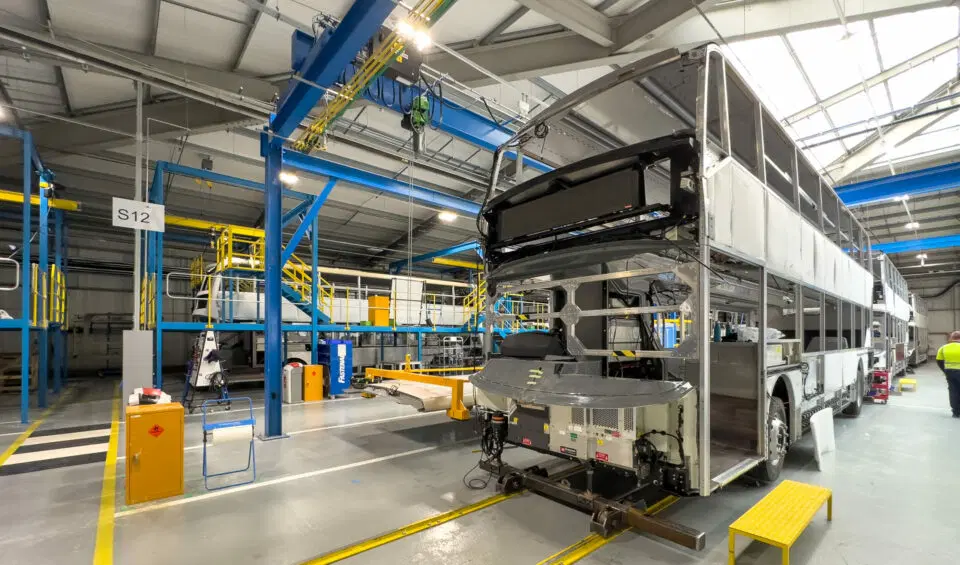
In June 2025, Alexander Dennis proposed plans to close its Scottish facilities, moving all manufacturing operations to a single site in Scarborough. Workers have been on furlough, supported by the Scottish government, since last September.
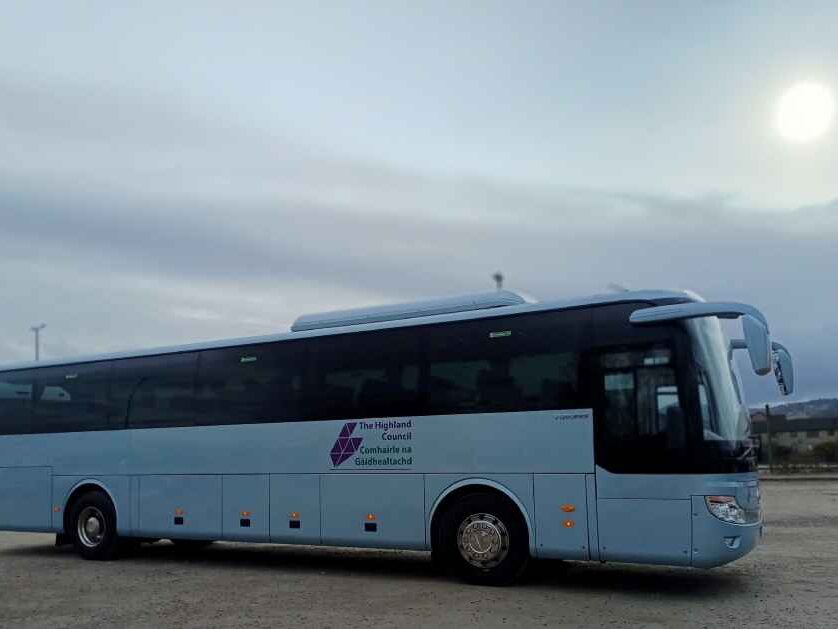
The new proposals now come in response to the results of the 45 million GBP Scottish Zero Emission Bus Challenge Fund (ScotZEB3). Under this scheme, 334 zero-emission vehicles will be built, with 123 vehicles supplied by Alexander Dennis, representing 36.8 percent. In contrast, 166 buses were awarded to Chinese company Yutong.
This has fuelled ongoing criticism about the use of government funds to support overseas manufacturing capabilities, at the detriment of domestic manufacturing. Read more about this issue and what can be done to mitigate it here, or check out our Podcast discussion.
Sharon Graham Unite general secretary, said:The announcement by Alexander Dennis that over a hundred highly-skilled manufacturing jobs will be axed at Falkirk and Larbert is shattering. It is an economic shock which the company has chosen to inflict on the workforce and the wider community when it has other viable options. This doesn’t need to happen.
The Scottish and UK governments have been woeful throughout this process. They have enabled Alexander Dennis’ decision with half of the new bus orders going to a Chinese company instead of boosting Scottish green manufacturing and supply chains. Unless there is urgent action to stop these job losses, then this political weakness and failure should not be forgiven.
The implications of these developments extend beyond a single factory closure, as the potential loss raises broader questions about the long-term viability of domestic bus production in the UK.
It follows the bankruptcy of Switch Mobility, which is closing its UK factory at Sherburn-in-Elmet. Wrightbus, now the leading UK bus manufacturer, has also acknowledged the threat of overseas manufacturers and has called for the government to do more to support domestic jobs and supply chains.
The UK is constrained by trade obligations that prevent it from implementing mandates for government-funded purchases to be made from domestic suppliers. However, by increasing the “social value” weighting within procurement, authorities have to account for factors such as local jobs, training, apprenticeships, and the wider economic benefit when choosing a supplier.
Alexander Dennis’s proposed transition reflects an attempt to remain competitive within the current environment. By focusing on chassis production rather than full vehicle assembly, the company aims to reduce costs and integrate more effectively into a globalised supply chain. However, this shift represents a dilution of domestic manufacturing capability, with fewer stages of production retained within the UK.
The potential closure of the Falkirk site therefore carries economic weight. For decades, the facility has supported skilled employment and regional industry. Its loss would mark a significant contraction in the UK’s ability to design and build complete buses domestically.
At a national level, the situation also highlights a fundamental challenge facing the UK’s transition to net zero: how to ensure that public investment in green technologies delivers long-term industrial and economic benefits. Without a clearer alignment between funding, procurement, and industrial strategy, there is a risk that the UK will increasingly rely on imported vehicles to meet its decarbonisation targets.