In March 2021, Transport for Greater Manchester announced that they would begin folding the city region’s bus services into its Bee Network scheme – expanding it to become an all-encompassing, fully-integrated public transport ‘concept’.
In the years following this move, the Bee Network has grown to become a shining example of what might be possible under a franchising model, acting as a consistent reference point for ‘how to do it right’. Passenger journeys have increased by 14% year-on-year, bus punctuality has risen above 80% during the initial phases, and, in 2028, the programme will expand to include commuter rail services.
However, despite its high profile success, Greater Manchester was not the first to implement franchising plans with such dramatic success. Of course, London did it in the 1980s and does very well for itself, but without the strength of the capital, who else decided to take control for themselves and improve public transport for the better?
Well, if you want an example of true franchising success, look no further than Jersey.

A small island situated in the English Channel; Jersey, with a population of around 103,000, is a self-governed British Crown Dependency with its very-own legal, financial, and administrative systems, 45 square miles of land, 12 Parishes, and, of course – its own bus franchising model.
Jersey – The Blueprint
First introduced in the form of the MyBus brand in 2002, Jersey’s move from an unregulated, private monopoly then saw the Government introduce competitive tendering for school bus and summer visitor attraction networks on a gross cost basis in 2012, with all fare revenues returned to Government of Jersey, before introducing competitive tendering for minimum subsidy contract with profit share in 2012 – again, with all fare revenues retained by the operator – and, in January 2013, Jersey overhauled and expanded its existing franchising model into the system it employs today with LibertyBus.
Running seven days a week, 362 days a year; LibertyBus services are delivered by Tower Transit UK both under contract to, and in partnership with, the Department for Infrastructure at the Government of Jersey. With a fleet of 58 single & double-decker buses, LibertyBus’ offers low-floor boarding on all services, and operates from both its own bus station in St Helier, Liberation Station and more than 800 dedicated bus stops across the island.

Since its introduction, LibertyBus services have become some of the most trusted of any company in the world, boasting an impressive 64+ net promoter score (for reference, Coca-Cola possesses a of 39 and Amazon sits at roughly 43). So, it’s safe to say that the residents of this island are very, very happy with their current bus operator.
What Makes It Work?
So how does a company achieve such roaring success? Surely it isn’t as straightforward as simply just flipping the franchising switch? Well, for starters, the island’s interpretation of franchising is wholly unique when compared to methods currently being devised across the UK.
During a presentation at Euro Bus Expo 2026 in Birmingham; Samuel Ribeiro, Managing Director at Tower Transit discussed just some of the more important aspects of running one of the most successful franchise services in the world. Firstly, the partnership between the Government of Jersey and LibertyBus is one designed for growth first and foremost.
In order to run a service that best meets public needs, the Government sets network requirements, general quality standards, and oversees contract delivery – acting in the interests of the public. LibertyBus then takes these priorities onboard and operates the network, proposes potential improvements to attract passengers, retains fares and takes more revenue risk – with all profits above an agreed threshold then subsequently shared with the Government itself.
Each month, there are full, intensive reviews of the service – which can result fines for those who do not fulfil their end of the bargain, so to speak. As previously mentioned, all fares are kept by the LibertyBus, providing a crucial financial incentive to ensure that priorities align with those of the local authority and giving them more of a reason to deliver a stellar network.
In order to drive these numbers, as well as overall passenger satisfaction, LibertyBus commits to running a number of different passenger incentives each year. One example given by Ribeiro is the recent TownLink promotion earlier this year, which offered free rides for passengers between Thursday 23 May and Saturday 1 June. This resulted in a 15% increase in average daily passengers six weeks after the promotion, and, according to Ribeiro, helped people to both discover the network and experience the service themselves.
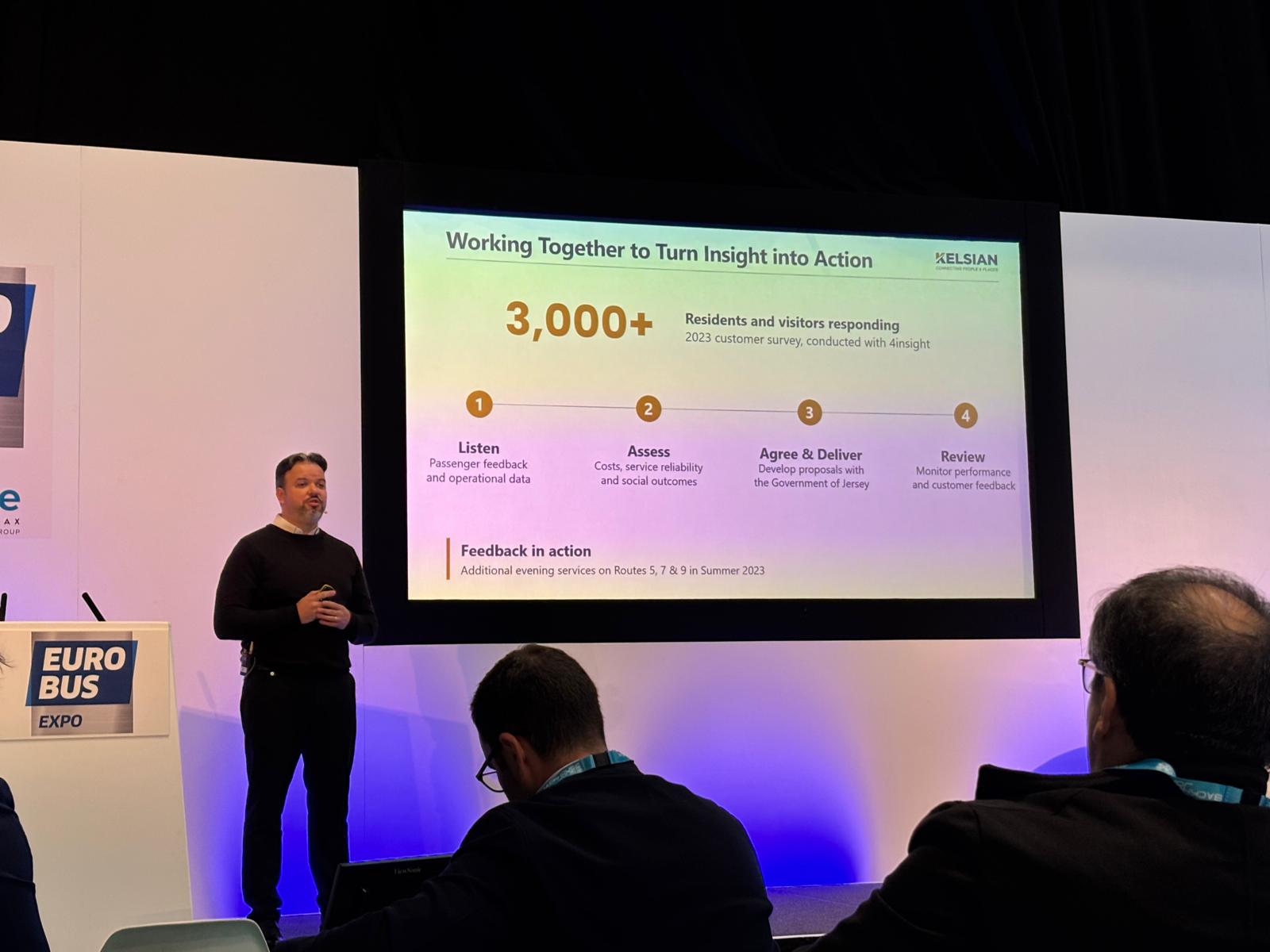
Over time, both parties have agreed to a number of service changes – a vast number of which are reactive and based on the current needs at that time. For example, Routes 1 and 15 initially provided services every 30 minutes during Winter and every 20 minutes in the Summer. However, due to passenger feedback, both parties agreed to increase this to every 20 minutes year-round in 2013,. This was then increased to every 15 minutes in Summer in 2014 and then, a year later in 2015, every 15 minutes year-round.
In the Bus Services Act 2025, the UK Government pledged to both identify and protect a range of routes deemed ‘socially necessary’. Legislation states that these are ‘local routes that are commercially unviable for private operators to run on their own, but are deemed essential by local authorities to help residents access employment, education, healthcare, essential shopping, and social activities’.
In Jersey, every single route on the island is considered either socially or economically necessary, and, ultimately, breaks even in the long run. This is aided by the fact that all plans are developed with customer feedback in mind, and in 2023, more than 3000 residents and visitors responded to a customer survey, providing the required data to ensure the safety of services, as well as continue providing any and all necessary services for the community across the island.
Across the UK, public transport is striving to reach passenger levels from before the start of the COVID-19 pandemic. In Jersey, they have not only recovered, they have surpassed them – and have increased overall ridership by +61.6% since the network’s introduction in 2013. In comparison, services in England are currently sitting at -20.6% since 2013, a drop from the pre-pandemic level of -5.7%.
‘Start with the Outcomes you want – then build the partnership to deliver them’
At this point, it’s pretty much irrefutable, the island of Jersey isn’t just a success, it’s the true blueprint for successful franchising efforts. To present it slightly differently, the residents of Jersey own more cars per person than a large portion of the UK – and they still choose to use the service provided for them instead.
Closing the main portion of his presentation, Ribeiro offered a few pieces of advice for regions looking to follow in its footsteps. Operators must devise services that are convenient, attractive, and, above all else, easy to use.
Networks must be something that a community can rely on – they should always be shaped by the needs of the customer, not what makes the most financial sense, and they must always continue to improve.
Working together, authorities and operators can actively develop the services the public needs – an approach that not only drives customer satisfaction, but results in more stable financial gain, trust, and, ultimately, longevity.
In a world becoming increasingly aware of its ever-expanding carbon footprint, the public are looking to their local public transport services to get them from A to B with ease. For large parts of the globe, this isn’t possible, especially in more rural areas in places like the UK, where integral bus routes are cut and services are slashed to a shadow of their former iterations every year.
It begs the question that if some of these regions were to look at Jersey’s answer to franchising, would they reverse course and accept the solution of a more closely-knit, reactive, personal service to provide not just improved services, but a better product for their prospective passengers? To quote Ribeiro; “Start with the outcomes you want – and then build the partnership to deliver them”.