The Department for Transport (DfT) has published a 10-year pipeline outlining anticipated orders for zero-emission buses (ZEBs) across England, Scotland and Wales between 2026 and 2035.
The pipeline brings together projections from local transport authorities and bus operators, offering an aggregated view of future procurement. It is based on data collected up to 4 November 2025 and is intended to support planning across the UK bus manufacturing sector.
Projected Demand
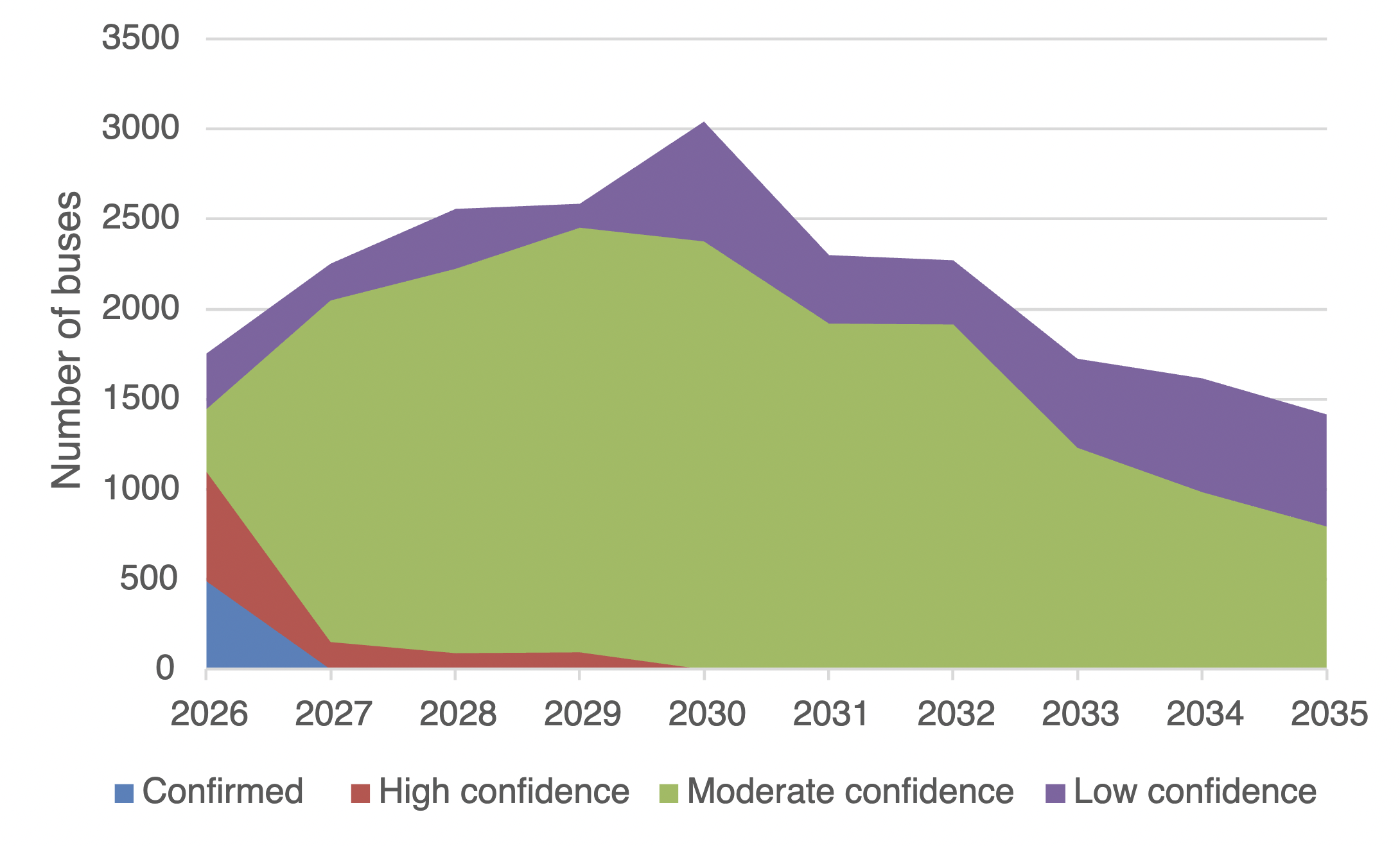
The figures indicate a steady flow of orders over the next decade. Total demand is estimated at between 17,400 and 21,525 vehicles, with a central estimate of 23,381 ZEBs.
Annual projections suggest that orders may rise from between 1,450 and 1,750 buses in 2026 to a peak range of 2,375 to 3,050 around 2030, before gradually declining towards 2035.
The data reflects varying levels of certainty, with projections grouped into confidence bands ranging from confirmed to low confidence.
Role of the Pipeline
The pipeline is designed to give manufacturers and suppliers greater visibility of likely demand. By presenting aggregated forecasts, it aims to support:
- Production planning and workforce development
- Investment in manufacturing capacity and supply chains
- Coordination between operators, policymakers and suppliers
- Alignment with wider decarbonisation and public transport objectives
The information has been anonymised to avoid disclosing commercially sensitive details.
Breakdown by Bus Type
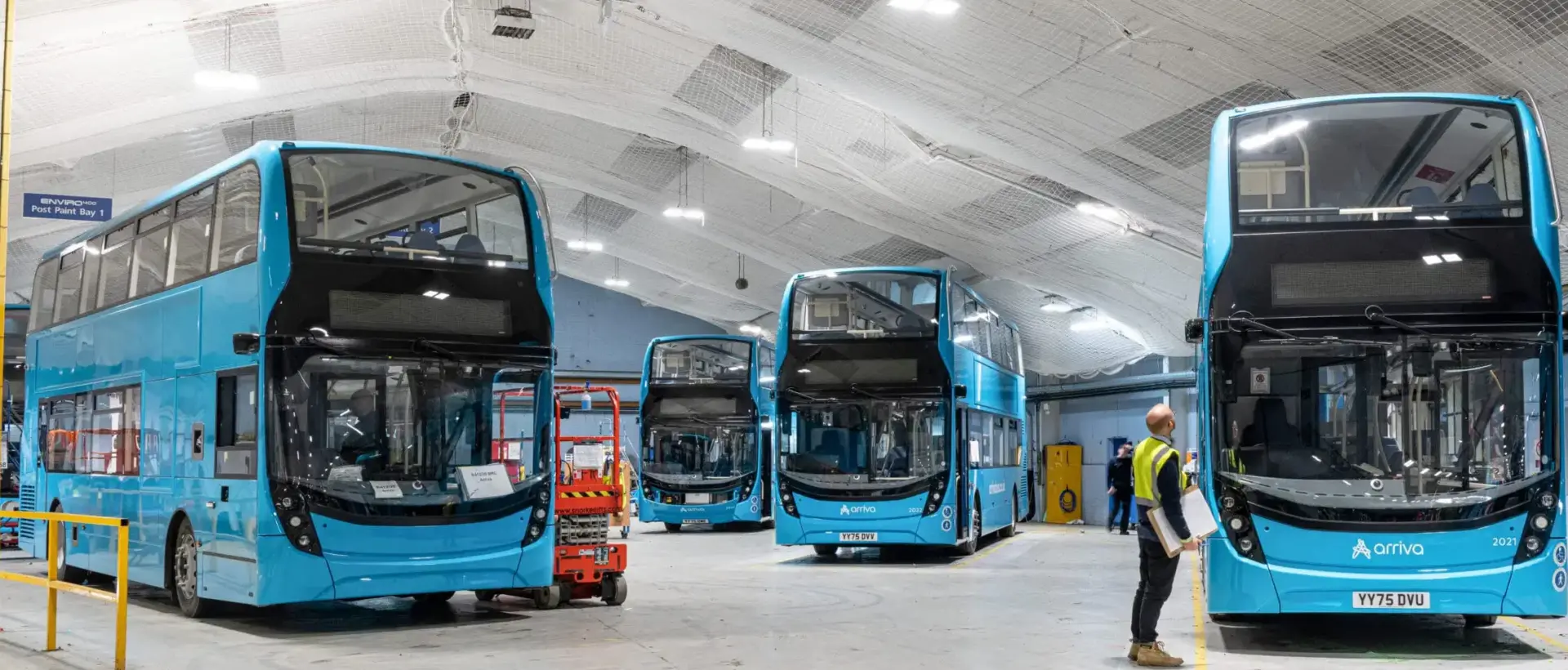
Double-deck buses account for the largest share of expected orders, with an estimated 12,673 vehicles over the period. These vehicles are typically used on high-capacity urban routes and form a key part of fleet replacement strategies in larger cities.
Single-deck buses represent a smaller share, with around 6,726 vehicles forecast. Demand is linked to suburban, rural and inter-urban services.
Other vehicle types, including mini, midi and slimline buses, make up a further 2,112 units. These are often used in areas where road access limits the use of standard-sized buses.
Industry Context
The publication of the pipeline was identified as a priority by the UK Bus Manufacturing Expert Panel. It is intended to provide a clearer picture of sector-wide demand over time, supporting long-term decision-making.
The figures represent a substantial portion of expected orders but do not include all operators, particularly smaller and medium-sized companies.
The projections are indicative and should not be treated as definitive. They are based on self-reported data and do not meet the criteria for official statistics.
Geographical breakdowns have not been included, as these were considered to offer limited additional insight and could risk revealing commercially sensitive information.
To engage further on the topic of domestic manufacturing in the bus sector, listen to our latest Podcast episode on the rise of Chinese buses globally.