By Edward Thomas, CEO, ComfortDelGro Bus & Coach UK and Ireland
Monday 26th October marks 40 years since bus services outside Greater London were deregulated. At the time, London’s franchised network was a national anomaly. Deregulation handed control over routes, fares, and timetables to commercial operators. This saw unprofitable services being cut, fares rising, and passengers left behind.
The legacy left by deregulation is areas with fewer transport links that have lost both their public transport services and their sense of community. Metroline’s latest research, which surveyed more than 3,000 UK adults and 1,000 senior business decision-makers, found that nearly two thirds (64%) of public transport users agree the bus is a vital route to local high streets and services and four in ten (41%) say limited public transport links to town centres and high streets make them feel cut off from their community.
This comes at a time when we are struggling to keep high streets and local communities alive. According to the Centre for Retail Research, over 13,000 shops closed in 2024, most of them small independents, with footfall still below pre-pandemic levels.
Driving people back to the high street
Without sufficient bus services, the high street will continue to struggle.
Almost half of public transport users (48%) say they are being pushed online because poor connectivity makes reaching shops too difficult, and 45% say limited links make them less likely to go shopping at all. 46% say the same about eating out or socialising locally.
Demand for the high street is still high. Shopping was the most common reason for a journey in 2025, according to the Department for Transport (DfT). The demand is there, but too often the connections are not.
Businesses see the same link. Nearly three quarters (73%) say transport connectivity is an important factor when deciding where to locate or expand, and 72% agree that good bus links make an area more attractive for investment. Poor connectivity is also adding to their costs, with 68% saying it is compounding the cost of doing business. With better links, 69% say they would have a more confident outlook.
But for many people there is no alternative. The DfT’s 2025 National Travel Survey found that 25% of households in England had no car or van. Even in built-up areas, Centre for Cities has cited poor urban transport as making UK cities effectively ‘smaller’ than their European counterparts, costing the UK economy around £23 billion a year in lost activity.
The economic health of our towns and cities depends on public transport.
Why franchising works
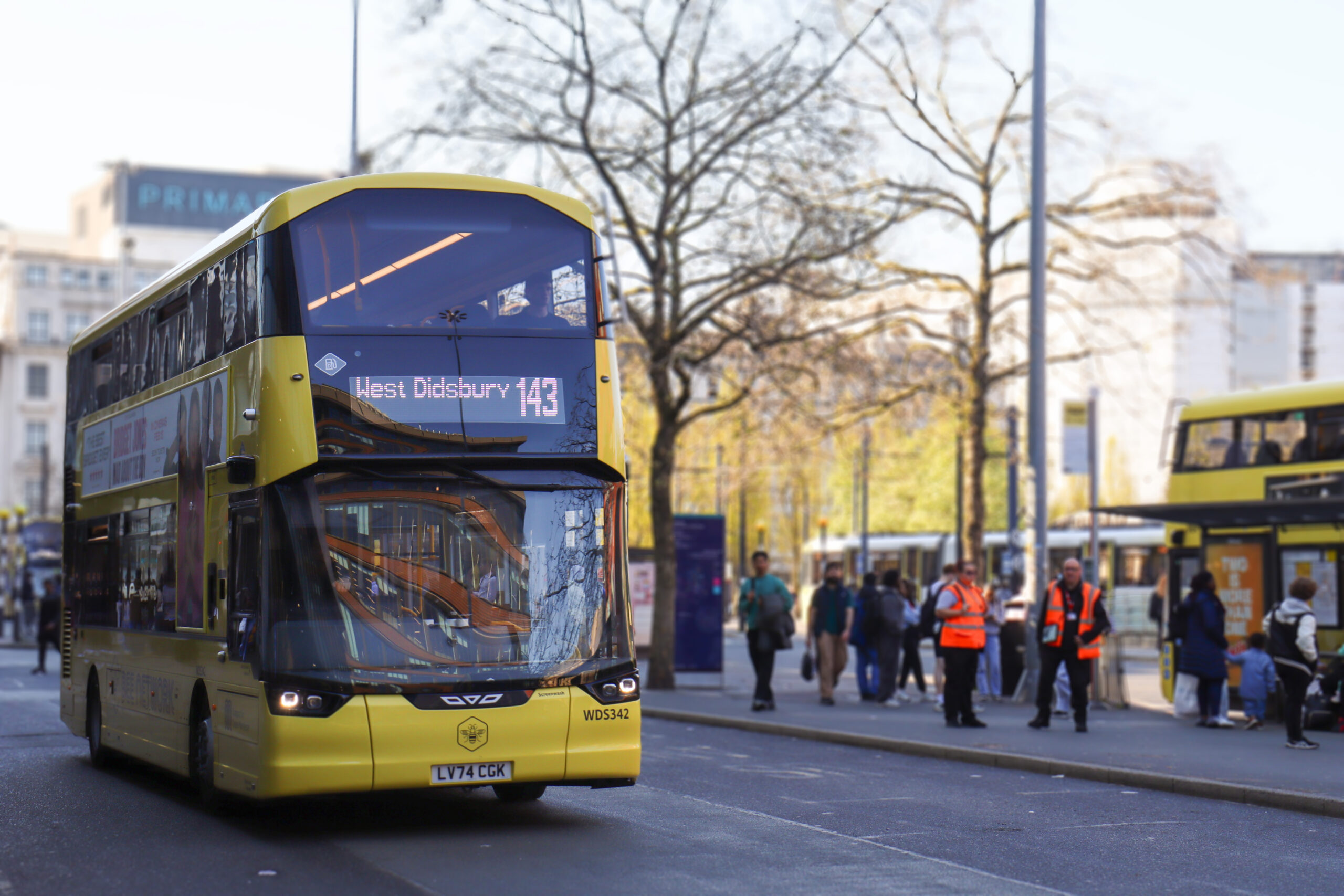
Andy Burnham’s government has put devolution on the agenda – hopefully a positive move for improving connectivity. If you need an example of where regional focus has led to the regeneration of a community, just look at Manchester’s Bee Network. With the Bee Network, Transport for Greater Manchester and the Greater Manchester Combined Authority are free to ensure their city is connected and free to choose the best operators to deliver the service.
We know that the health of the high street is important to this government. The Prime Minister’s recent £210m regeneration package for high streets tells us that much. But we are at a critical moment; his plan will only work if people can actually reach their town centres. The key is that investment in businesses needs to be matched by investment in the buses that bring customers to them.
We have one of the biggest moments in the economic calendar coming up this week with the budget. We support sustained funding for local authorities, so that they can plan routes around town centres and take on franchising where they choose to. Without that, the regeneration package risks improving high streets that people still can’t get to.