Good passenger information starts with good data management. We meet the company connecting the dots between the back office and the bus stop.
The most essential infrastructure is often invisible. Nobody thinks about the power grid when they put the kettle on – the electricity’s just there. But between the power plant and your kitchen, a vast infrastructure is working to keep that flow stable and consistent.
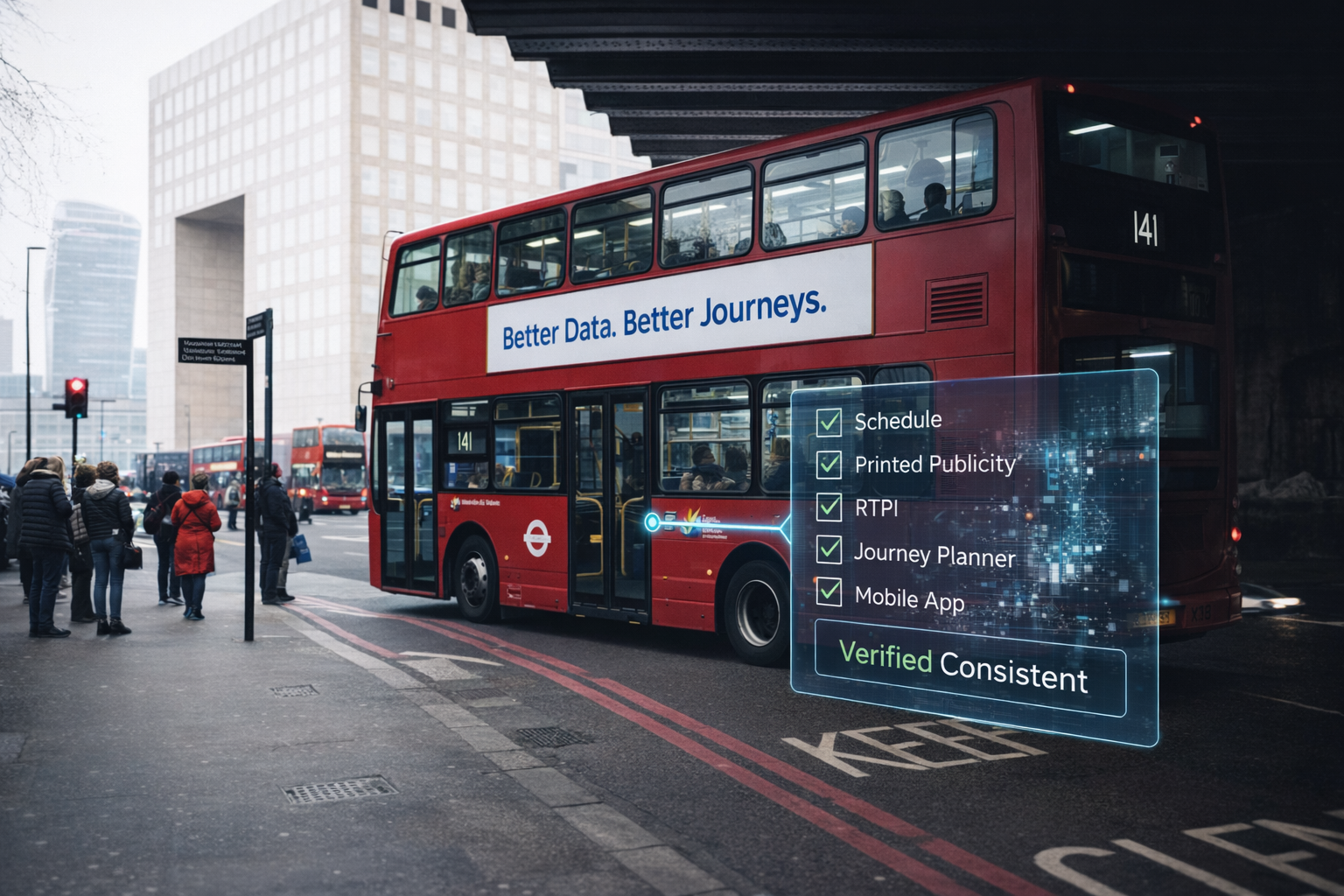
Data quality in public transport works the same way, and when the infrastructure fails, passengers are impacted. The timetable created in a back office some months ago is the seed for everything a passenger sees on an app or electronic sign through to a printed timetable. On its journey from that back office through scheduling, publicity, real-time systems and journey planners, timetable data passes through multiple departments and software systems, providing countless opportunities to fragment, change or become out of sync.
The Problem with the Pipeline
Having spent more than 15 years implementing software solutions in the passenger transport industry, software architect Rob West spotted two converging pressures that were making the flow of timetable data harder to manage.
The first was a growing lack of interoperability between systems.
Rob West, software architect and Founder of Elydium, says:With an ever-increasing number of suppliers entering the market, operators and authorities would focus their procurements on functionality, simply asking 'does it have a feature we need?', but nobody was questioning how it would connect with everything else.
There was an assumption that if all suppliers were simply told to be standards compliant everything would magically work together, but that wasn't the case.
The second was the introduction of legal requirements for bus operators to openly publish their timetable, location and fares data. This was a significant new obligation in the UK and West could see that the existing systems weren’t set up to meet its requirements.
Seeing that nobody was focused on the data pipeline between the scheduler and the passenger, West founded Elydium in 2019 to provide a solution.
A Tech-First Approach
Over the years, West had watched the same problems repeat themselves across organisations of every size and had a clear idea of what was needed to fix them. He began building the architecture for a solution, which included extensive data modelling, technical infrastructure and deep understanding of the underlying standards – and the ways in which these standards were used (and abused) in the real world.
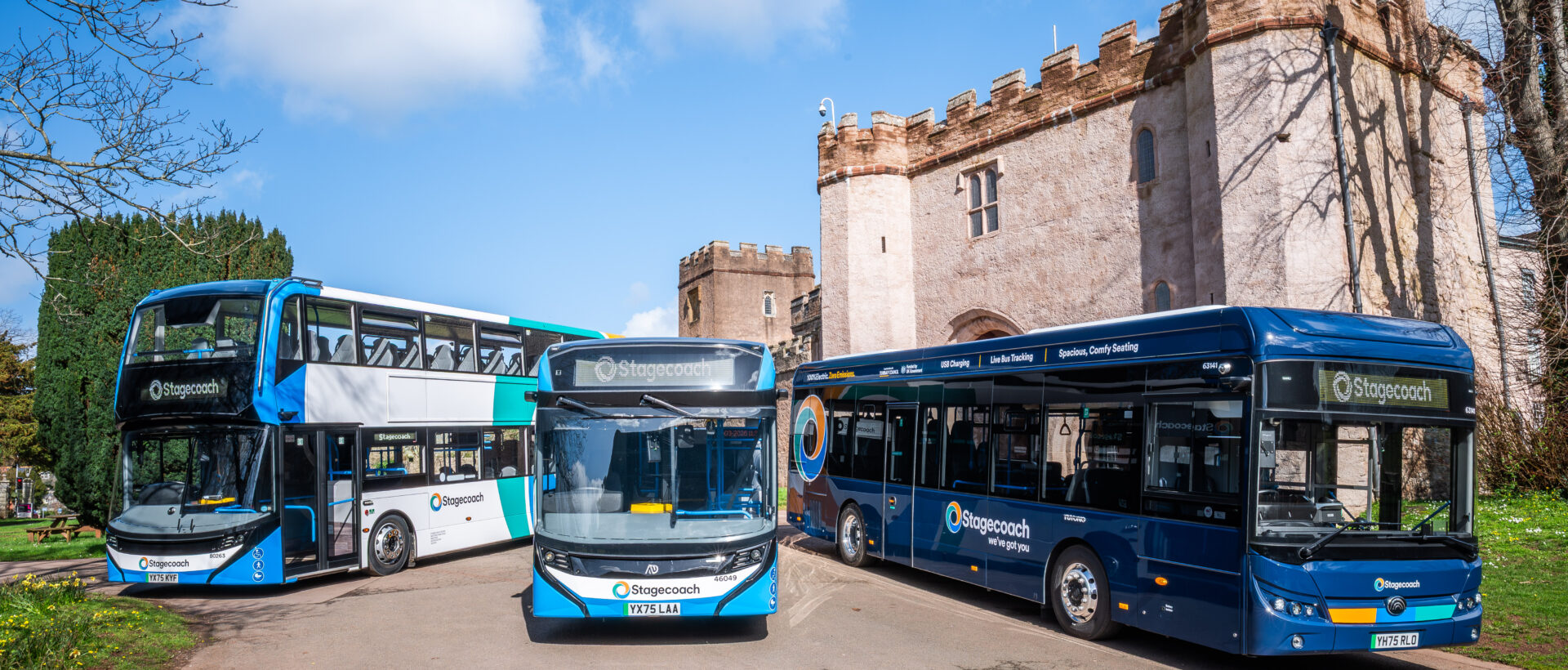
This is what makes Elydium different from the typical tech startup. Only once that foundation was solid did West begin to approach potential customers. One of the first came through an industry introduction. A mutual contact introduced West to someone at First Bus who was experiencing the problem his solution was built to solve. A pilot followed, and within months the platform was rolling out across the country. It went similarly with Stagecoach, which had strikingly similar needs and a similarly swift adoption. Other customers now include Transport for Greater Manchester, which brought the same data pipeline challenges, but from a franchising authority perspective.
The Evolution of a Platform
Elydium’s technology has evolved significantly since its early days. What began as a targeted tool that offered a fast and clean way for individual users to open, view and validate timetable files, has grown into a full enterprise platform. One that’s capable of operating at national scale across thousands of files and multiple operators simultaneously.
This shift reflects how the platform’s first customers grew to use it. First Bus and Stagecoach both started with that simple, targeted tool. Both came back asking for more: automation, dashboards, compliance monitoring, bulk processing. Because the underlying architecture was scalable, Elydium was able to deliver, and today the platform handles everything from timetable creation and version control through to validation and compliance checking, multi-format export and analysis of real-time data feeds.
Elydium’s foundations were built on standards that extend well beyond the UK. Across Europe, the data landscape is different in detail while consistent in principle, leading to the same underlying problems, and therefore solutions.
At the heart of everything Elydium does is a belief that better data means better journeys. A timetable managed and distributed with precision feeds accurate and consistent information into every system that touches the passenger. This information builds trust and confidence, which in turn leads to more people choosing bus travel over the car.
Rob West:This can only be better for operators, cities and the environment.
It is, by its very nature, an invisible kind of success. When the data is right, the bus simply arrives, and nobody asks why. Like the power grid humming quietly in the background, the work only gets noticed when it stops. But that, he would argue, is exactly the point.
So what does Elydium actually do?
In simple terms, Elydium makes sure that data flows cleanly and consistently from wherever it originates, typically a planning or scheduling system, through all the departments, formats and systems to get to what the passenger eventually sees.
Critically, it doesn’t replace the systems operators already have: the scheduling system stays, as do downstream systems such as the ticketing platform, real-time passenger information (RTPI) system and journey planner. What Elydium provides is the data infrastructure between them, ensuring that the data is always accurate, consistent and timely.
The Elydium Timetable Management Platform
The Elydium Timetable Management Platform handles version control, validation and export of timetable data across multiple formats, including the UK standard TransXChange and the internationally used GTFS.
It’s modular by design, meaning operators and authorities can take the functionality they need without the complexity they don’t. And because the underlying architecture has been there since day one, when customers come back asking for something tailored to their organisation – perhaps a dashboard, greater automation or a new report, it’s very easy to develop a prototype quickly and cost effectively.
Rob West says:We can usually have something in front of a customer within a few weeks.
Meet Elydium in 2026
Elydium will be exhibiting at two major industry events this year, the ALBUM annual conference in Blackpool in May and Euro Bus Expo at the NEC, Birmingham in November.
Rob West says:At these events we're inviting operators and authorities to come and see exactly what their published data looks like from the outside. It's a revealing exercise, often highlighting issues that organisations didn't know they had.
To arrange a meeting at either event, or to find out more about how Elydium can support your organisation, please contact [email protected] or visit elydium.co.uk.