The global bus market opened 2026 with an unprecedented boost. Driven by the urgent need to renew local public transport (LPT) fleets in a sustainable way, the sector is recording record growth rates.
Consolidated data from the first quarter (Q1) of 2026 and mid-year trends outline a clear scenario: the ecological transition is accelerating at an impressive speed, driven not only by the consolidation of batteries but also by the overwhelming emergence of hydrogen as a concrete alternative for a zero-emission future.
Italy: A Historic Boom and the Hydrogen Breakthrough
Italy is positioning itself as one of the most advanced laboratories in Europe for the commercial testing and large-scale adoption of hydrogen, simultaneously recording one of the fastest growth rates worldwide in the early months of 2026. The urban segment drove a massive surge in total registrations in Q1 (1,434 total units, +28.2% compared to Q1 2025), culminating in May with a peak of +81.9% in monthly sales.
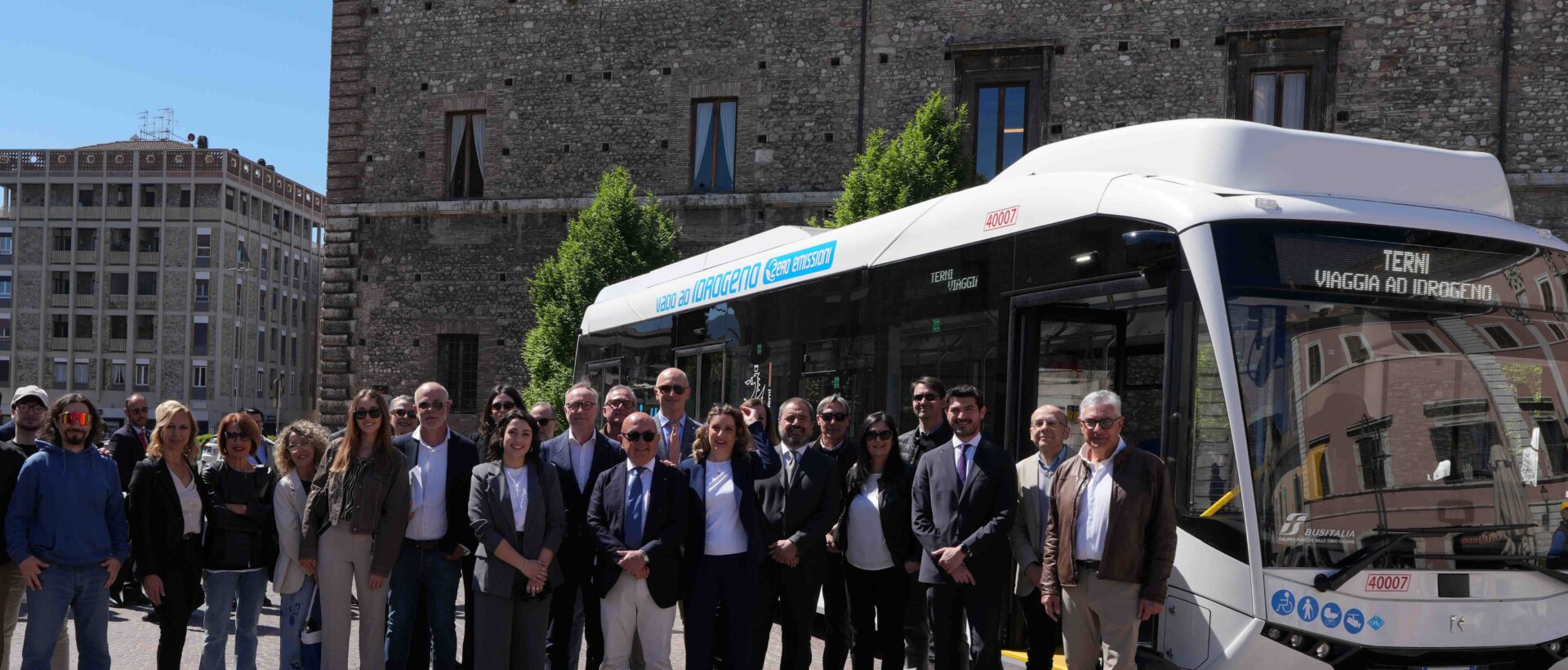
- The historic record of Hydrogen (FCEV): With an impressive 142 units registered in the first quarter, fuel cell buses captured 9.9% of the national market share. This leap, driven by large urban public contracts (such as the plans of the cities of Bologna and Venice), represents an exponential percentage growth starting from almost zero volumes last year.
- The leap in BEV technology: 100% electric buses achieved an extraordinary increase of +172.5% (466 units), conquering 32.5% of the market. Combined with hydrogen, the result is historic: a solid 42.4% of new Italian buses are zero-emission (almost 1 in 2 vehicles).
- The role of Diesel: Traditional engines maintain the relative majority share at 48.2% (691 units). However, there is a +31% increase in absolute volumes, linked to the forced replacement of older, more polluting Euro II and Euro III models.
Europe: Hydrogen Accelerates in Urban and Extended Contexts
According to official ACEA data, the European Union kicked off 2026 confirming the bus segment as the most dynamic of the entire commercial vehicle sector, registering 10,964 total units in Q1 (+24.5% compared to Q1 2025).
- Dominant E-Buses in cities: Electric bus (BEV) registrations in the EU increased by +36%, consolidating a market share of 21.8%. Isolating just the municipal bus segment, zero-emission sales now exceed 60% in over 20 European countries.
- The advance of fuel cells: Hydrogen is gaining ground mainly in long-haul intercity contexts or in municipalities with harsh climates and extended routes, reaching around 1.8% – 2% of the EU market share in Q1. Growth is supported by the adoption of advanced propulsion systems, such as the Toyota fuel cells used by many European manufacturers.
- Diesel leader on long distances: Diesel maintains overall leadership with a 65.7% share, growing by +24.8% especially in the tourist and long-distance coach segment. Hybrids are in sharp decline, dropping to a 5.1% share (a decrease of -10.6%).
World: The Infrastructural Challenge of Hydrogen
Globally, the market value of electric buses is estimated at around 50-64 billion dollars for 2026, with a compound annual growth rate (CAGR) of 14-16%, driven by mature charging infrastructures in urban centers. China is approaching electric saturation in cities, while Latin America (with Chile and Brazil) alone generates 30% of e-bus growth outside the Sino-European axis.
- Hydrogen and strategic corridors: FCEV buses currently cover about 1% of the world market. Penetration is proceeding more slowly than batteries due to high operating and refuelling costs, but targeted investments are concentrated in China (where hydrogen logistics corridors are being developed), California, and Europe. The global hydrogen generation market is nevertheless expanding rapidly (over 190 billion USD in 2026), and lower fuel costs are expected to favour FCEV buses in the early years.
- Traditional markets: Diesel and traditional engines still represent over 75% of the global market, remaining indispensable in the emerging economies of Africa, South Asia, and Latin America that lack adequate power grids. However, analysts estimate that the global share of e-buses out of the total world fleet will reach 25% within the next decade.
TCO and Range: The Technological Comparison Between BEV and FCEV
The choice between a battery infrastructure (BEV) and a hydrogen one (FCEV) forces public transport players to strategically balance operating costs and field performance. The two key factors of the comparison are mileage range and total cost of ownership (TCO):
- Mileage Range: Hydrogen proves clearly superior over long distances. An FCEV bus guarantees a range of 350-400 km with a single refuelling, compared to the 200-250 km average of a battery-electric bus. This makes hydrogen the ideal choice for suburban or intercity lines, or for complex urban contexts with harsh climates that weigh heavily on battery consumption.
- Management and Maintenance Costs: The weak point of hydrogen remains the economic aspect. Currently, a hydrogen bus costs about twice as much as a battery-electric one in terms of TCO (Total Cost of Ownership). This gap is caused not only by the initial cost of the vehicle but also by the maintenance expenses of fuel cell systems and the high cost of fuel procurement and storage.
Bus Energy Mix: Q1 2026 in Figures
The table below summarizes the market shares and performances of the first three months of the year, highlighting the new technological balance underway:
| Geographic Area | Electric (BEV) | Hydrogen (FCEV) | Traditional (Diesel) | Others (Hybrids/Gas) |
|---|---|---|---|---|
| Italy | 32.5% (+172.5%) | 9.9% (Historic record) | 48.2% (+31%) | 9.4% |
| European Union | 21.8% (+36.0%) | ~2.0% (Strongly rising) | 65.7% (+24.8%) | ~10.5% |
| World | ~15-20% (+15% CAGR) | ~1.0% (Focused) | ~75% (Stable) | ~4% |
The trend of this first half of 2026 confirms that the future of collective urban transport is completing its ecological turning point. While battery electric represents the economic and established standard for regular city routes, hydrogen is strongly carving out the role of a complementary pillar, ready to dominate as soon as infrastructure scalability lowers its operating costs.
This article was originally published by PEI Mobility.