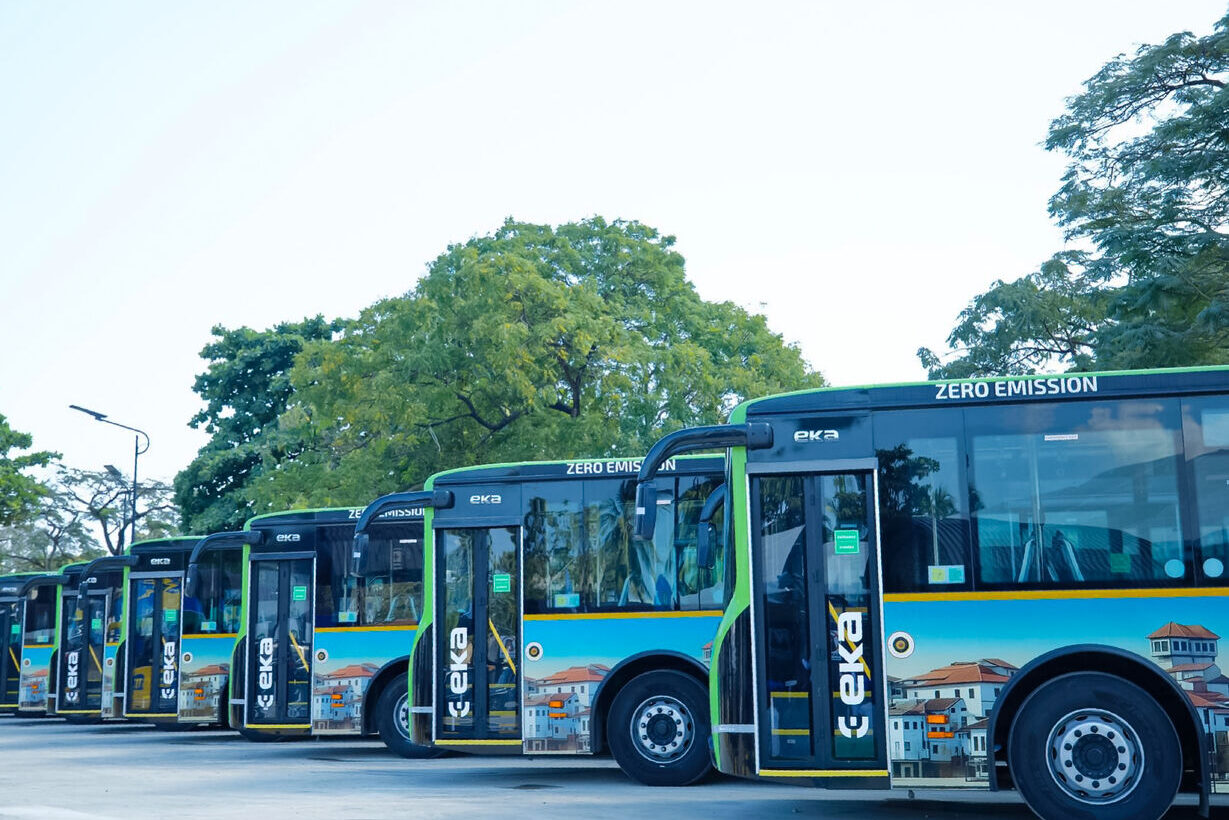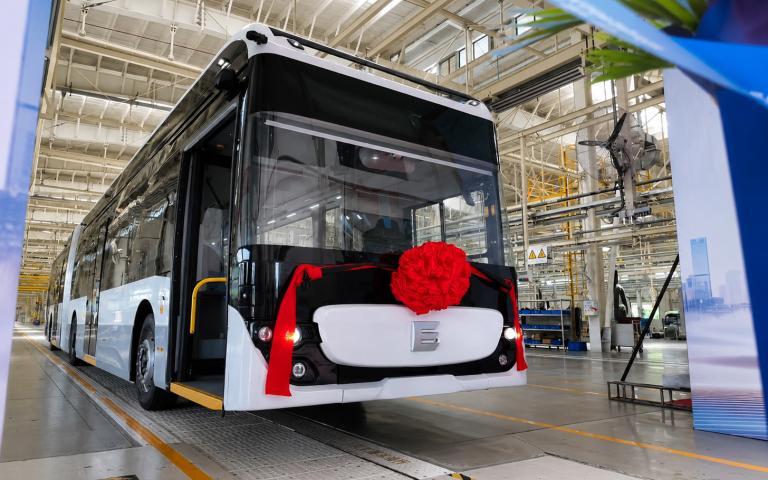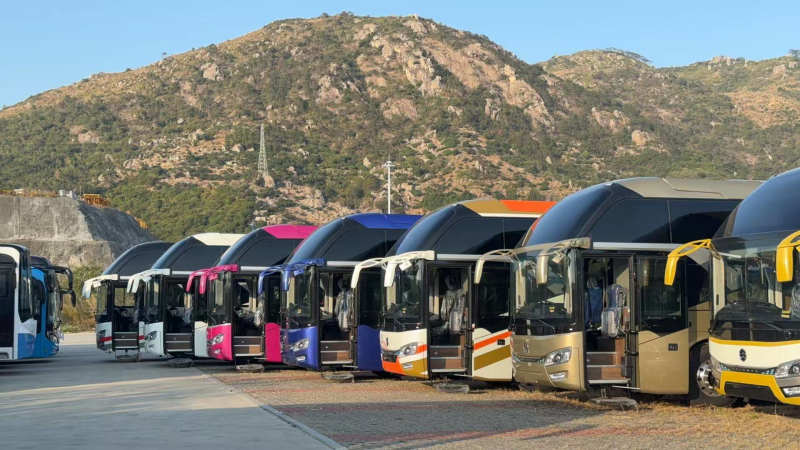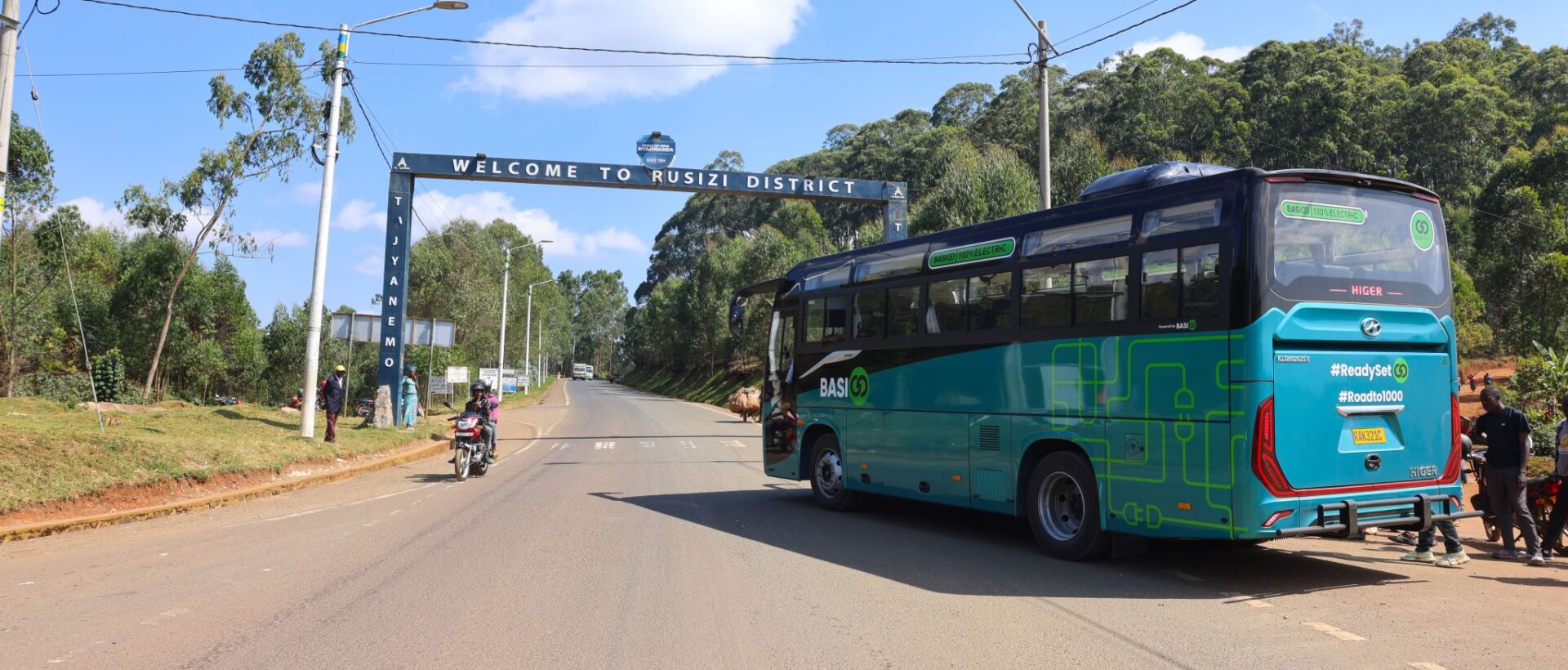
Three Golden Dragon PIVOT E12 battery-electric buses have completed a 1,600-kilometre road journey between Addis Ababa and the Ethiopia-Kenya border, testing electric bus operation beyond urban routes.
The buses normally operate on fixed routes in Addis Ababa, where they typically cover between 100 and 200 kilometres per day before returning to a depot for overnight charging.
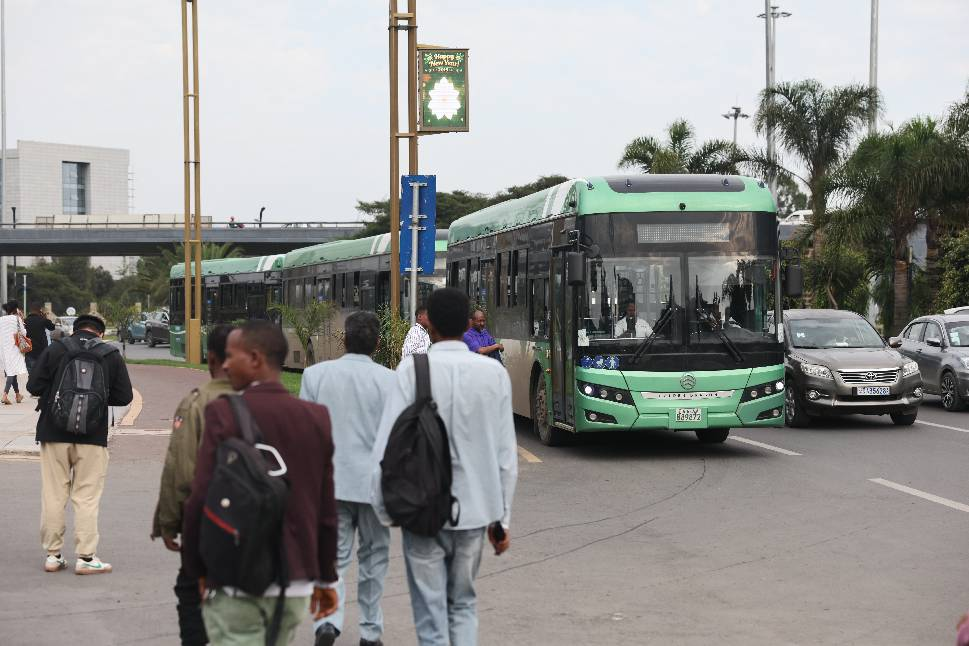
On 10 September, the three buses left the Ethiopian capital and travelled approximately 800 kilometres south to Moyale, a town on the Ethiopia-Kenya border. They met an electric bus delegation travelling north from Nairobi before returning to Addis Ababa for the Nordic-Africa EV Summit.
The four-day journey was conducted along a route with limited public charging infrastructure. It was intended to assess how battery-electric buses perform on longer-distance journeys in conditions different from their normal urban operations.
The route took the buses through Bishoftu and Batu towards southern Ethiopia. The journey included sections of uneven road, heavy traffic and livestock on the carriageway, as well as changes in weather and elevation.
The route from Addis Ababa towards Moyale involved a change in elevation of around 1,000 metres. The return journey required the buses to climb back towards the capital.
The buses covered around 400 kilometres per day on average, more than twice their usual daily urban mileage.
Each PIVOT E12 used a 350 kWh battery pack, with a reported maximum range of around 350 kilometres on a single charge. Charging was arranged at planned stops in Hawassa, Yabelo and Moyale, with Ethiopia Electric Utility facilitating access to the electricity grid. Two of the three buses also carried portable charging equipment.
At Hawassa, the three buses were charged simultaneously from approximately 30% to full capacity in around one hour. Across the 1,600-kilometre round trip, the fleet made five charging stops.
Golden Dragon service engineer Yuan Hongxing, who supported the journey, said:Lab testing cannot tell you whether a city bus can handle long-distance travel. You only find out by actually driving it.
The company said the three buses completed the journey without breakdowns or requiring replacement vehicles.
The journey followed an earlier long-distance electric vehicle trial on the Nairobi-Addis Ababa corridor. That exercise identified challenges including limited charging infrastructure, electricity supply and road conditions. The latest expedition involved full-size electric buses carrying passengers and therefore placed different demands on the vehicles.
The test does not establish that regular electric bus services could operate on the route without additional infrastructure. However, completing the journey provides a real-world example of battery-electric buses operating over long distances in a region where public charging infrastructure remains limited.