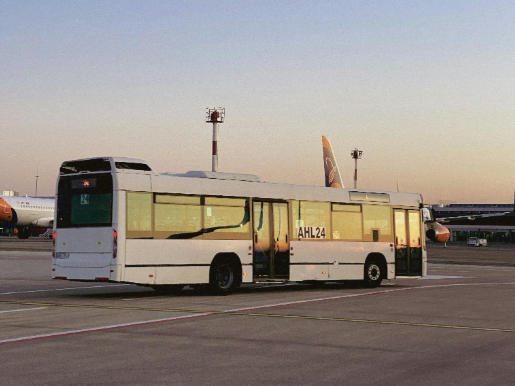
Bus and coach safety regulations are evolving beyond traditional compliance models. As public transport fleets become increasingly dependent on electronic systems, connected infrastructure and automated operational technologies, regulators are placing greater emphasis on resilience during emergency conditions rather than normal operating performance alone.
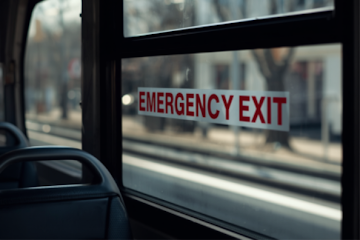
This transition is clearly reflected in the United Nations Economic Commission for Europe (UNECE) amendments to UN Regulation No. 107 Rev.10 governing M2 and M3 passenger vehicles. The amendments introduce enhanced requirements for emergency windows, escape hatches and emergency breaking devices used in buses and coaches.
The significance of these amendments lies not only in the technical details, but in the broader engineering philosophy they represent. Emergency evacuation systems are no longer treated as passive safety components existing solely for compliance purposes. Instead, the regulation increasingly evaluates whether passengers can realistically evacuate under degraded or high-stress conditions involving smoke, panic, electrical disruption or infrastructure failure.
One of the most notable changes is the requirement that emergency glazing systems must be capable of being broken and removed within 20 seconds by a single person from inside the passenger compartment. This transforms emergency egress into a measurable operational outcome rather than a theoretical design provision.
The regulation also reinforces the importance of accessibility and reliability during emergencies. Emergency devices must remain clearly visible, positioned adjacent to escape points and available at all times. In cases where electronic emergency devices are used, the amendments further require these systems to remain operational even if the vehicle’s power supply fails.
This requirement reflects a growing recognition within the transport sector that modern vehicle systems cannot assume uninterrupted electrical or software availability during emergencies. Electrical faults, fires, collisions or infrastructure failures may compromise digitally dependent systems precisely when passengers require immediate evacuation capability.
The direction of these amendments also aligns with broader functional safety principles reflected in ISO 26262-1:2018, the international standard governing functional safety in road vehicle electrical and electronic systems. The standard emphasises fail-safe operation, fault tolerance and maintaining safe outcomes during system failure conditions.
For bus operators and manufacturers, the direction of the regulation is increasingly clear. Safety is shifting from static compliance toward survivability under real-world failure conditions. Mechanical emergency egress systems such as Safe-T-Punch™ align naturally with this resilience-based approach because they operate independently of software logic, network infrastructure and vehicle power availability, preserving a direct physical means of escape when other systems may become compromised.
LINKS
Learn more – https://unece.org/sites/default/files/2022-02/ECE_TRANS_WP.29_2022_53E.pdf
Find out more – https://safe-t-punch.co.za/
This article was originally written by Safe-T-Punch.