Cybersecurity Is Becoming a Physical Safety Issue in Bus Transport
Modern bus fleets are becoming increasingly connected. Vehicle telematics, predictive diagnostics, connected fleet management systems and digitally integrated passenger infrastructure now form part of everyday transport operations. These technologies improve operational efficiency and monitoring capabilities, but they also expand the potential attack surface for cyber-related disruption.
Recent cyber incidents across global transport sectors demonstrate that digital disruption is no longer limited to data loss or operational downtime. Increasingly connected vehicles create the possibility that cyber incidents could interfere with electronically integrated operational systems, communications infrastructure or emergency management environments.
As transport systems become more digitally dependent, cybersecurity increasingly becomes a passenger safety issue rather than simply an IT concern. A cyberattack affecting operational infrastructure during emergency conditions could potentially compromise communications, evacuation coordination or electronically controlled safety systems.

This growing convergence between digital infrastructure and physical safety is reshaping transport resilience planning. Emergency systems must remain dependable even if wider onboard or networked infrastructure becomes compromised.
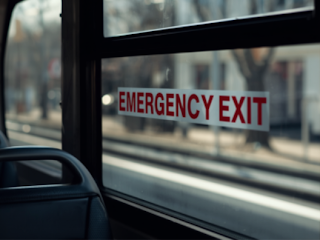
UNECE Regulation No. 107 Rev.10 reflects elements of this resilience philosophy by strengthening emergency evacuation requirements under degraded operational conditions. The regulation reinforces a broader engineering principle increasingly shaping modern transport safety: emergency escape capability must remain available even during wider systems disruption.
This direction also aligns with principles reflected in ISO 26262-1:2018, which emphasises fault tolerance, fail-safe operation and maintaining safe outcomes during electronic or electrical systems failure. Within increasingly connected transport environments, maintaining operational independence during disruption becomes increasingly important.
Mechanical emergency egress systems such as Safe-T-Punch™ support this resilience-based approach because they function independently of software logic, network connectivity or external communications infrastructure. Their operation remains physically available regardless of cyber disruption affecting wider vehicle systems.
For bus operators and manufacturers, cybersecurity resilience increasingly forms part of passenger survivability.
This article was originally published by Safe-T-Punch.