Public transport fleets are becoming increasingly software-defined. Modern buses now rely on electronically integrated systems for diagnostics, operational monitoring, passenger management, route coordination and safety functionality. These technologies improve efficiency and operational visibility, but they also increase dependence on complex electronic environments within safety-critical systems.
As transport systems become more interconnected, operational complexity also increases. Software faults, electrical failures, communications disruption or sensor instability can create cascading effects across digitally integrated environments. During emergency conditions, this creates growing concern around whether critical safety functions remain available when primary infrastructure becomes compromised.
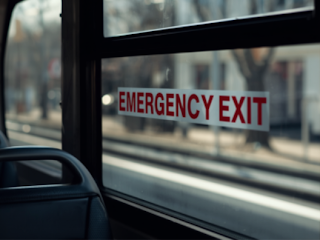
UNECE Regulation No. 107 Rev.10 reflects an important response to this challenge. The amendments strengthen requirements around emergency evacuation systems by emphasising operational reliability during degraded conditions. Emergency devices must remain visible, accessible and capable of functioning even during vehicle power failure.
This shift reflects a broader resilience philosophy emerging across modern transport engineering. Safety-critical systems are increasingly being evaluated according to their ability to maintain functionality during disruption rather than merely during normal operation.
The direction of these amendments also aligns closely with principles reflected in ISO 26262-1:2018, which emphasises fail-safe operation, fault tolerance and maintaining safe outcomes during electrical or electronic systems failure. As public transport systems become more digitally dependent, maintaining physically independent safety layers becomes increasingly important.
For bus operators and manufacturers, this creates a growing distinction between operational convenience and emergency certainty. Digitally integrated systems may improve automation and efficiency, but emergency evacuation capability must remain dependable even if those systems become unavailable during crises.
Mechanical emergency egress systems such as Safe-T-Punch™ provide an example of this engineering principle in practice. Because they function through direct physical action rather than software logic or electrical activation, they remain operational during smoke conditions, power loss, communications failure or wider systems disruption.
This does not represent resistance to technological progress. Instead, it reflects an increasingly important understanding within transport safety engineering: as operational systems become more complex, the importance of simple, mechanically dependable emergency systems continues to increase rather than disappear.
This article was originally published by Safe-T-Punch.