Why Emergency Egress Must Remain Power-Independent in Modern Bus Fleets
Modern buses are becoming increasingly dependent on electronically controlled systems. Automated door controls, digital diagnostics, connected fleet infrastructure and integrated passenger management technologies now form part of everyday public transport operations. These systems improve efficiency, monitoring and operational visibility, but they also create growing dependence on uninterrupted electrical functionality within safety-critical environments.

Emergency conditions expose the limitations of this dependency. Fires, electrical faults, collisions and battery-related failures can disable electronically controlled infrastructure precisely when passengers require immediate evacuation capability. In these environments, emergency systems dependent entirely on power availability may become vulnerable to the same failure affecting the wider vehicle architecture.
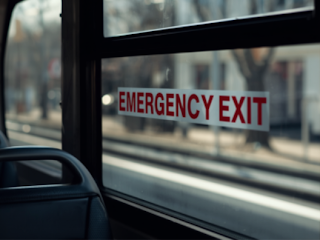
This growing challenge is reflected in the amendments introduced under UNECE Regulation No. 107 Rev.10 governing M2 and M3 passenger vehicles. The regulation strengthens requirements around emergency windows, escape hatches and emergency breaking devices by emphasising operational reliability during degraded conditions. Importantly, where electronic emergency devices are used, the regulation requires these systems to remain operational even during vehicle power failure.
This represents an important shift in transport safety philosophy. Emergency escape systems are no longer evaluated solely by functionality during normal operating conditions, but by their reliability during systems disruption and infrastructure failure. The regulation effectively acknowledges an operational reality modern transport engineers increasingly face: electronically integrated systems cannot assume uninterrupted power availability during emergencies.
The direction of these amendments also aligns with broader functional safety principles reflected in ISO 26262-1:2018, which emphasises fail-safe operation, fault tolerance and maintaining safe outcomes during electrical or electronic systems failure.
For bus operators and manufacturers, the implications are increasingly clear. Emergency evacuation capability must remain available regardless of the condition of the wider vehicle environment. Mechanical emergency egress systems such as Safe-T-Punch™ support this resilience-based approach because they operate independently of software logic, network infrastructure and vehicle power availability, preserving a direct physical means of escape when electronically dependent systems become unavailable.
This article was originally written by Safe-T-Punch.