Compliance establishes essential standards for bus safety. But when a passenger needs to escape a damaged vehicle, a more immediate question emerges: will the emergency system still be usable? Yet resilience also depends on what happens when the operating environment is no longer normal.

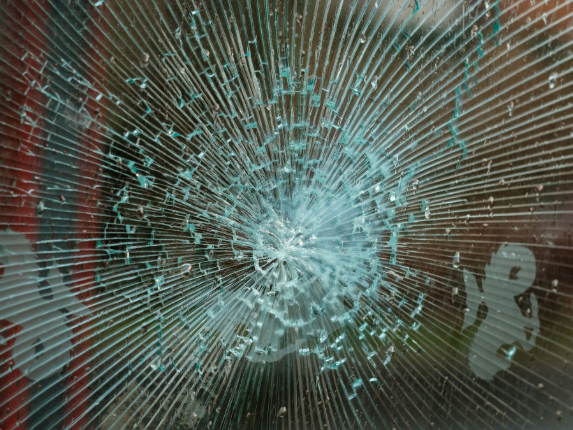
This distinction is particularly relevant to UNECE Regulation No. 107 and its 10 series of amendments for M2 and M3 passenger vehicles. Its emergency-window provisions specify practical requirements for devices used with toughened-glass exits, including a test in which one person must be able to break and remove the pane within 20 seconds. The amendments also address device availability and electronic power failure.
The significance is not that regulatory compliance has become unimportant. It is that an installed emergency exit must also produce a usable escape opening. Passengers must still operate it during smoke, injury or confusion.
This is the distinction between technical conformity and real-world survivability. Compliance sets the baseline; emergency performance asks whether the system remains dependable when passengers need it most. For manufacturers and operators, that means examining the full escape process, not simply the equipment fitted to the vehicle.
A related engineering principle appears in the ISO 26262 series, which addresses functional safety for road-vehicle electrical and electronic systems. It provides a framework for managing risks arising from malfunctioning electronic systems; it does not itself prescribe emergency-window glazing or mechanical egress requirements. The comparison is one of safety philosophy, not regulatory equivalence.
For bus manufacturers and operators, resilience engineering therefore complements compliance. Emergency equipment needs to remain identifiable, accessible and capable of use when lighting, vehicle power or other onboard systems are compromised. Its effectiveness should be considered from the passenger’s position.
Safe-T-Punch™ illustrates this design approach for designated emergency windows made from R43 toughened safety glass. Mounted directly ON the emergency exit window, it provides a fixed mechanical means of initiating glass fracture without reliance on software, network connectivity or vehicle electrical power. Successful evacuation still depends on the complete window system.
As buses become more technologically integrated, the central safety question remains straightforward: not merely whether an emergency system meets its specification, but whether it remains usable when the vehicle and its passengers are under the greatest strain. Compliance is the foundation. Survivability is the outcome that matters.
Sources and Further Reading
UNECE Regulation No. 107, 10 series amendment proposal (ECE/TRANS/WP.29/2022/53). Primary regulatory text for emergency-window devices, 20-second toughened-glass route, and power-failure provisions. Open source
ISO 26262-1:2018, Road vehicles — Functional safety — Part 1: Vocabulary. Official ISO description of the E/E functional-safety framework; Part 1 defines vocabulary. Open source
Safe-T-Punch™ official website. Manufacturer information on fixed mechanical emergency-egress technology for toughened-glass windows. Open source
This article was originally published by Safe-T-Punch.