Why Bus Emergency Systems Must Be Designed for Failure Conditions

Emergency evacuation systems are rarely called upon under normal operating conditions. Their value is tested when the environment has already deteriorated: after a collision, during a fire, through smoke, following electrical disruption or when normal exits are no longer usable. That is why emergency systems must be designed for the conditions in which failure is most likely to matter, not only for the conditions in which testing is easiest.
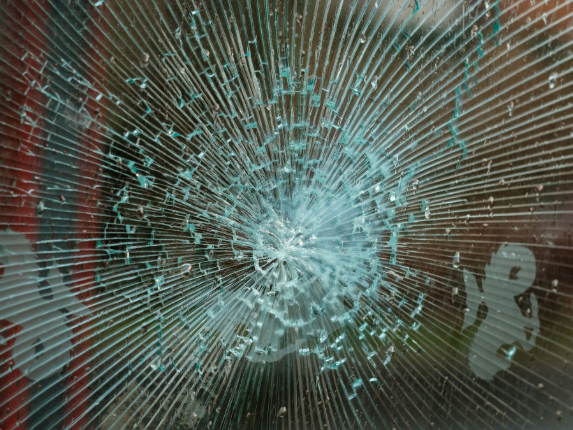
UNECE Regulation No. 107 reflects this principle directly for M2 and M3 passenger vehicles. Its emergency-window provisions require the means of escape to remain visible and available, and where an electronic device is used, it must continue to operate during power-supply failure. For the toughened-glass route, the regulation also requires an easy-to-operate device that ensures the pane can be broken and removed within 20 seconds by a single person from inside the passenger compartment.
These requirements shift attention from equipment presence to operational outcome. An emergency system can be installed correctly and still be ineffective if passengers cannot locate, understand or operate it when smoke, panic, vehicle damage or power loss changes the conditions around them.
That distinction is increasingly important as buses become more electronically integrated. The ISO 26262 series provides the road-vehicle functional-safety framework for safety-related electrical and electronic systems across their lifecycle. It does not regulate emergency glazing, but it reinforces a useful engineering principle: safety has to be considered in relation to malfunction, dependency and the ability to maintain a safe outcome when systems do not behave as intended.
For bus operators and manufacturers, worst-case design therefore means examining the full evacuation chain. The emergency exit, glazing, operating device, passenger instructions and surrounding vehicle systems must still produce a usable escape path when normal assumptions have already failed.
Safe-T-Punch™ addresses this challenge within the R43 toughened-glass emergency-window pathway. Mounted directly on the emergency-exit window, it provides a fixed mechanical means of initiating glass fracture without depending on software logic, network connectivity or vehicle power.
The wider lesson is straightforward: emergency equipment should not be judged only by how well it fits into a vehicle under normal conditions. Its real measure is whether it remains understandable, available and effective when the vehicle is no longer operating normally.
Sources and Further Reading
UNECE Regulation No. 107 Amendment – ECE/TRANS/WP.29/2022/53
Primary source for the amended emergency-window requirements, including visibility, availability, power-failure provisions and the 20-second toughened-glass pathway.
Open source
ISO 26262 – Road Vehicles: Functional Safety
Official ISO overview of the functional-safety series for safety-related electrical and electronic systems in road vehicles. ISO 26262-1:2018 is the vocabulary part of the series.
Open source
Safe-T-Punch™ – Emergency Window Escape Devices
Official product source describing Safe-T-Punch™ for R43 toughened safety glass and its fixed mechanical emergency-egress application.
Open source
This article was originally published by Safe-T-Punch.