Why Mechanical Redundancy Is Returning to Modern Bus Safety
Modern buses are becoming more intelligent, connected and electronically integrated. Diagnostics, fleet management, safety monitoring and passenger communication increasingly depend on digital systems working together. These technologies bring major operational benefits, but they also create a simple safety question: what remains available when the wider electronic environment is disrupted?

That question is helping to bring an older engineering principle back into focus: mechanical redundancy. The idea is not to replace digital technology or resist innovation. It is to ensure that critical emergency functions do not inherit every dependency of the systems around them.
During a fire, collision, electrical fault or other degraded condition, power and electronically integrated systems may become partially unavailable precisely when passengers need a dependable means of escape. In that moment, independence becomes a safety feature.
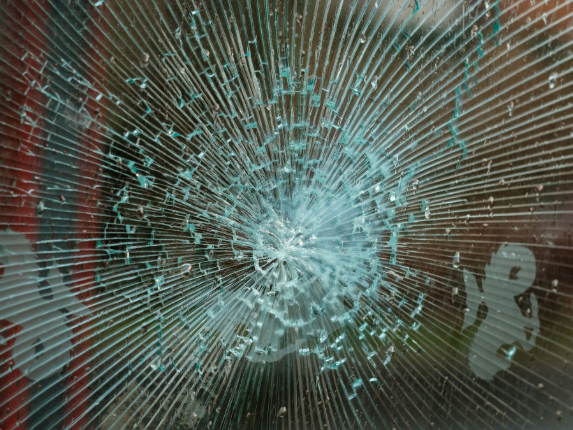
UNECE Regulation No. 107 reflects this resilience principle for M2 and M3 passenger vehicles. Its amended emergency-window provisions require emergency devices to remain visible and available. Where an electronic emergency device is used, it must remain operational during vehicle power-supply failure. For the toughened-glass emergency-window pathway, an easy-to-operate device must ensure that each pane can be broken and removed within 20 seconds by a single person from inside the passenger compartment.
The significance goes beyond the individual requirement. It points toward a broader approach to bus safety: emergency capability should remain dependable even when normal vehicle systems are no longer operating as intended.
That thinking also sits comfortably alongside the ISO 26262 functional-safety framework for safety-related electrical and electronic systems in road vehicles. ISO 26262 does not regulate emergency glazing, but it addresses hazards arising from malfunctioning E/E systems and provides a useful context for considering dependency, failure and safe outcomes.
For bus operators and manufacturers, mechanical redundancy therefore becomes less about returning to old technology and more about preserving an independent safety layer within an increasingly complex vehicle.
Safe-T-Punch™ applies that principle directly to emergency egress on R43 toughened safety glass. Fixed on the emergency-exit window and mechanically operated, it provides a means of initiating glass fracture without depending on software logic, network connectivity or vehicle power.
As buses become more technologically advanced, the lesson is not that safety should become less digital. It is that the final means of escape should remain dependable when digital complexity is no longer something passengers can rely on.
Sources and Further Reading
UNECE Regulation No. 107 amendment – ECE/TRANS/WP.29/2022/53
Primary source for the amended emergency-window requirements, including visibility, availability, power-failure provisions and the 20-second toughened-glass pathway.
Open source
ISO 26262 – Road Vehicles: Functional Safety
Official ISO overview of the functional-safety series for safety-related electrical and electronic systems in road vehicles. ISO 26262-1:2018 is the vocabulary part of the series.
Open source
Safe-T-Punch™ – Emergency Window Escape Devices
Official product source describing Safe-T-Punch™ for R43 toughened safety glass and its fixed mechanical emergency-egress application.
Open source