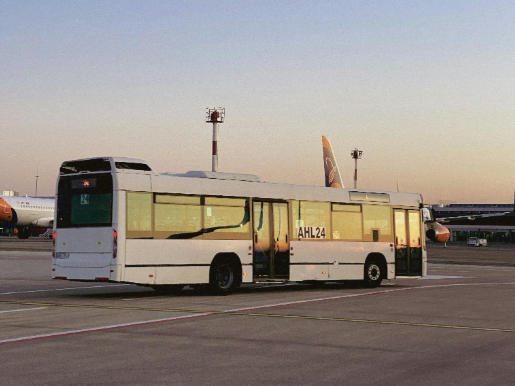
Public transport systems are undergoing rapid digital transformation. Modern buses increasingly rely on predictive diagnostics, fleet management platforms, automated passenger systems and electronically integrated controls. These technologies improve operational visibility, monitoring and efficiency, but they also create growing dependence on complex electrical and electronic environments within safety-critical systems.

This creates what may be described as the digital–analog paradox. As transport becomes more technologically advanced, emergency survivability can still depend on simple physical systems capable of functioning when digital infrastructure, communications or vehicle power become unavailable.
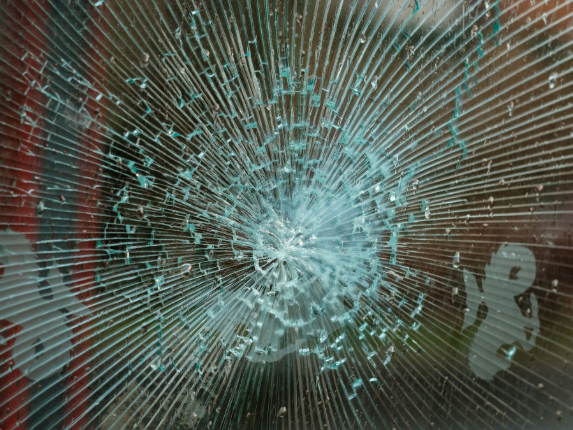
UNECE Regulation No. 107 reflects this resilience principle directly in its amended emergency-window provisions for M2 and M3 passenger vehicles. The regulation requires the emergency breaking device to be clearly visible and readily available at all times. Where an electronic device is used, it must remain operational if the vehicle power supply fails. The regulation also allows the device to be permanently fixed adjacent to or on the emergency window, providing a direct relationship between the means of breaking the glazing and the escape point itself.
That requirement illustrates a broader engineering reality. Digitally integrated systems can improve normal operation, but emergency design must also consider the conditions in which those systems are degraded, partially unavailable or no longer trustworthy. A safety function becomes more resilient when its outcome is not dependent on the same infrastructure that may be affected by the emergency.
The ISO 26262 series provides useful functional-safety context for this discussion. It addresses hazards caused by malfunctioning behaviour of safety-related electrical and electronic systems in series-production road vehicles and establishes a functional-safety framework for vehicle development. ISO 26262-1:2018 itself provides the vocabulary used across that wider series.
For bus operators and manufacturers, the practical issue is therefore not whether digital technology belongs in modern transport. It does. The issue is whether every safety-critical action should inherit digital, software, connectivity or power dependencies when an independent physical pathway can remain available.
Safe-T-Punch™ provides an example of that independent layer. Designed for R43 toughened safety glass and mounted directly on the emergency-exit window, it provides a fixed mechanical means of initiating glass fracture without relying on software logic, network connectivity or vehicle power.
The digital–analog paradox is not an argument against smarter buses. It is an argument for smarter system architecture: use digital technology where it adds capability, while preserving mechanical certainty where passengers may ultimately depend on immediate physical escape.
Sources and Further Reading
UNECE – ECE/TRANS/WP.29/2022/53
Primary source for the amended UN Regulation No. 107 emergency-window provisions, including visibility, continuous availability, power-failure operation for electronic devices, and permanent fixing adjacent to or on the emergency window.
ISO 26262-1:2018 – Road vehicles – Functional safety – Part 1: Vocabulary
Official ISO source explaining the scope of the functional-safety series and confirming that Part 1 defines the vocabulary used throughout ISO 26262.
Safe-T-Punch™ – Emergency Window Escape Devices
Official product source describing Safe-T-Punch™ for R43 toughened safety glass and its fixed mechanical emergency-egress application.
This article was originally published by Safe-T-Punch.