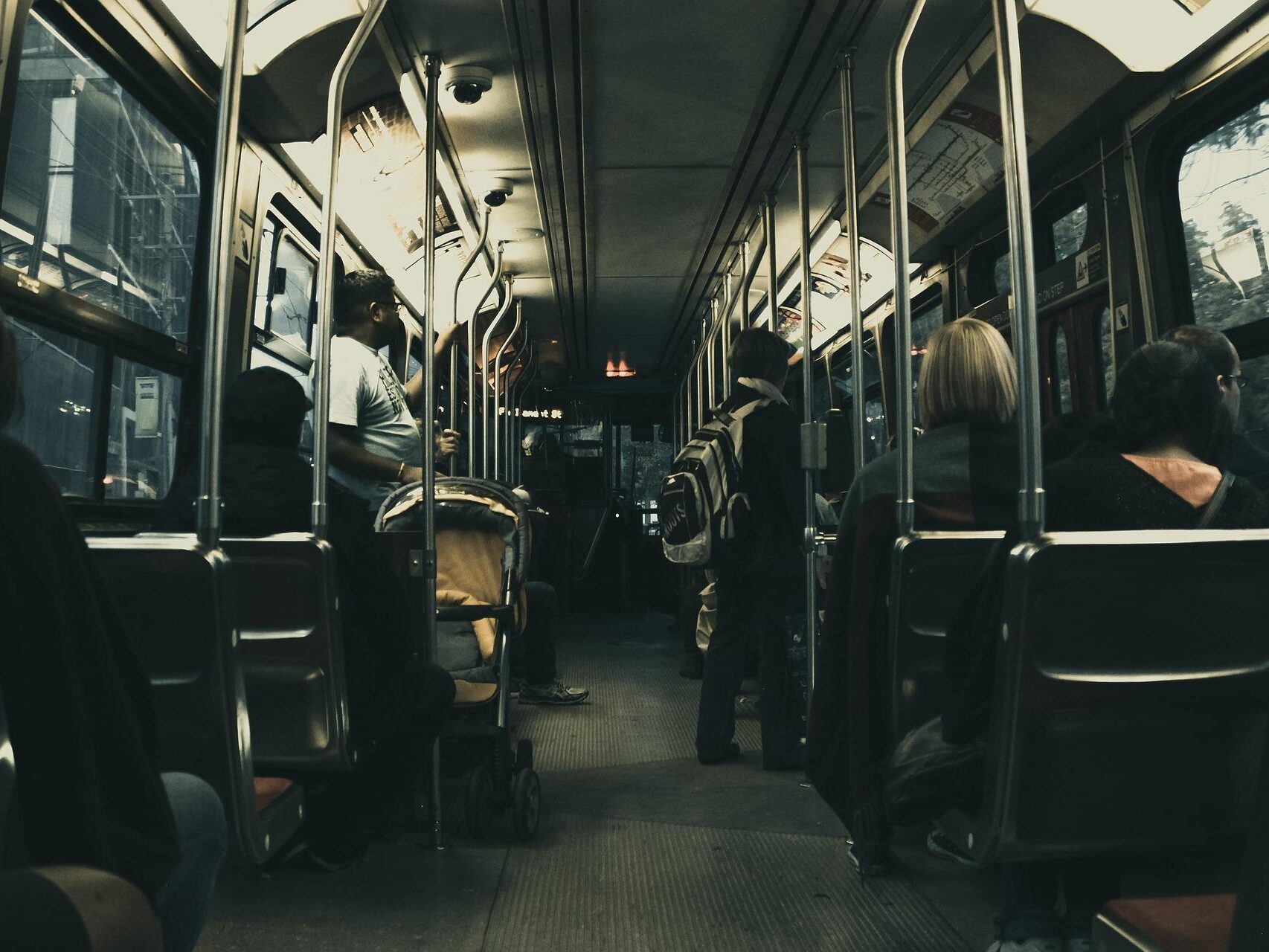
A connected bus can tell a fleet manager what is happening hundreds of kilometres away. But if its communications go silent, what can a passenger still do for themselves?

Today’s buses use telematics, predictive diagnostics and integrated monitoring to improve service and spot problems earlier. These capabilities matter. Yet an emergency can introduce the very disruptions those systems depend on avoiding: damaged wiring, lost power, unavailable networks or equipment operating outside normal conditions.
A communications outage does not automatically disable a bus’s emergency provisions. That distinction matters. The engineering question is which passenger-facing actions depend on connectivity, electronic control or vehicle power, and what remains possible if one of those dependencies disappears.
UNECE Regulation No. 107, including its 10 series of amendments, provides a practical reference for M2 and M3 buses and coaches. For toughened-glass emergency windows, it addresses easy-to-operate breaking devices and verification of the resulting opening. The amendments also address device availability and require electronic breaking devices to remain operational if the vehicle power supply fails. They do not prohibit electronic safety technology.
The ISO 26262 series concerns functional safety of road-vehicle electrical and electronic systems. It is not an emergency-window specification, but its attention to malfunctioning systems provides a useful parallel: engineers should examine failure modes before passengers encounter them.
That creates an opportunity for bus manufacturers and operators to review emergency exits from the passenger’s perspective. If a bus has stopped, the lights are unreliable and communications are interrupted, can someone recognise the escape provision and operate it without waiting for an electronic response? The answer must be established for the actual vehicle, not assumed from the presence of equipment.
One option worth evaluating is physically independent emergency-window technology. Safe-T-Punch™ is a fixed mechanical device mounted directly ON designated toughened-glass emergency windows. It works without batteries, software, a network connection or vehicle power. Its suitability depends on the glazing, installation and applicable vehicle requirements; it is not intended for laminated glass.
Smarter buses and independent escape mechanisms are not opposing ideas. The most useful design question may be the simplest: when the connection ends, does the passenger still have a clear way to act?
Sources and Further Reading
UNECE Regulation No. 107, 10-series amendments. Official adopted amendment text covering emergency-window breaking devices, availability and electronic-device operation after vehicle power failure. Open source
ISO 26262-1:2018, Road vehicles: Functional safety, Part 1. ISO scope and terminology for electrical/electronic functional safety; not a bus emergency-window standard. Open source
Safe-T-Punch™ official website. Manufacturer information about the fixed mechanical device for appropriate toughened-glass emergency windows. Open source
This article was originally published by Safe-T-Punch.